Fast Fixes for Commercial Roof Emergencies

When Your Commercial Roof Can't Wait
Commercial emergency roofing Whitehall businesses need is available 24/7, and acting fast is the difference between a manageable repair and a costly structural problem.
If you have a roofing emergency right now, here's what to do:
- Call a licensed commercial roofer immediately for same-day response
- Move people and equipment away from the affected area
- Document all visible damage with photos before any cleanup
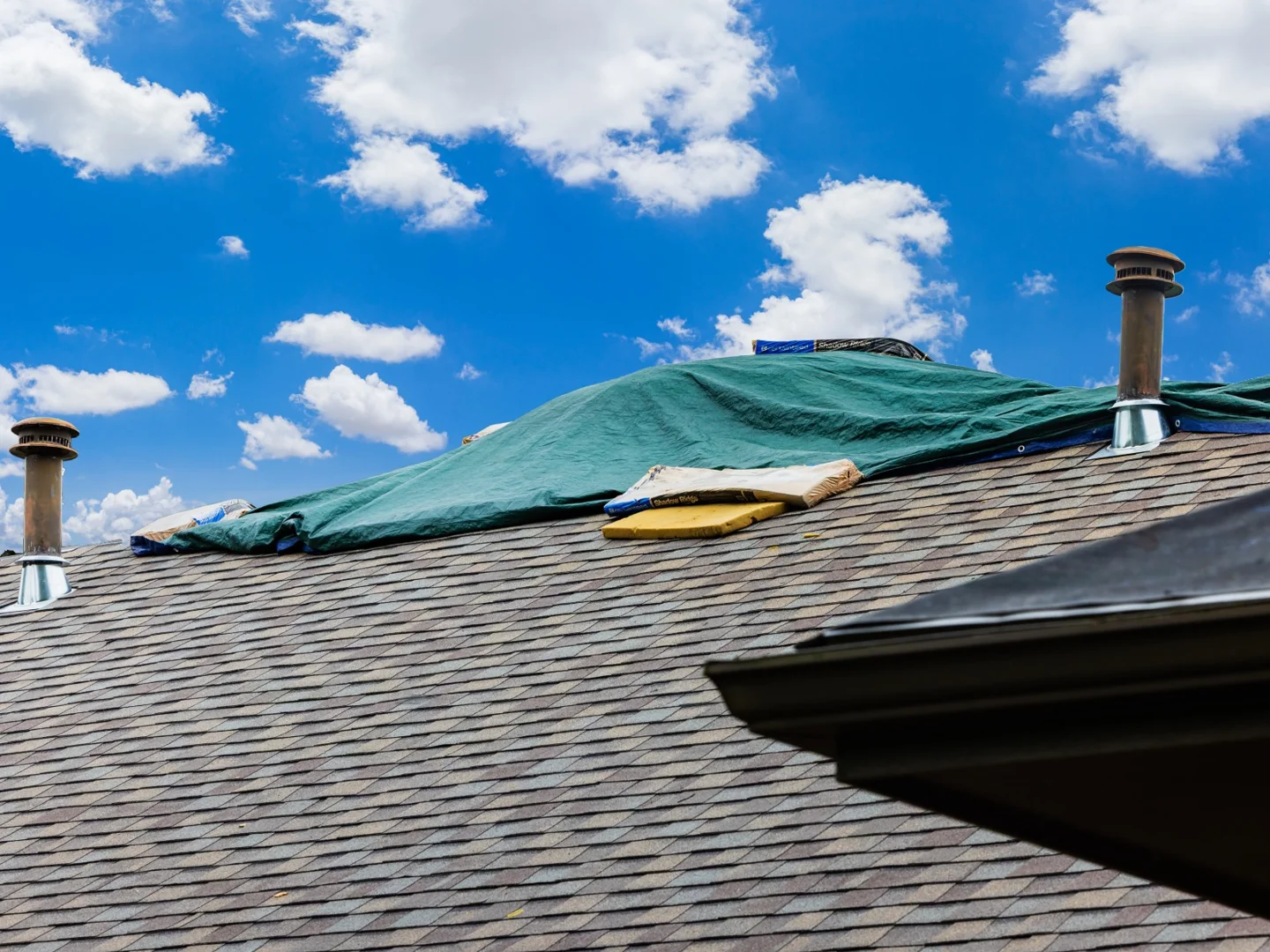
- Request emergency tarping or shrink wrap to stop water intrusion fast
- Contact your insurance provider and ask for an inspection report from your roofer to support your claim
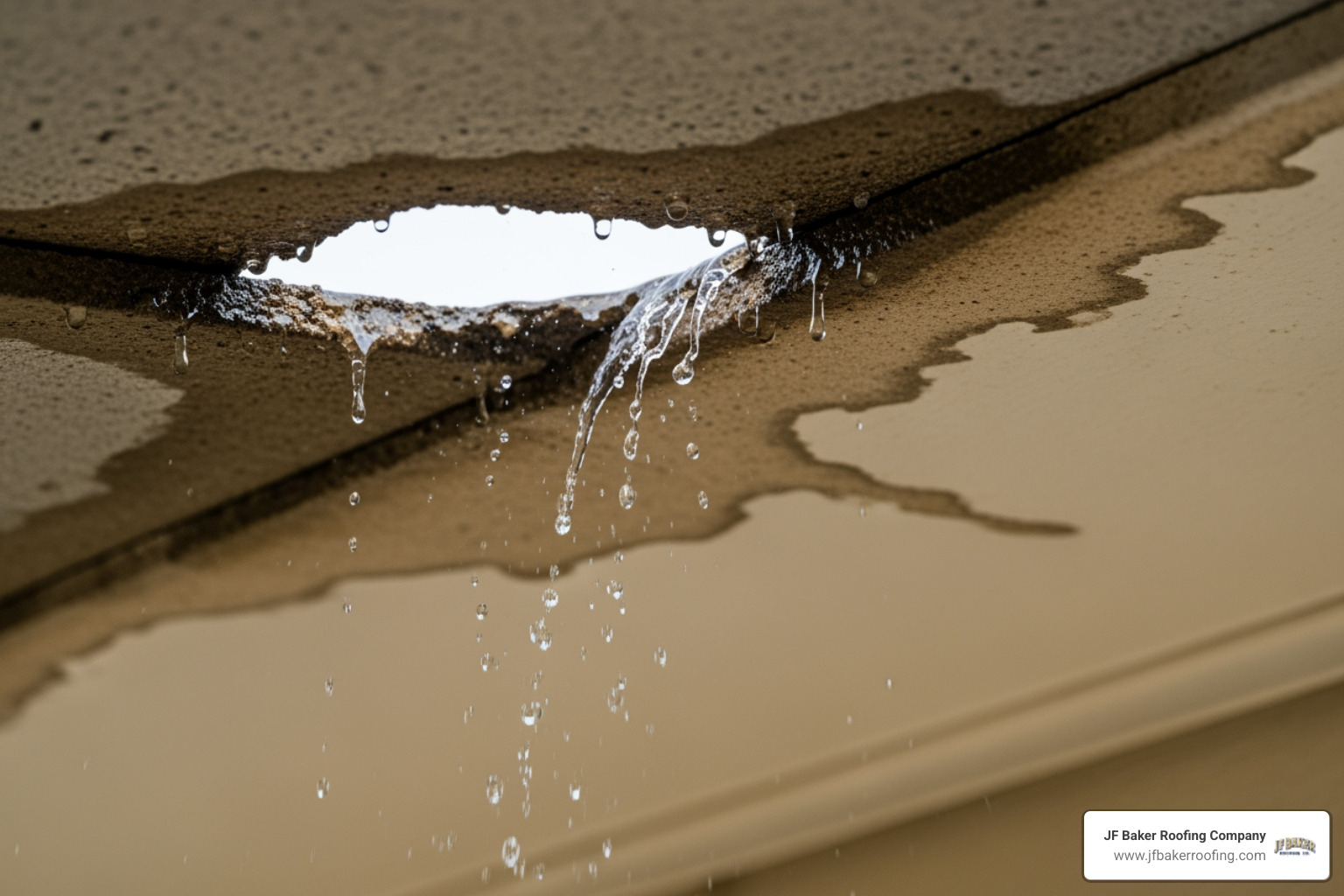
A commercial roof failure in Whitehall, Ohio doesn't give you time to shop around. Whether it's a sudden storm, hail impact, or a leak that's gone from drip to flood overnight, the damage compounds quickly. Water gets into insulation, then into ceilings, then into your inventory, equipment, or tenant spaces.
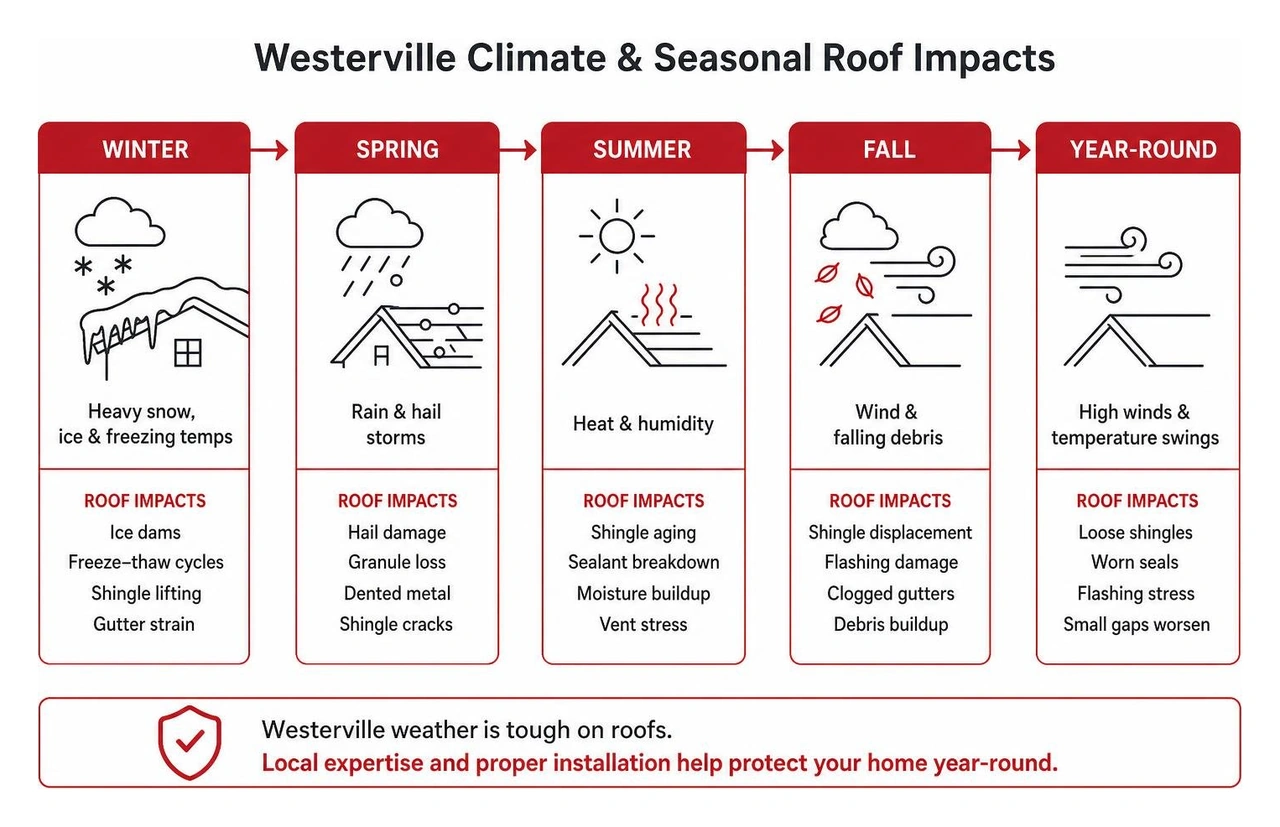
Central Ohio's weather makes this a real and recurring risk. Spring storms, summer hail, ice dams in winter, and heavy snow loads all put flat and low-slope commercial roofs under serious stress.
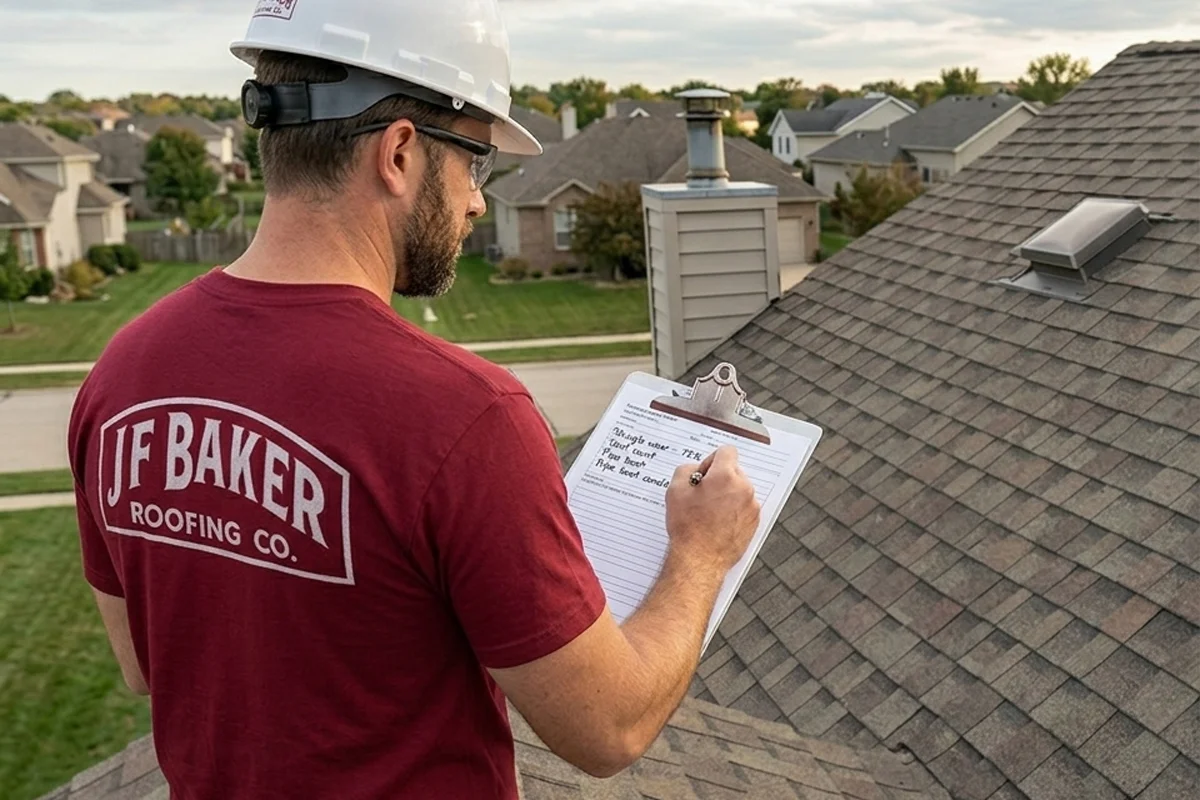
At JF Baker Roofing, we've been handling commercial roof emergencies across Columbus and surrounding areas, including Whitehall, since 1929. Three generations of the Baker family have built this company on one thing: honest work when people need it most.
If your roof is failing right now, don't wait to read the full guide. Reach out to our team and we'll get someone out to you.
How to Handle Commercial Emergency Roofing Whitehall Situations
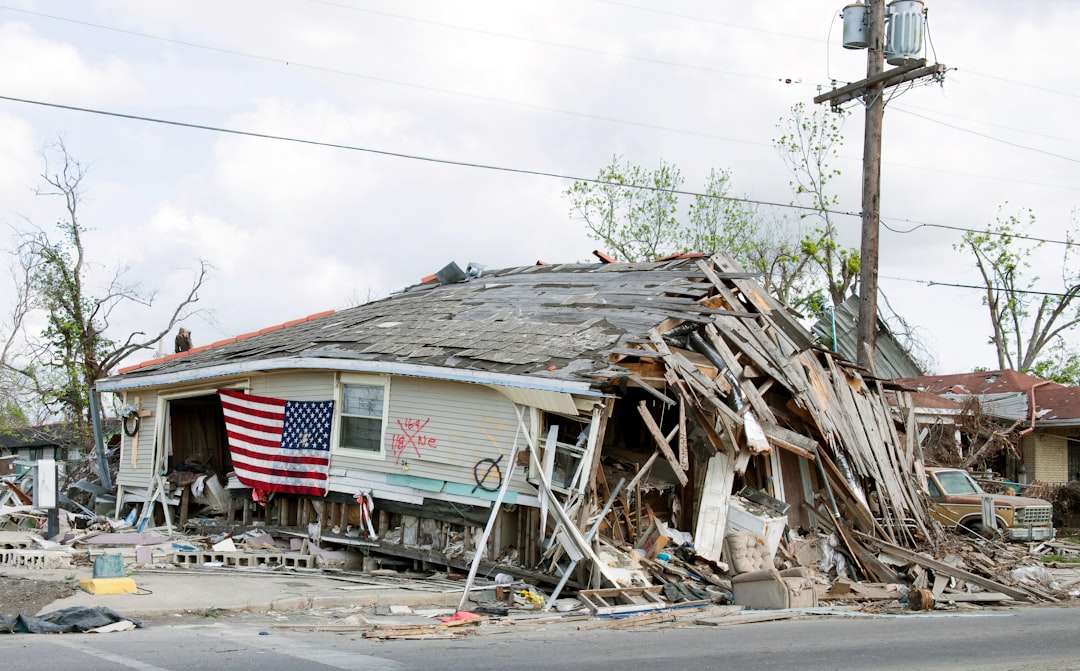
When a roofing crisis hits your Whitehall business, the first few minutes are the most important. A "roofing emergency" generally refers to any situation where the structural integrity of the building is threatened or where water is actively entering the building, risking your inventory, electronics, and the safety of your employees.
Safety Protocols and Interior Protection
Before looking at the roof, look at your people. If the ceiling is sagging or if water is pouring near electrical panels or light fixtures, evacuate that section of the building immediately. Turn off power to the affected area if it is safe to do so.
Once people are safe, focus on interior mitigation. Move high-value equipment, computers, and inventory. If items are too heavy to move, cover them with heavy-duty plastic sheeting. Use buckets to catch active drips, but a full bucket is heavy and can spill, creating a slip hazard.
Damage Documentation and Immediate Mitigation
Before any cleanup begins, grab your phone. Take clear photos and videos of the leaks, the damaged ceiling tiles, and any pooled water on the floor. If you can safely see the damage from the ground outside, take photos of the roofline or any fallen debris. This documentation is gold when dealing with insurance adjusters later.
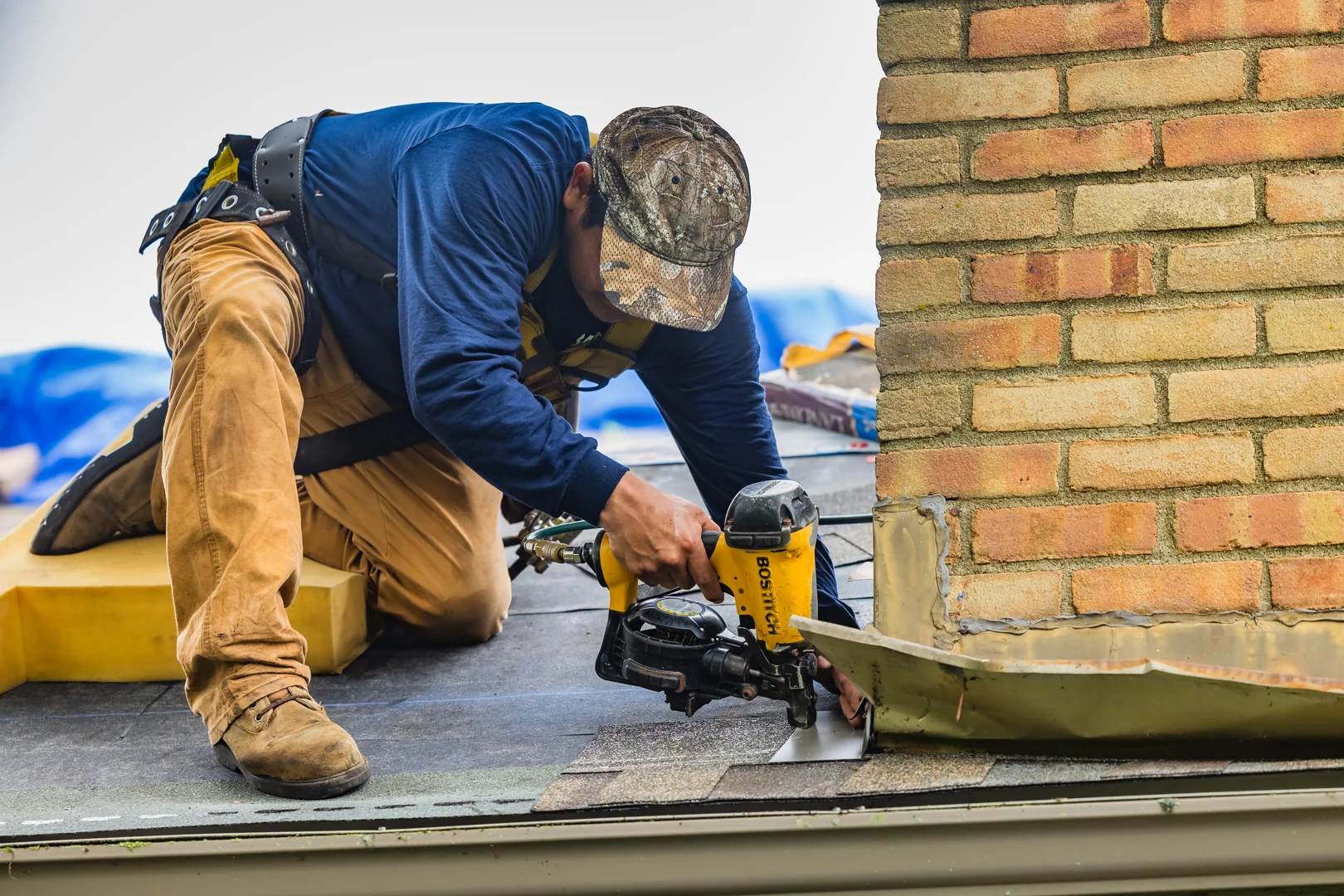
The goal of commercial emergency roofing Whitehall services is to stop the bleeding. This usually involves "dry-in" procedures. We focus on getting the building watertight as quickly as possible so you can keep your doors open. For more details on how we handle these high-pressure situations, you can read about our storm damage repairs.
Vulnerable Systems and Commercial Emergency Roofing Whitehall
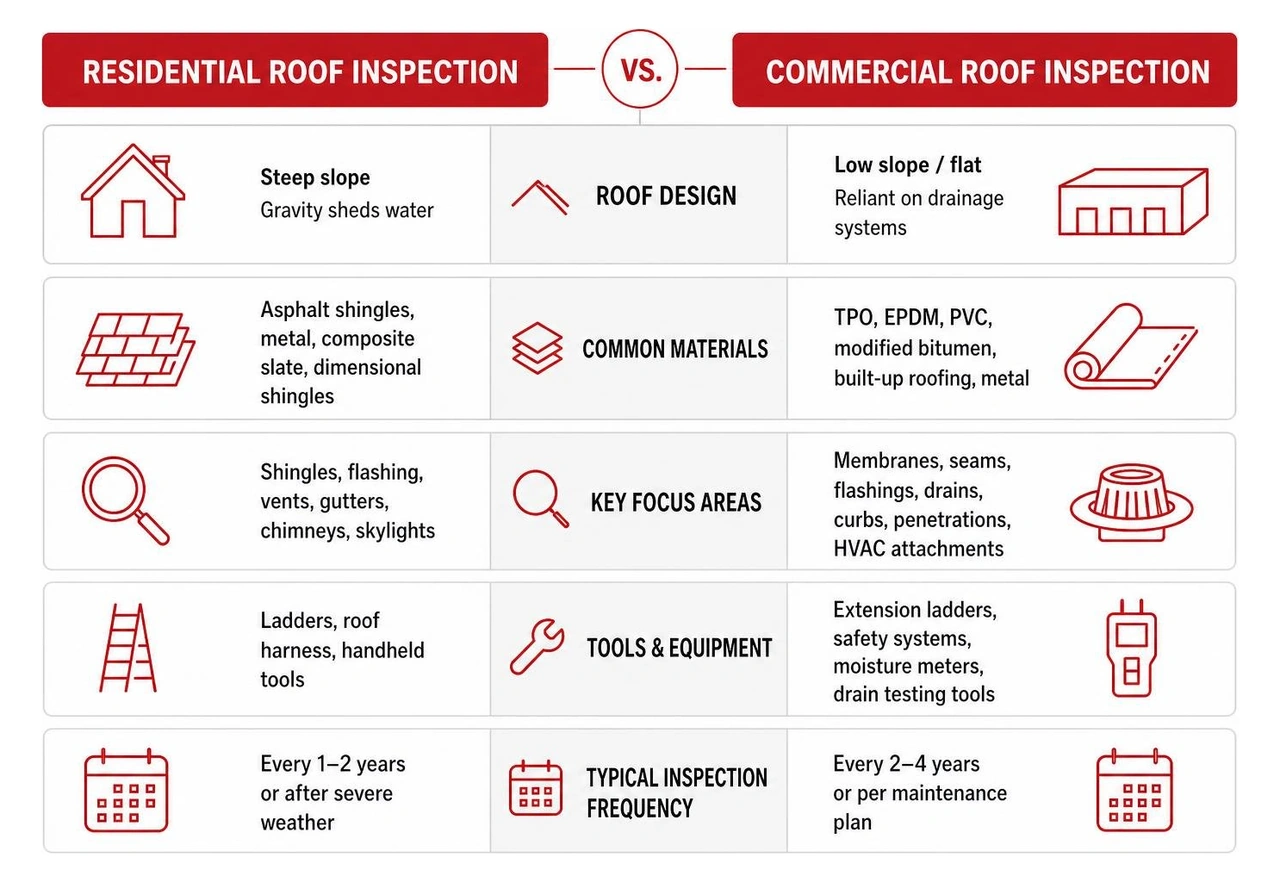
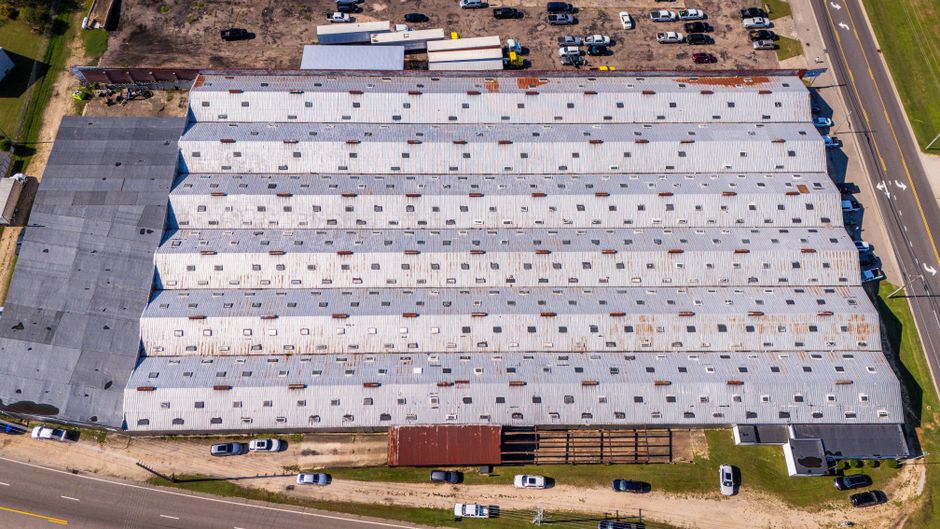
Different roofing systems fail in different ways. In Whitehall, we see a wide variety of commercial structures, from retail strips on Main Street to industrial warehouses near the airport. As members of the National Roofing Contractors Association (NRCA), we follow established industry standards to ensure every emergency repair is handled correctly.
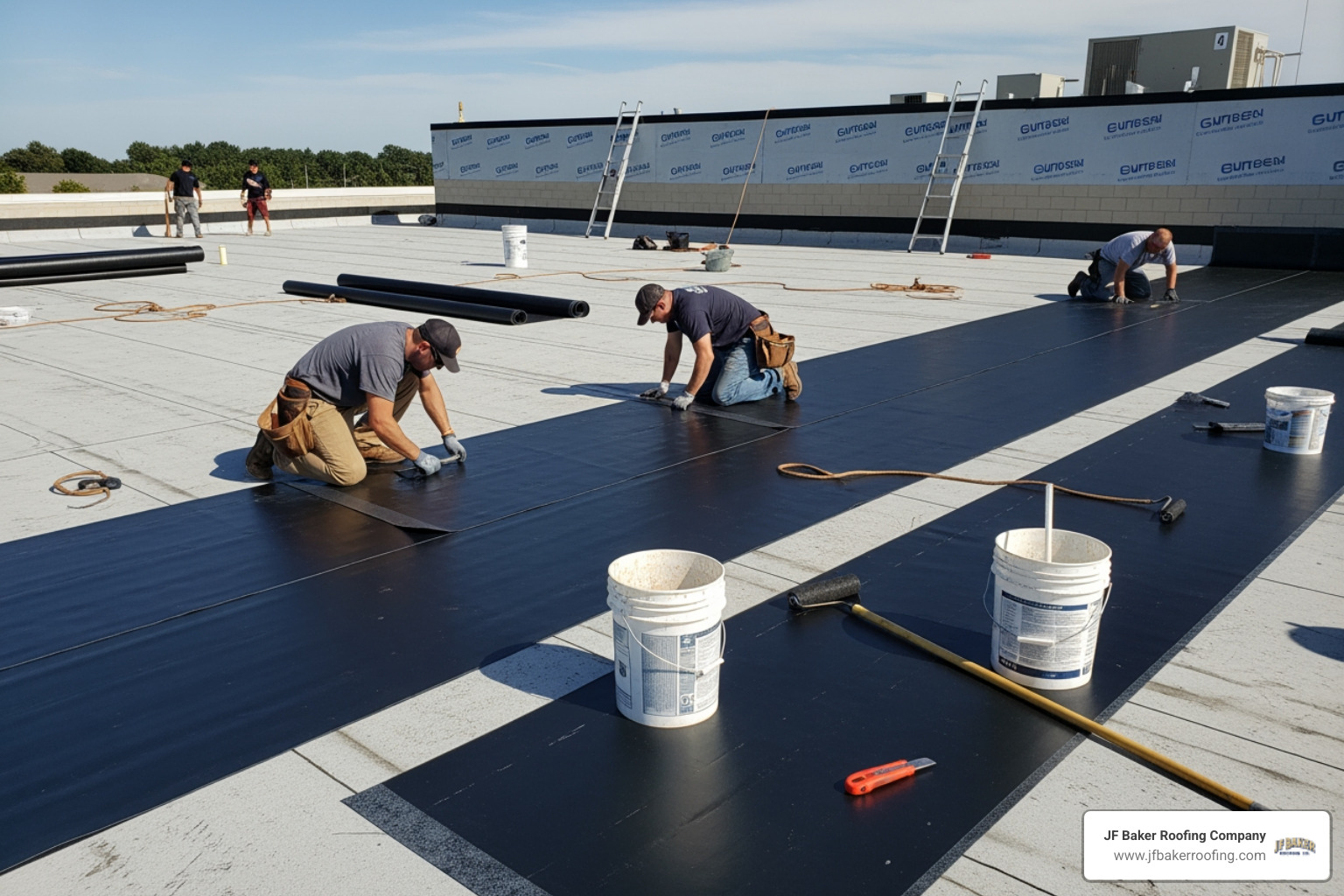
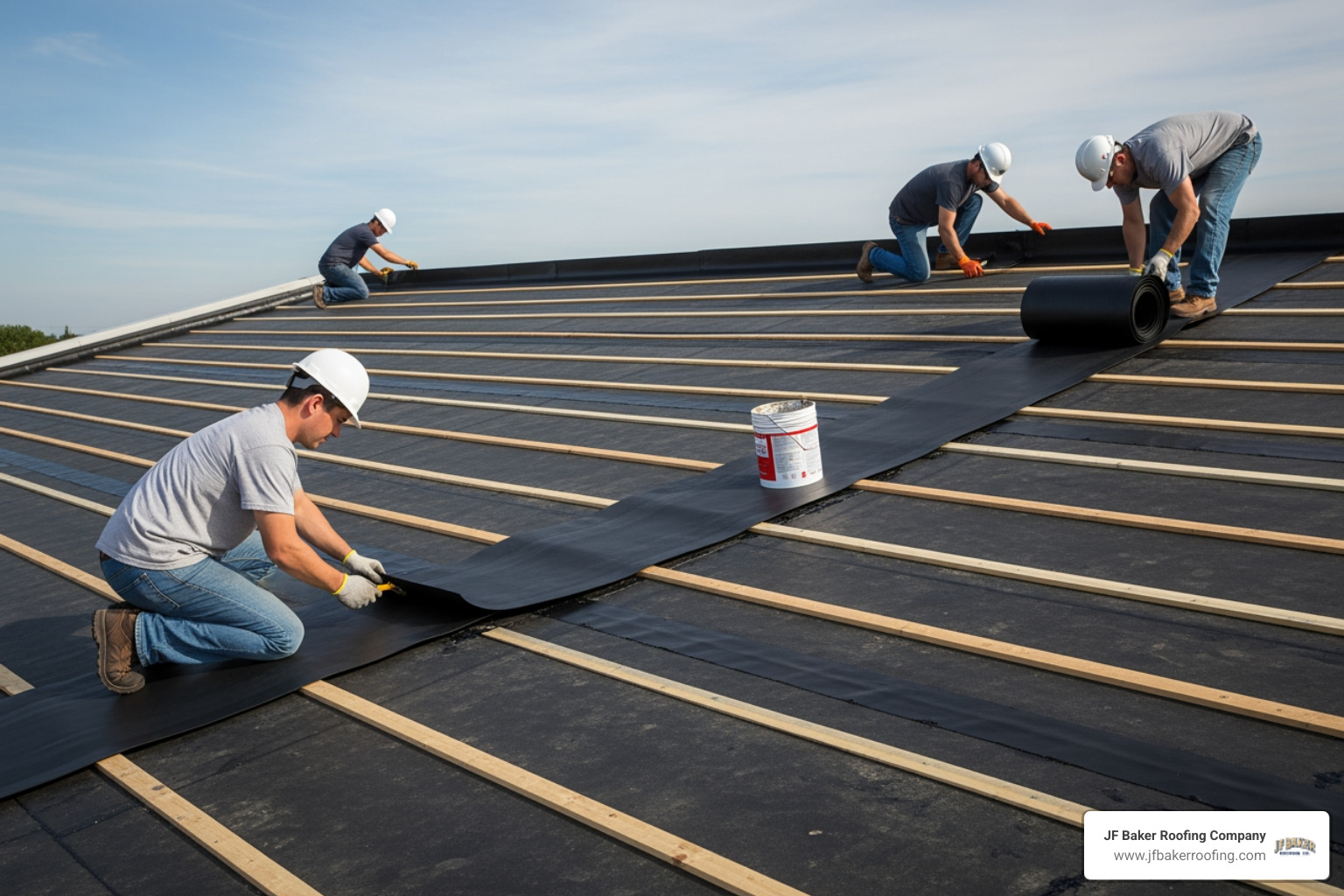
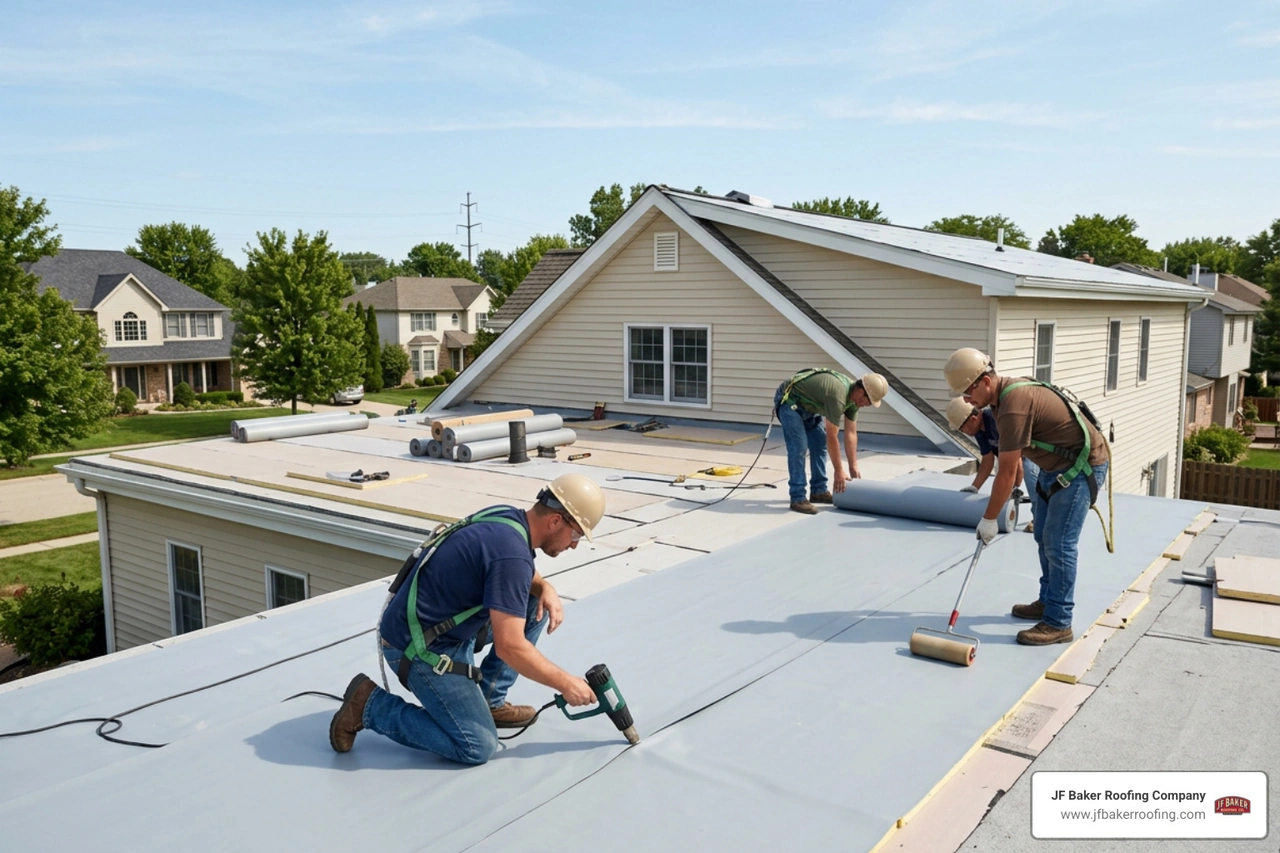
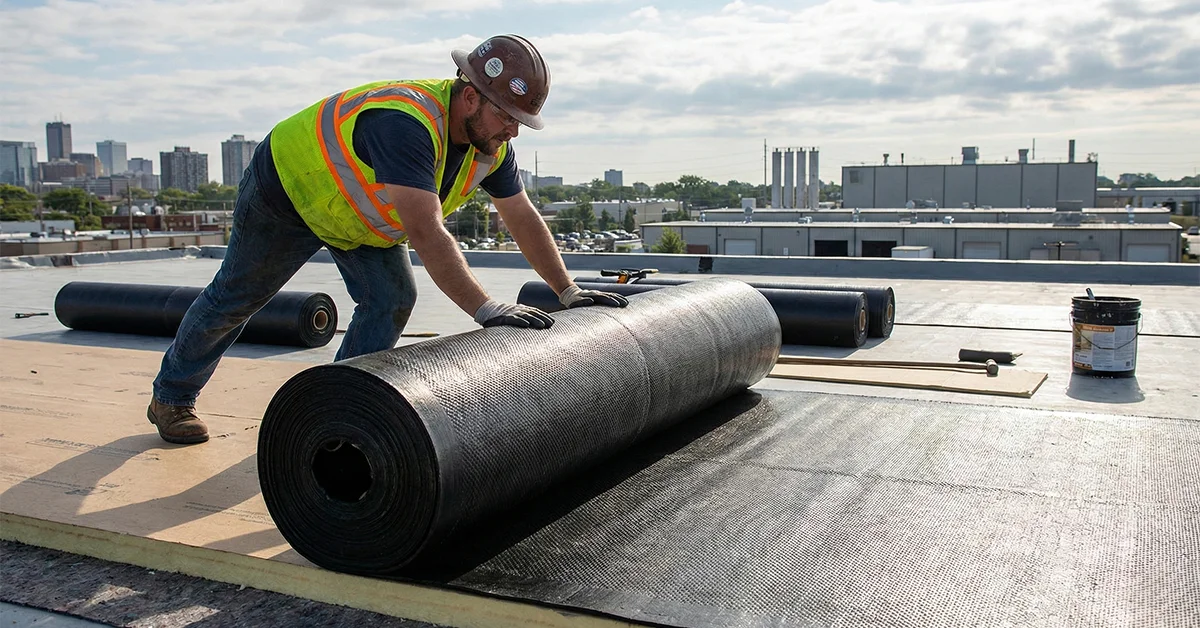
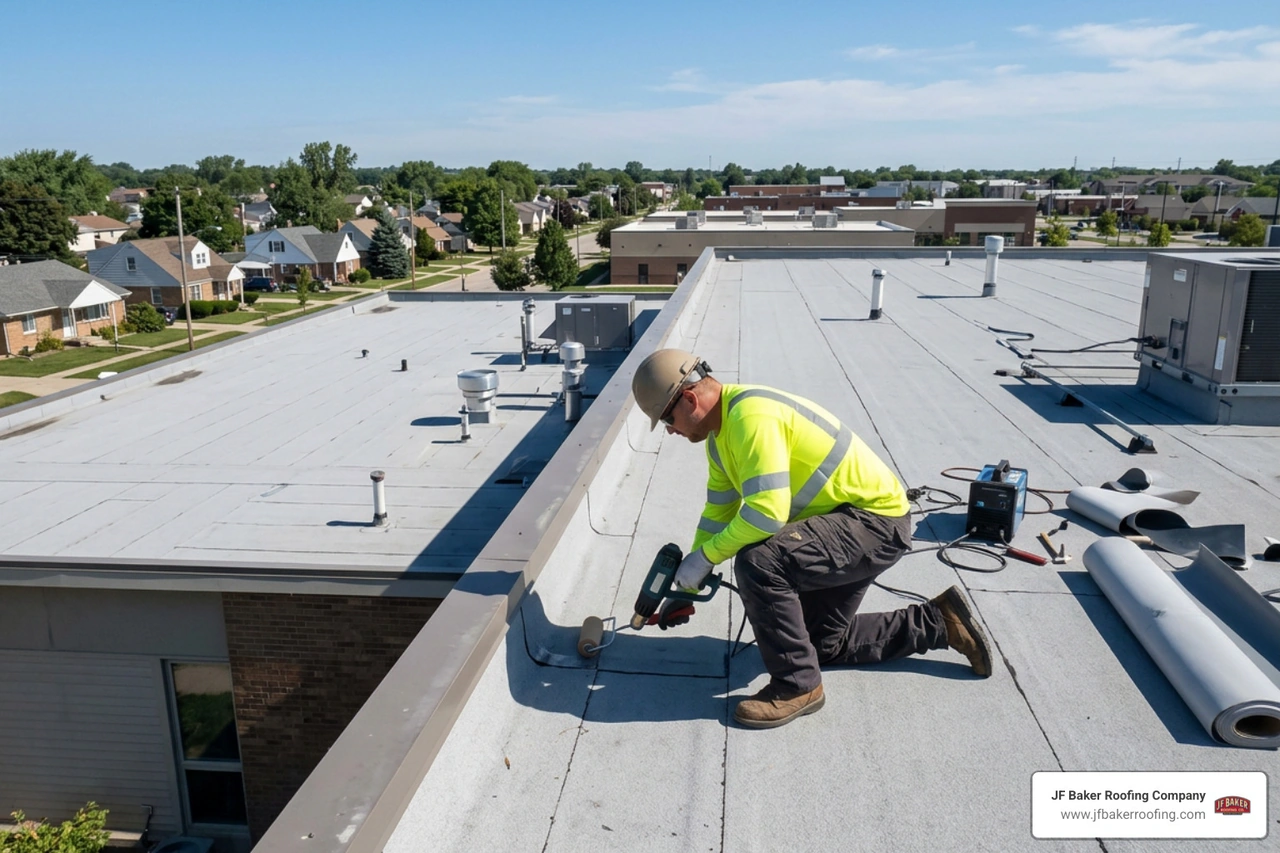
- TPO (Thermoplastic Polyolefin): This white, reflective single-ply membrane is popular for its energy efficiency. However, high winds can catch the edges if they aren't properly terminated, or hail can puncture the membrane, leading to widespread leaks that are hard to track.
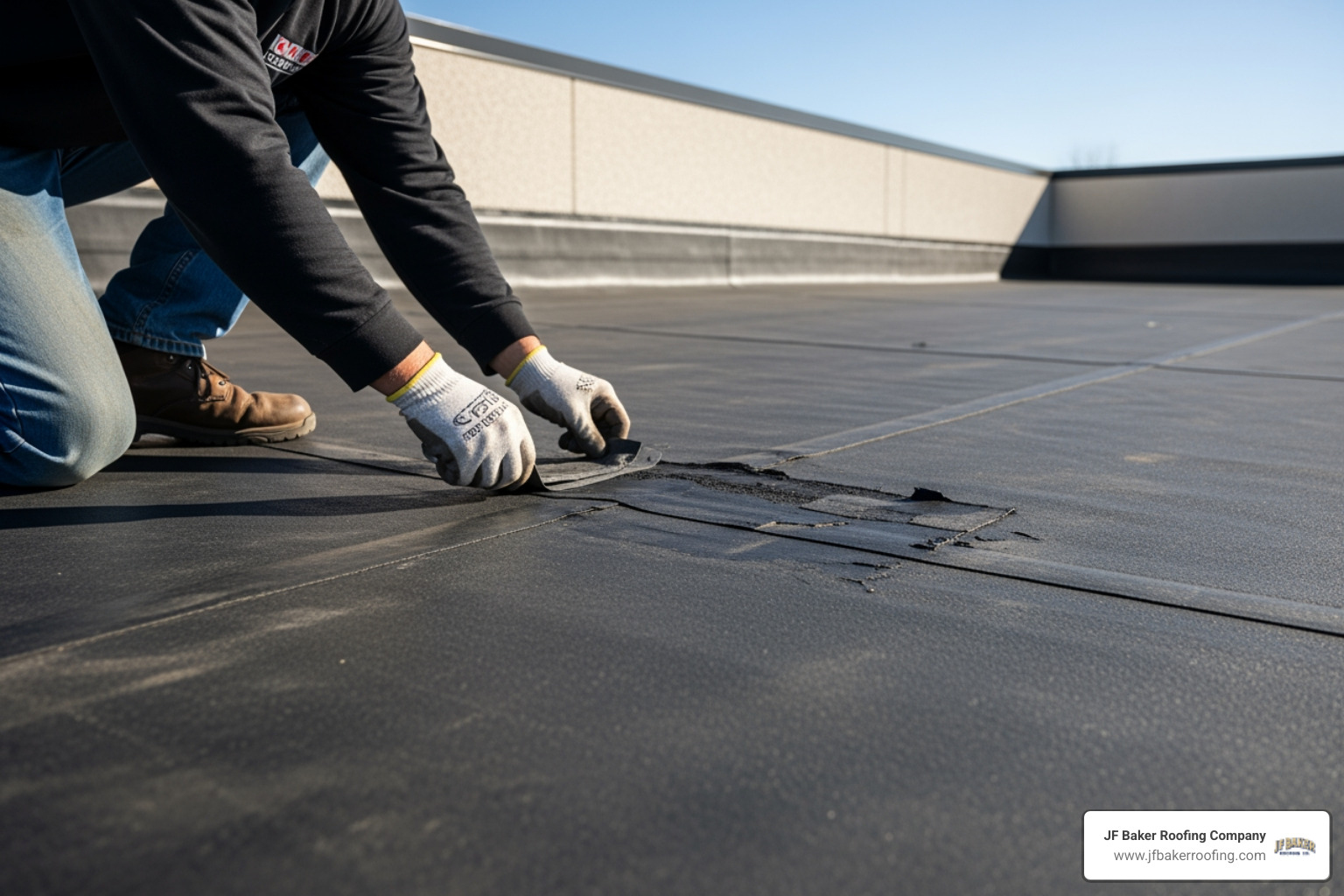
- EPDM (Ethylene Propylene Diene Terpolymer): Often called "rubber roofing," EPDM is durable but prone to seam failure as it ages. In an emergency, a seam that "pops" can allow a massive amount of water to travel under the membrane.
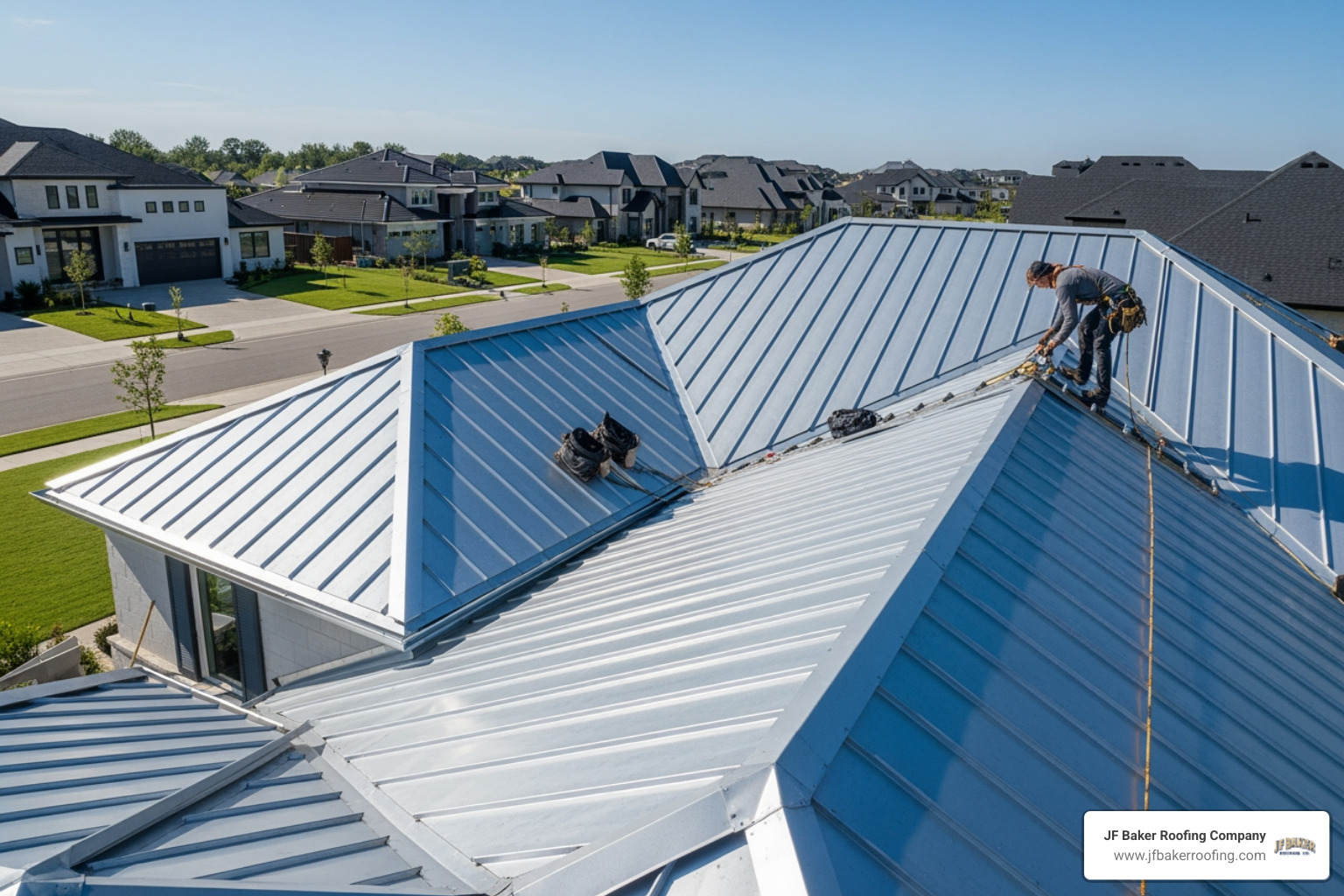
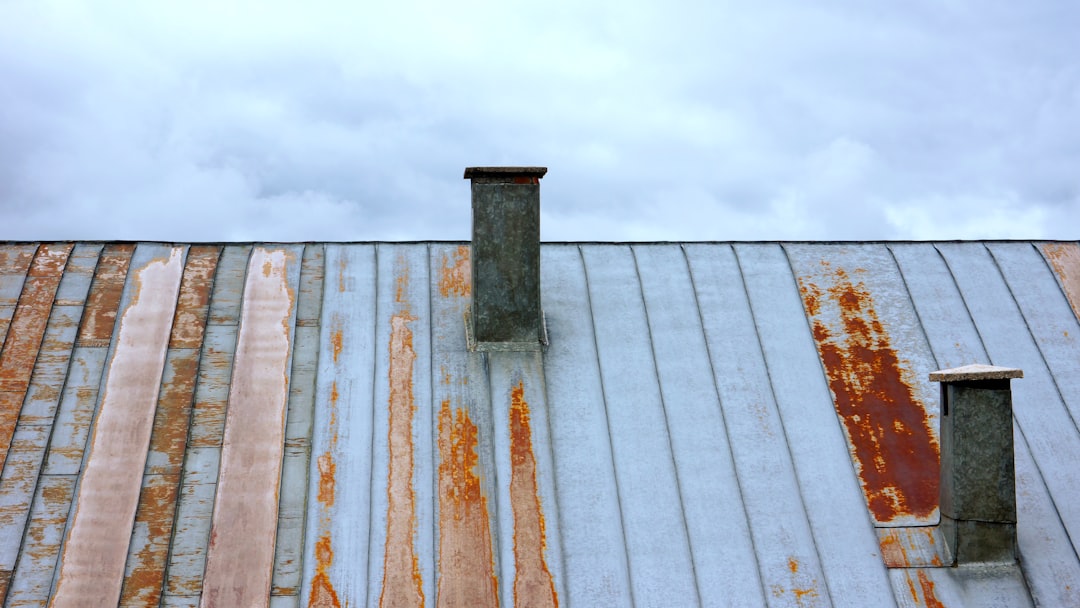
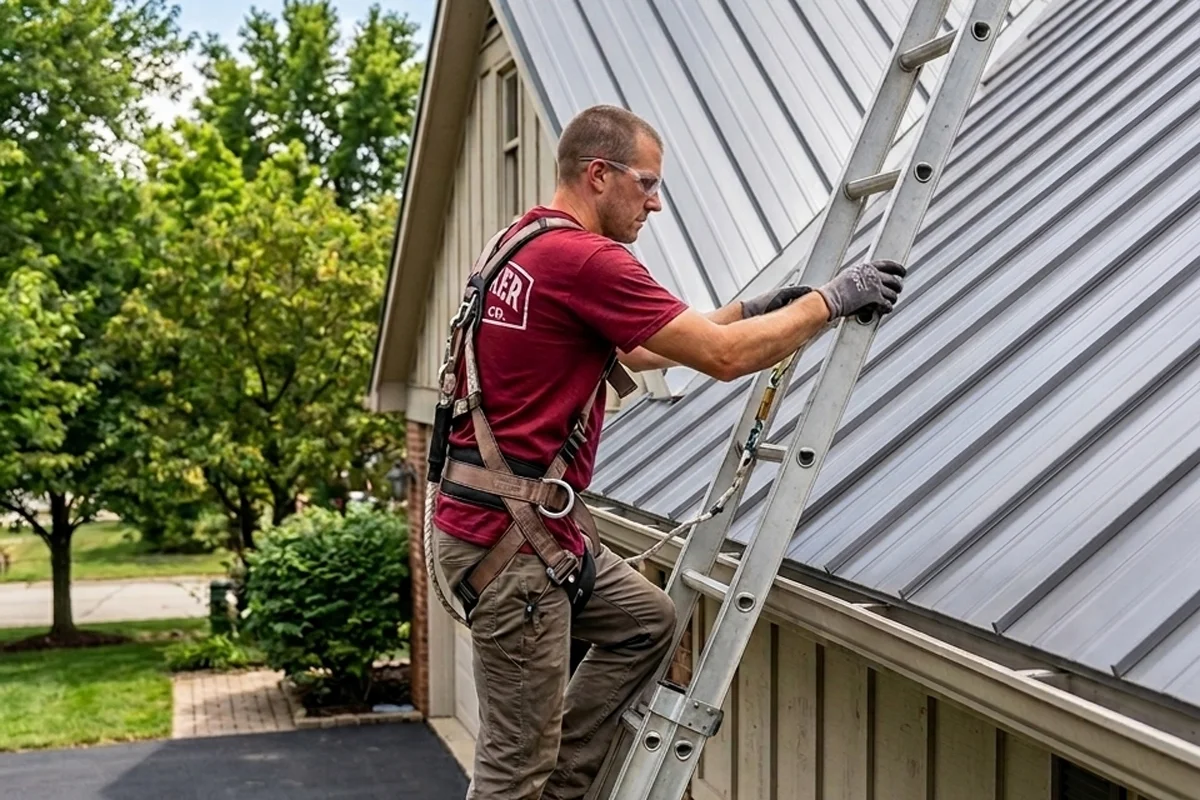
- Metal Roofing: While incredibly tough, metal roofs in Central Ohio can suffer from backed-up gutters or failing fasteners. During high wind events, metal panels can catch the air like a sail if they’ve become loose.
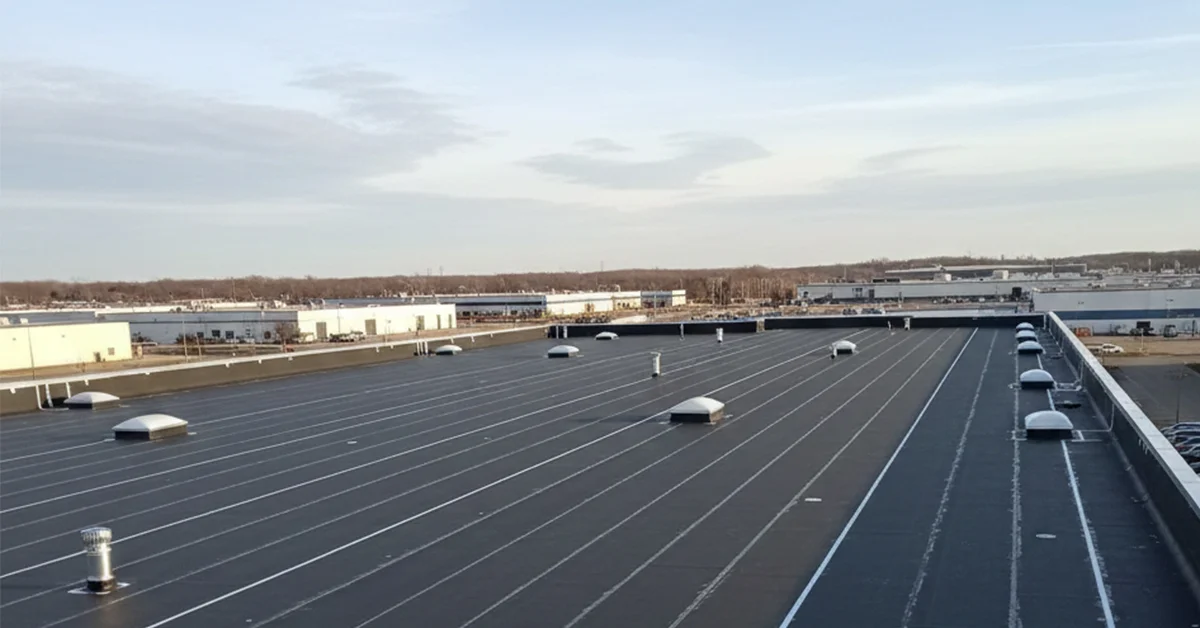
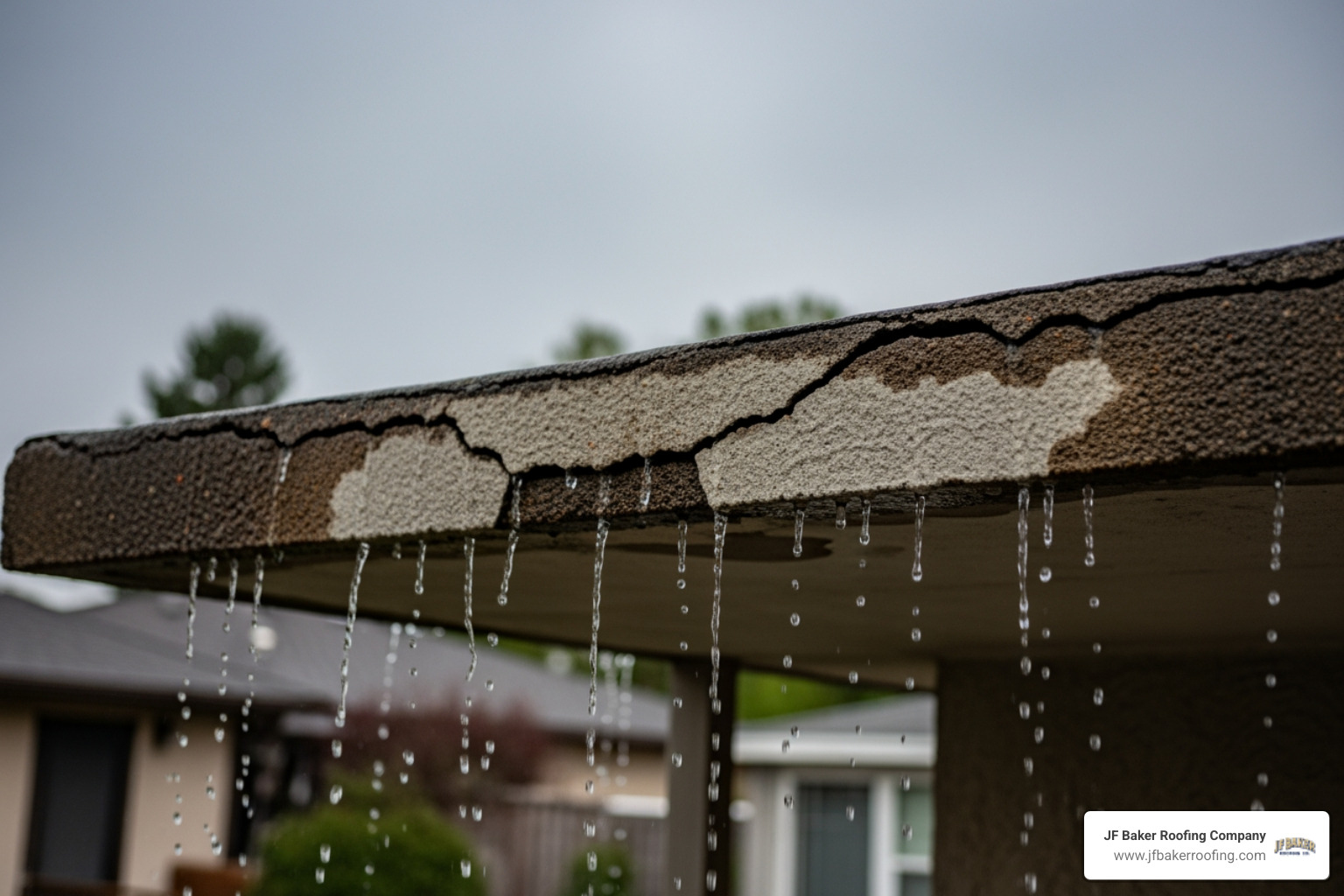
- Built-Up Roofing (BUR): These "tar and gravel" roofs are heavy and durable, but they are susceptible to cracking and "alligatoring" over time. When they leak, the water often travels a long way from the entry point, making the emergency repair a bit of a detective job.
To better understand what's sitting on top of your building, check out our guide on Types of Commercial Roofing Systems: What Columbus & Central Ohio Building Owners Should Know.
Professional Assessment for Commercial Emergency Roofing Whitehall
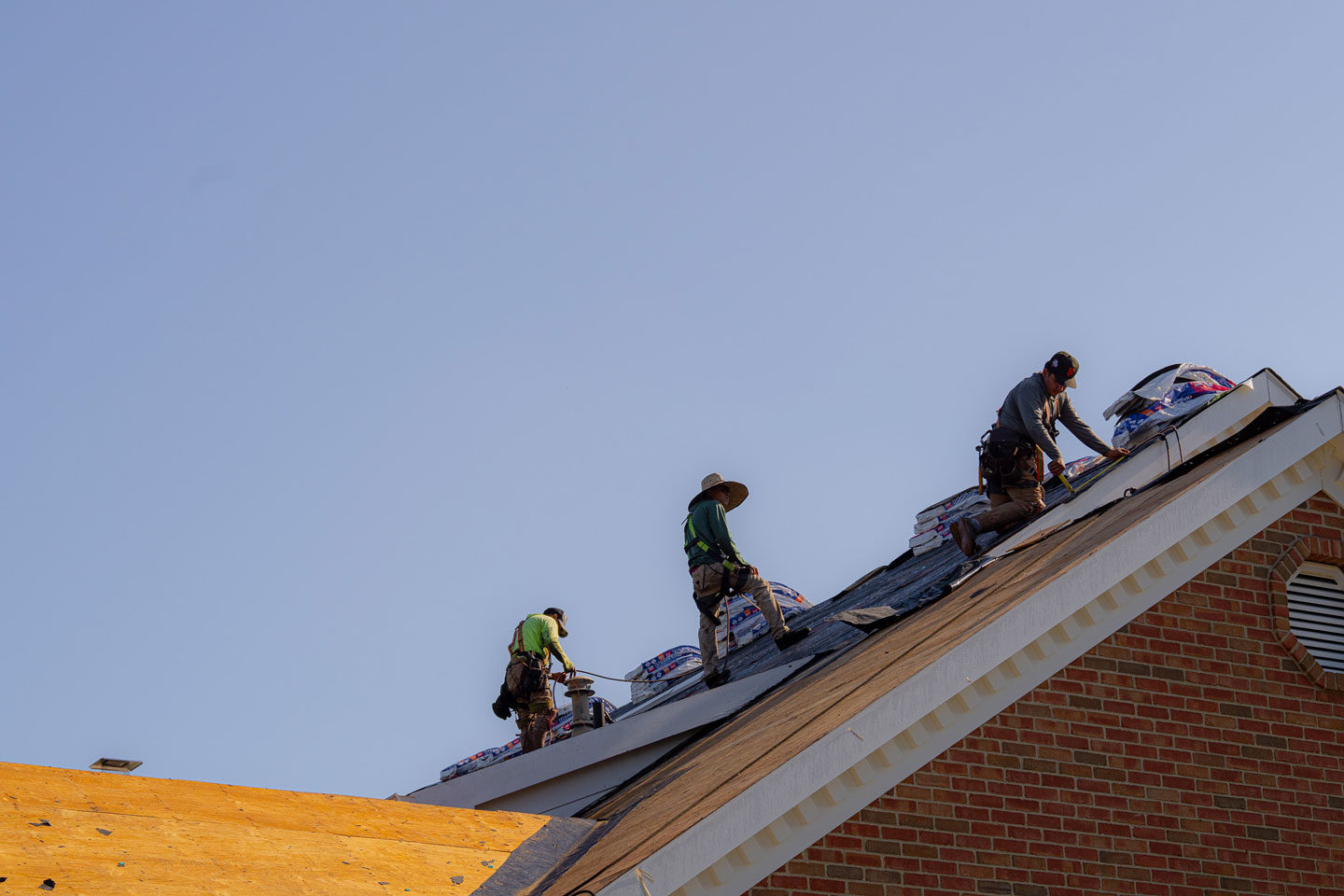
Once we arrive on-site, our first job is a thorough assessment. We don't just look at the hole; we look at the whole system.
We use advanced tools like infrared thermography to find moisture trapped deep within the insulation layers that isn't visible to the naked eye. We also conduct a structural review to ensure the roof deck hasn't been compromised by the weight of water or snow. This professional eye ensures that a "quick fix" doesn't trap moisture inside your building, which would lead to mold and rot down the road. Learn more about our commercial roofing services.
Common Causes and Seasonal Risks in Central Ohio
Whitehall businesses face a rotating door of weather threats. Because we’ve been local since 1929, we’ve seen every version of an Ohio "weather event."
Wind and Hail Damage
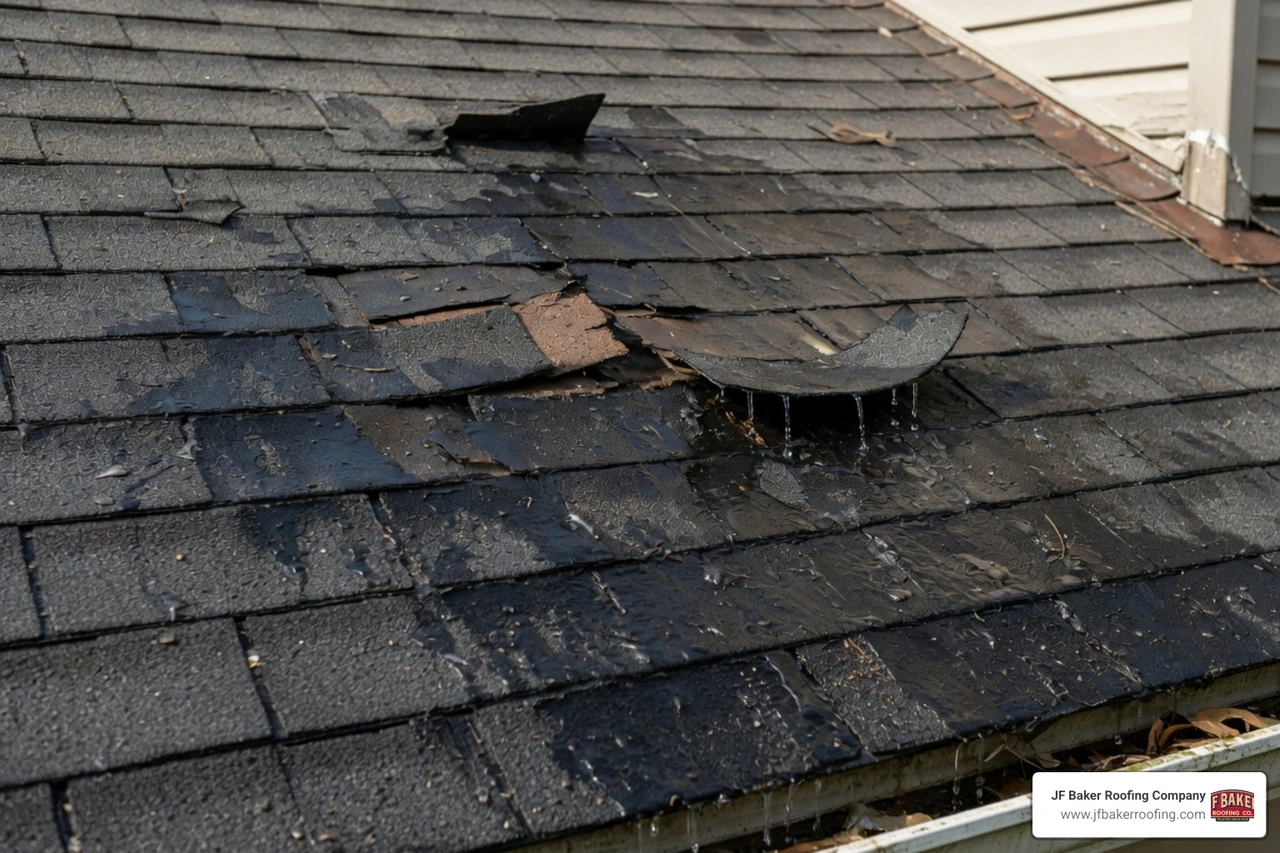
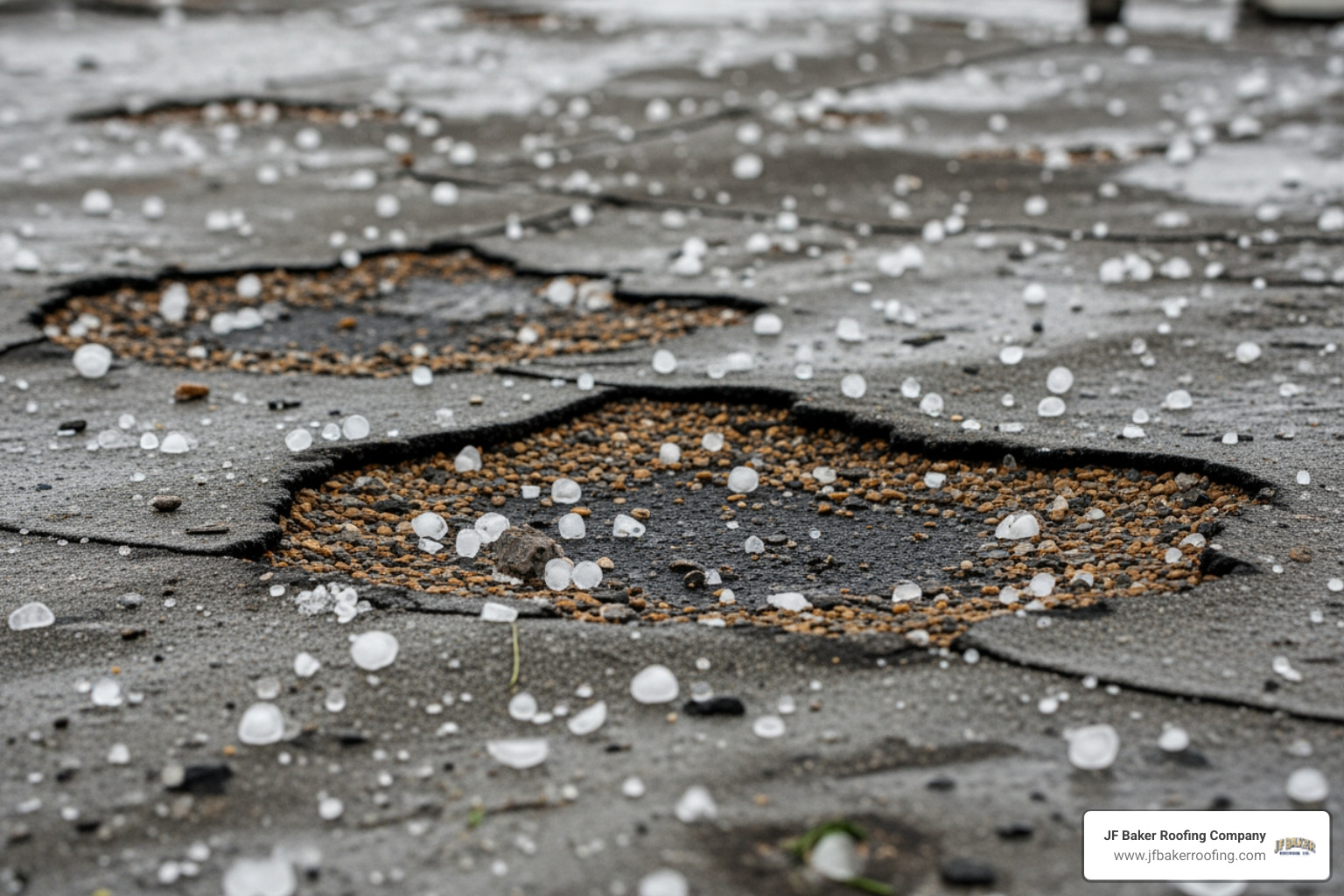
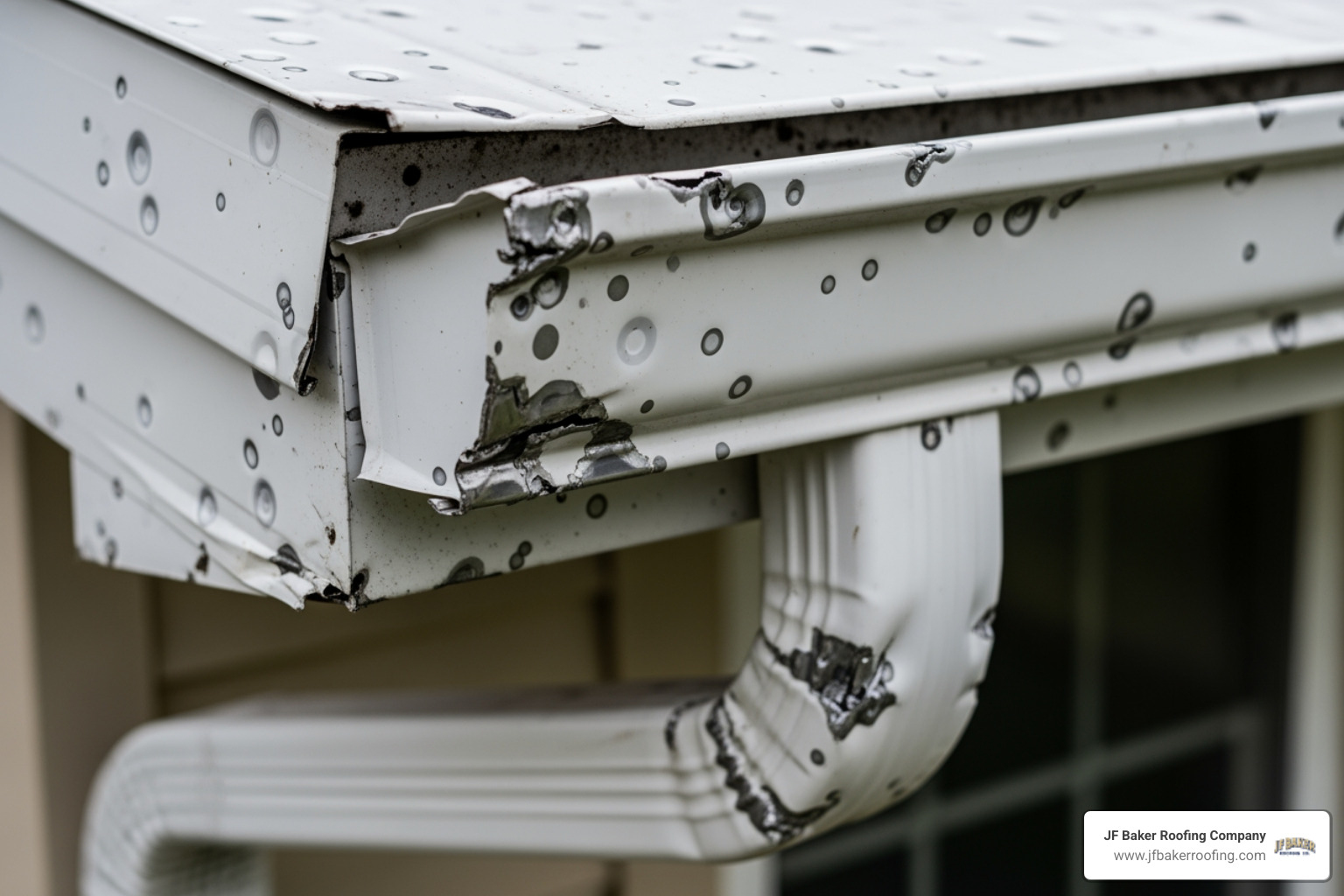
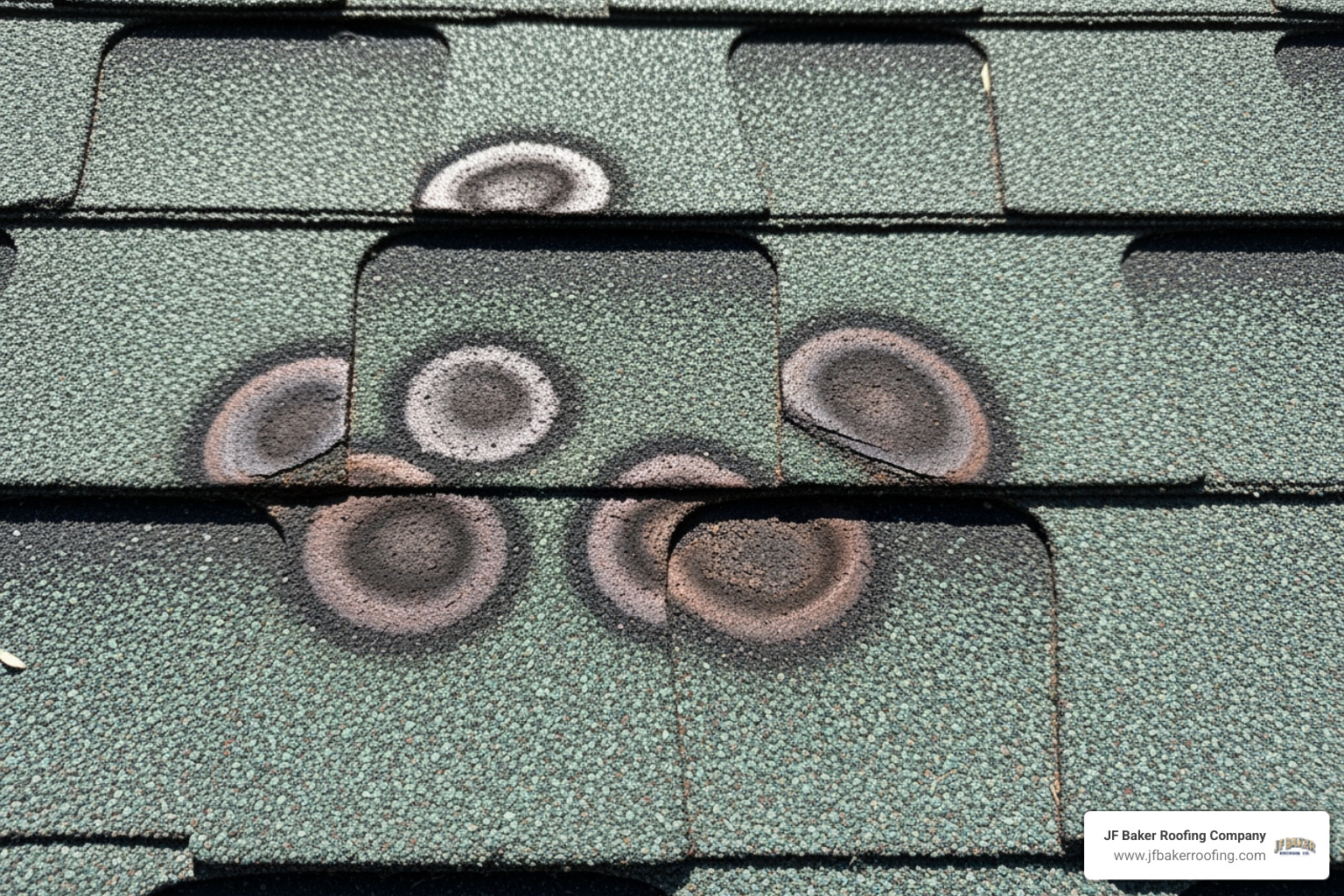
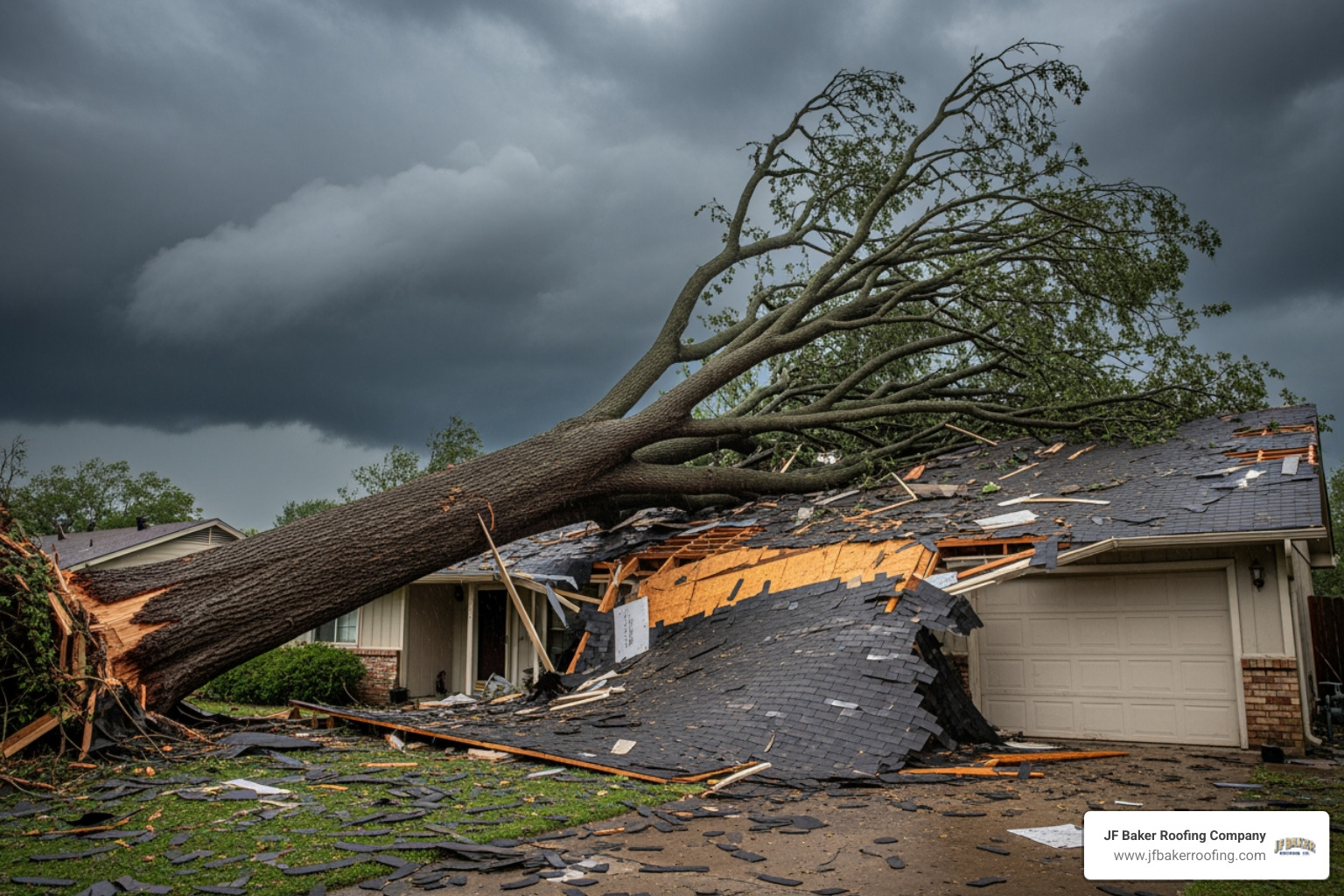
High winds in Whitehall can reach speeds that pull membranes away from the roof deck or blow heavy debris onto the roof surface. Hail is another major culprit. Large hailstones can bruise or puncture TPO and EPDM, and they can dent metal roofs, compromising the protective coatings. Even if you don't see a hole, hail damage can significantly shorten the lifespan of your roof.
Winter Woes: Ice Dams and Heavy Snow
Winter is perhaps the most dangerous time for commercial emergency roofing Whitehall.
- Ice Dams: When heat escapes through the roof, it melts snow, which then refreezes at the cold eaves or around drains. This creates a dam that forces liquid water up under the roofing material.
- Snow Load: Flat roofs are designed to hold weight, but heavy, wet "heart attack" snow followed by rain can exceed those limits. If you hear creaking or see new cracks in the interior walls during a snowstorm, you have a structural emergency.
Summary of Seasonal Risks:
- Spring: Heavy rains and high winds testing seams and flashings.
- Summer: Hail storms and extreme UV heat causing membrane expansion/contraction.
- Fall: Clogged drains from falling leaves causing "ponding" water.
- Winter: Ice dams, freeze-thaw cycles, and excessive snow weight.
If you suspect your building has been hit, understand Central Ohio's storm risks before the next cloud rolls in.
Immediate Response and Temporary Mitigation
When we talk about "fast fixes," we aren't talking about a permanent repair that will last 20 years. We are talking about stopping the water now.
Emergency Tarping and Shrink Wrapping
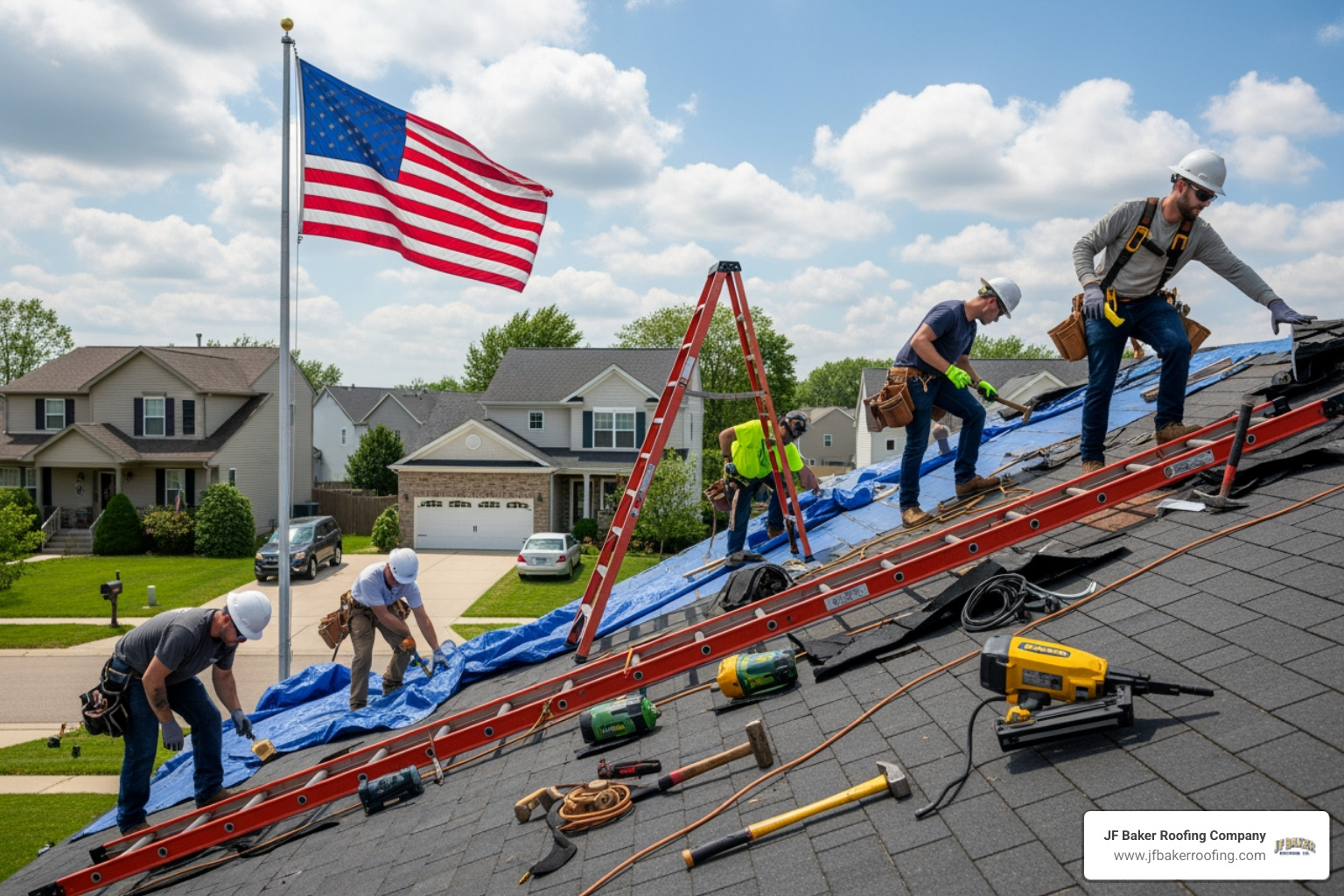
For many Whitehall businesses, the quickest way to protect the interior is professional tarping. We use heavy-duty, UV-resistant tarps secured with sandbags or wooden strips (never nails directly into a good membrane).
For more complex shapes or larger areas, we might suggest shrink wrapping. This involves a specialized plastic that is heated to form a tight, drum-like seal over the roof. It’s an excellent temporary solution that can stay watertight for weeks while we wait for insurance approvals or specialized materials to arrive.
Preventing Secondary Damage
The real enemy in a roofing emergency isn't just the water; it's what the water leaves behind. If a roof leaks and isn't dried out properly, mold can begin to grow within 24 to 48 hours. This turns a roofing repair into a full-scale environmental remediation project. By responding quickly with moisture barriers and temporary seals, we protect your air quality and your building's structural health. For more on how we protect your business, see our commercial roofing services.
Navigating Repairs, Costs, and Local Regulations
Once the immediate danger has passed, we have to talk about the permanent solution. This is where our "honest assessments" policy comes into play. We will never tell you that you need a whole new roof if a targeted repair will solve the problem.
Building Codes and Permits
Whitehall, Ohio has specific building codes that must be followed. For example, there are limits on how many layers of roofing can exist on a building. If your emergency reveals that you already have two layers of roofing, code usually requires a full tear-off rather than a patch. We handle the permitting process with the City of Whitehall Building Department to ensure everything is above board and compliant with local regulations.
Insurance Claims and Labor Factors
Navigating an insurance claim for commercial emergency roofing Whitehall can be a headache. We provide detailed reports, photo documentation, and itemized estimates that your insurance adjuster needs. Because we are a family-owned business with nearly a century of history, adjusters generally respect our assessments.
Repair vs. Replacement: What to Consider
- Immediate cost: Repairs usually cost less upfront, while replacement requires a larger initial investment.
- Lifespan: A patch may extend the roof’s life by 1-5 years. Replacement can offer 20-30+ years of protection.
- Insurance: Sudden damage repairs are often covered. Replacement may be partially covered or pro-rated.
- Business impact: Repairs typically cause minimal disruption. Replacement takes more planning and may affect operations.
- Energy efficiency: Repairs rarely improve performance. Replacement creates a chance to upgrade insulation and reflectivity.
Frequently Asked Questions about Whitehall Commercial Roofing
How quickly should a business respond to a roof leak?
Immediately. A small drip in a commercial setting is rarely just a small drip. Because commercial roofs are often flat, water can pool and travel through the insulation for dozens of feet before finding a hole in the roof deck. By the time you see a drip in your office, the insulation above it might already be saturated.
What are the benefits of a professional emergency inspection?
A professional inspection does more than find the leak. It identifies the cause. If we find that a leak was caused by a clogged drain, we can fix the drain and prevent five more leaks from happening next week. We also provide the documentation you need for insurance and for your own maintenance records.
Can regular maintenance prevent commercial roofing emergencies?
Absolutely. Most of the "emergencies" we see in Whitehall could have been prevented with a twice-yearly maintenance plan. Clearing drains, checking seams, and resealing flashings around HVAC units are simple tasks that prevent catastrophic failures during a storm. We recommend inspections in the spring (after the winter thaw) and in the fall (before the snow flies).
Conclusion
At JF Baker Roofing, we know that a roof isn't just a collection of shingles or membranes; it's the shield that protects your livelihood. We’ve been a part of the Central Ohio community since 1929, and we take that history seriously. When you call us for commercial emergency roofing Whitehall services, you’re getting three generations of integrity and a team that stands behind every roof we install.
We don't believe in high-pressure sales or "band-aid" fixes that won't hold. Whether you need a midnight tarping service or a comprehensive assessment of your warehouse roof, we provide honest answers and transparent communication. Let our reputation be your security during your next roofing crisis.
Ready to protect your business? Contact our team for commercial roofing services today, and let's make sure your roof is ready for whatever the Ohio sky throws at it next.

.jpeg)