A Homeowner Guide to Pipe Boot Repairs and Roof Penetration Seals

Why Roof Pipe Flashing Matters
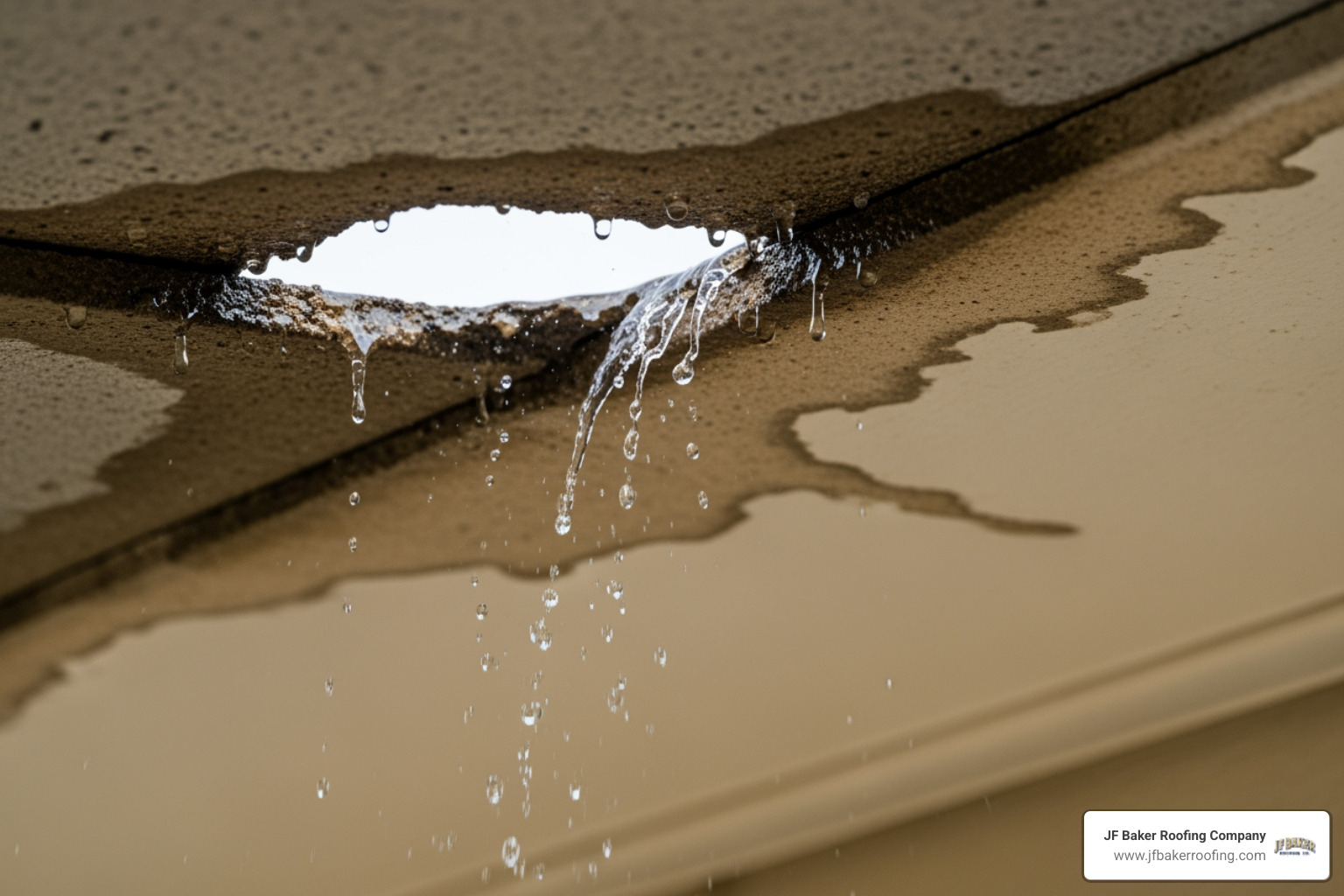
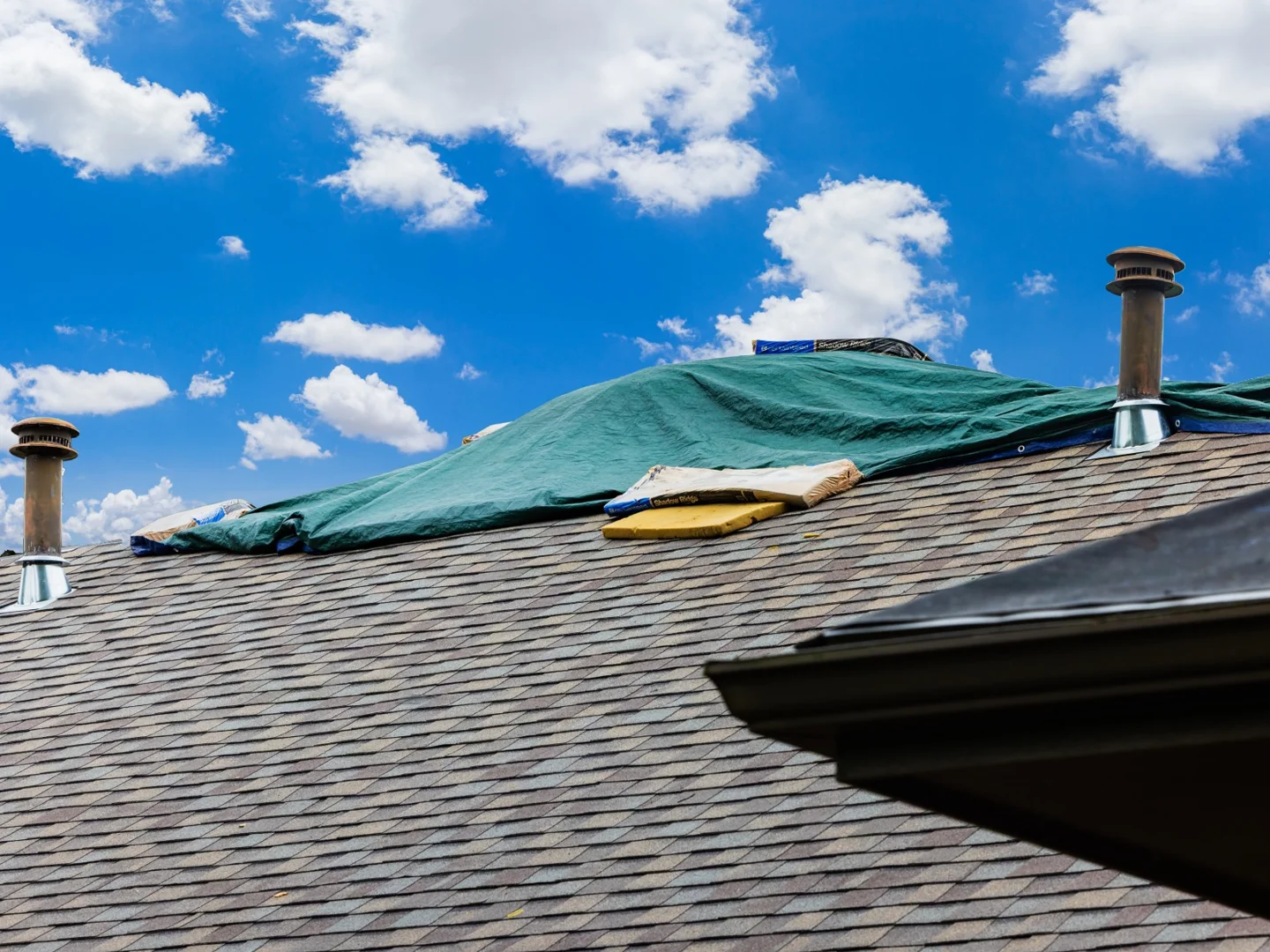
Roof pipe flashing, often called a pipe boot, seals the gap where a vent pipe passes through your roof. If you see cracked rubber, a loose base, or a ceiling stain near a vent, have the flashing checked. A damaged boot can often be replaced without replacing the roof. On shingle roofs, the new flashing must sit beneath the shingles above the pipe and over the shingles below it so rain can drain away.
I’m Chad M. Baker of JF Baker Roofing, a family-owned company serving Central Ohio since 1929, and I’ll walk you through what to look for and when a repair makes sense.
Understanding Roof Pipe Flashing Materials and Temperature Ratings
Every roof penetration creates a break in your home's exterior envelope. Plumbing vents, electrical masts, and exhaust flues must pass through the roof deck to allow sewer gases to escape and appliances to vent. Without a properly engineered seal, rainwater will run down the outside of the pipe directly into your attic, ruining insulation, rotting roof decking, and causing drywall damage inside your home.
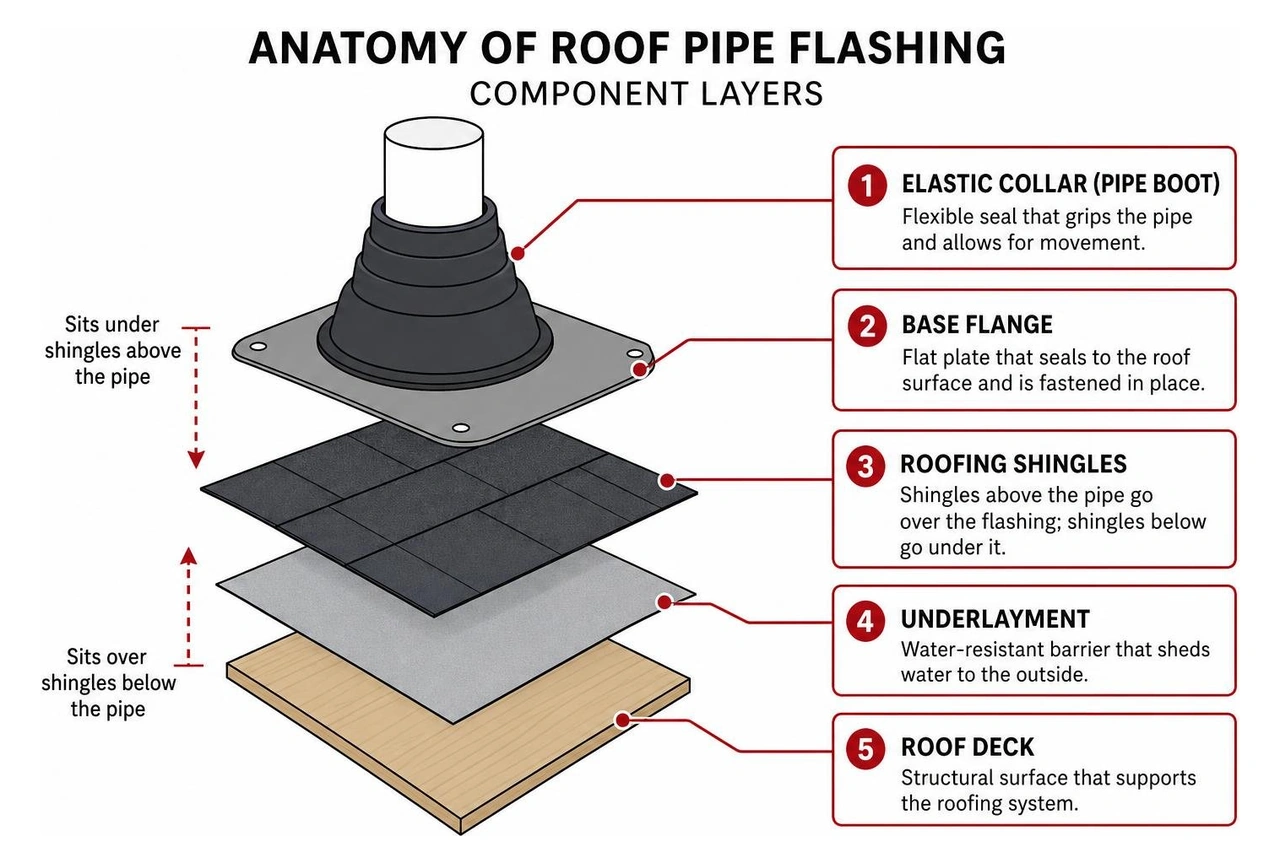
A complete roof pipe flashing assembly consists of two primary elements: a flat base plate flange that integrates into your roofing material, and an elastic collar or seal bushing that grips the pipe wall. Throughout the changing seasons in Central Ohio, your vent pipes expand and contract vertically due to indoor temperature shifts, while the roof deck moves horizontally with outdoor thermal cycles. Quality pipe flashing must accommodate this continuous movement without tearing, separating, or losing its compression seal.
Material Comparison: EPDM Rubber vs Silicone
The rubber collar on a pipe boot faces relentless ultraviolet radiation, ozone exposure, and dramatic temperature swings. Selecting the correct elastomer determines whether your seal lasts for decades or fails within a few seasons.
- EPDM (Ethylene Propylene Diene Monomer): This is the industry standard for general plumbing vent pipes. High-grade EPDM can handle continuous operating temperatures ranging from -55°C (-67°F) up to 100°C (212°F). It delivers proven resistance to UV rays and ozone degradation under normal household conditions.
- Silicone Elastomers: When venting hot exhaust from appliances, stoves, or heating equipment, standard rubber degrades quickly. High-consistency silicone elastomeric boots provide an extended service range, handling sub-zero conditions down to -74°C (-101°F) and continuous heat exposure up to 225°C (437°F). Silicone also provides top-tier resistance against harsh weather fatigue.
For complex commercial applications and metal roof profiles, reviewing PIPE-MASTER PIPE FLASHING specifications ensures that the selected rubber compound meets the required environmental demands.
Metal Base Options: Galvanized and Stainless Steel
The base plate secures the flashing assembly to the roof deck and guides water safely around the penetration. Selecting the right metal prevents premature rust and failure:
- Galvanized Steel: Standard residential flashings often utilize 24-gauge G-60 galvanized steel. When treated with factory-applied Kynar protective coatings, these plates resist chipping, chalking, and rust while matching the color scheme of your roof covering.
- Marine-Grade 316L Stainless Steel: For homeowners seeking permanent longevity or properties exposed to harsh environmental factors, 316L stainless steel (typically 0.0197 inches thick) provides unmatched corrosion resistance. It easily passes rigorous salt spray testing (ASTM B 117-09), ensuring the base outlasts standard sheet metals.
If you suspect water is bypassing an older metal base, our comprehensive roof flashing repair guide covers how flashing components work together to protect your home.
Sizing, Roof Pitches, and Specialty Penetrations
A watertight seal requires an exact physical fit. Vent pipes are manufactured to specific plumbing and electrical dimensions, meaning your flashing must match the outer diameter precisely to maintain continuous compression.
Standard residential plumbing stacks in Central Ohio typically use Schedule 40 PVC DWV (drain, waste, and vent) pipes. Common nominal sizes include:
- 1¼-inch pipe (1.660" actual outside diameter)
- 1½-inch pipe (1.900" actual outside diameter)
- 2-inch pipe (2.375" actual outside diameter)
- 3-inch pipe (3.500" actual outside diameter)
- 4-inch pipe (4.500" actual outside diameter)
Commercial roofing projects often feature much larger mechanical lines and conduits, with flexible boots designed to accommodate pipe diameters ranging anywhere from ¼ inch up to 24 inches.
Sizing Roof Pipe Flashing for Steep Angles and Complex Slopes
Roof pitch dramatically alters the geometry of the hole where the pipe exits the roof deck. On a flat roof, the pipe penetrates at a 90-degree angle, creating a round opening. As the pitch steepens, that opening elongates into an oval.
Standard flashing boots can become strained on steep slopes, stretching the rubber unevenly and pulling the uphill side away from the pipe. Premium modern solutions like the Ultimate Pipe Flashing® data sheet show that advanced engineered seal bushings with a minimum wall thickness of 3.6mm (0.144") can comfortably adapt from flat roofs up to steep 18/12 pitches without requiring field modifications.
For extreme architectural slopes between 35° and 65°, purpose-built extreme angle flashings are essential to prevent over-stretching the rubber collar. When working on roofs steeper than 20° (approximately 4.5/12 pitch) with standard flexible boots, a good rule of thumb is to select the next larger boot size to provide extra rubber slack.
Retrofit Split Boots and Non-PVC Vent Pipe Solutions
Standard pipe boots must slide down over the open top of the pipe. However, in many situations, the top of the penetration is inaccessible because of:
- Overhead electrical service connections on power masts
- Capped gas vent flues or heating exhausts
- Exterior electrical wiring, conduits, or exterior brackets
In these scenarios, a split retrofit boot is the ideal solution. These boots wrap directly around the pipe stem and are mechanically sealed along a vertical seam using stainless steel closure clips, grippers, or rivets.
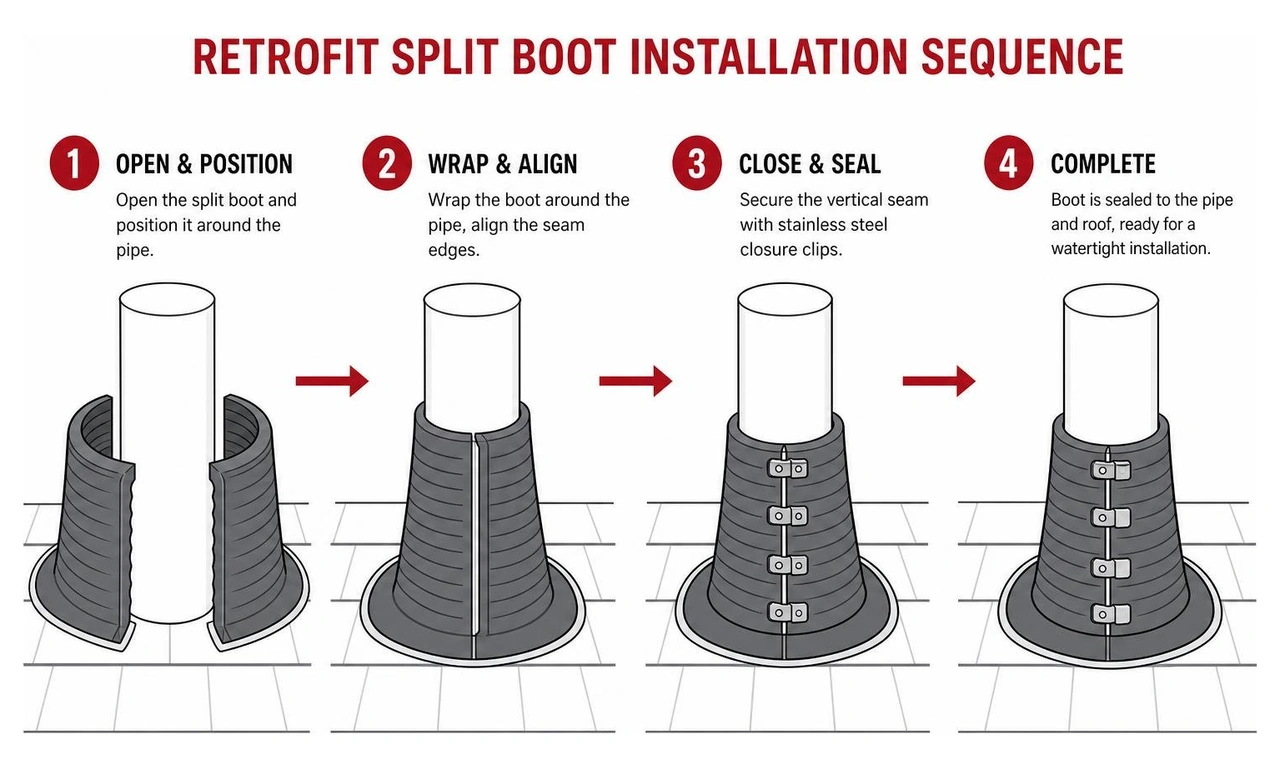
When working on historic homes throughout Columbus and surrounding neighborhoods, you will frequently encounter legacy plumbing materials such as cast iron stacks or copper vents. Because copper and cast iron have different outer dimensions and thermal expansion rates compared to standard PVC, specialized adapter sleeves or transition bushings are required to create a tight, lasting seal.
Step-by-Step Installation Across Different Roof Types
Proper installation depends entirely on integrating the flashing into the drainage plane of the specific roof covering.
Installing Roof Pipe Flashing on Asphalt Shingles and Metal Panels
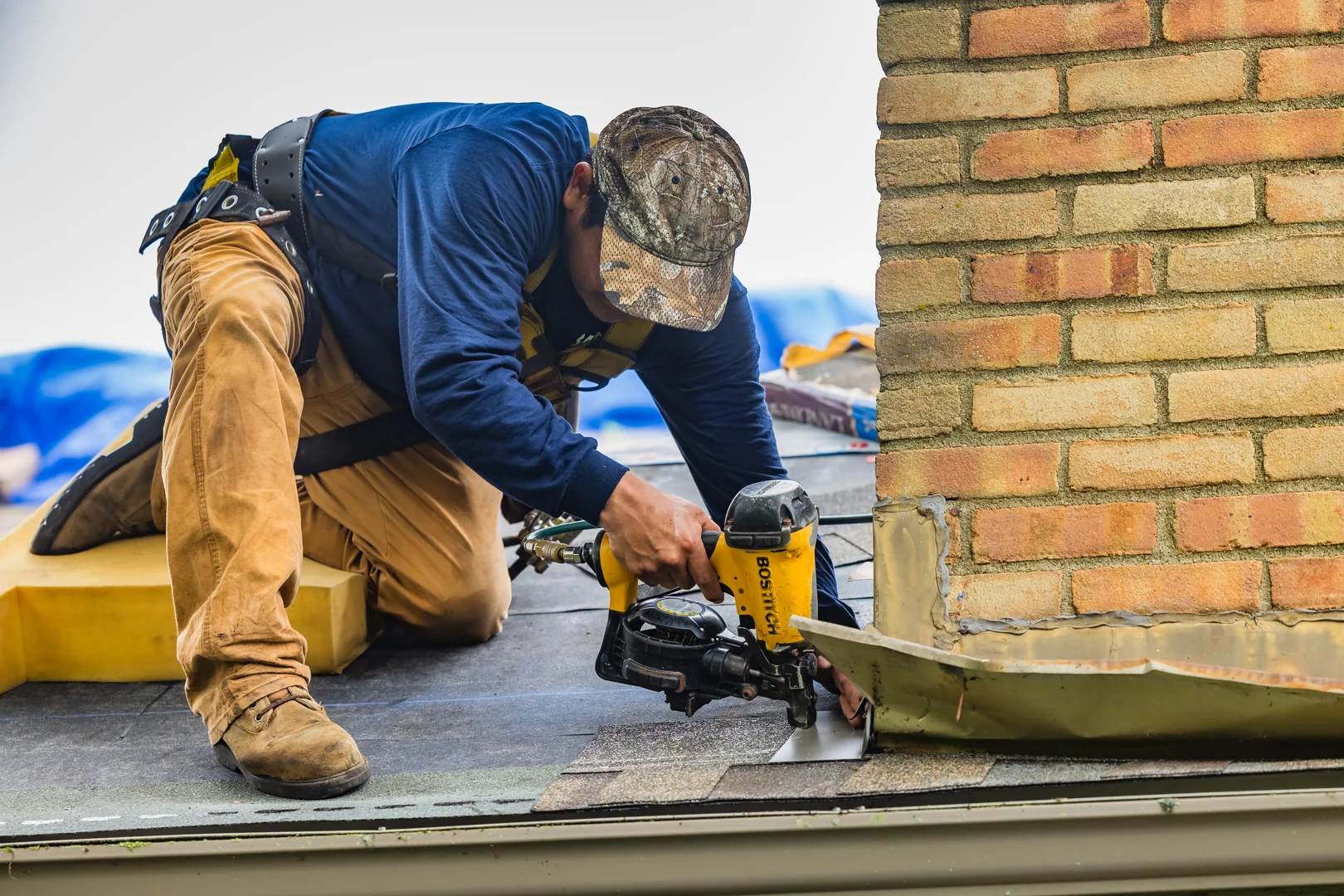
On an asphalt shingle roof, pipe flashing must follow proper shingle layering rules. The bottom and side flanges of the metal base plate sit on top of the shingles below the pipe. The top flange (headlap) and side margins slide underneath the shingles above the pipe. This configuration ensures that water rolling down the roof flows smoothly over the top of the plate, around the collar, and out onto the lower shingles.
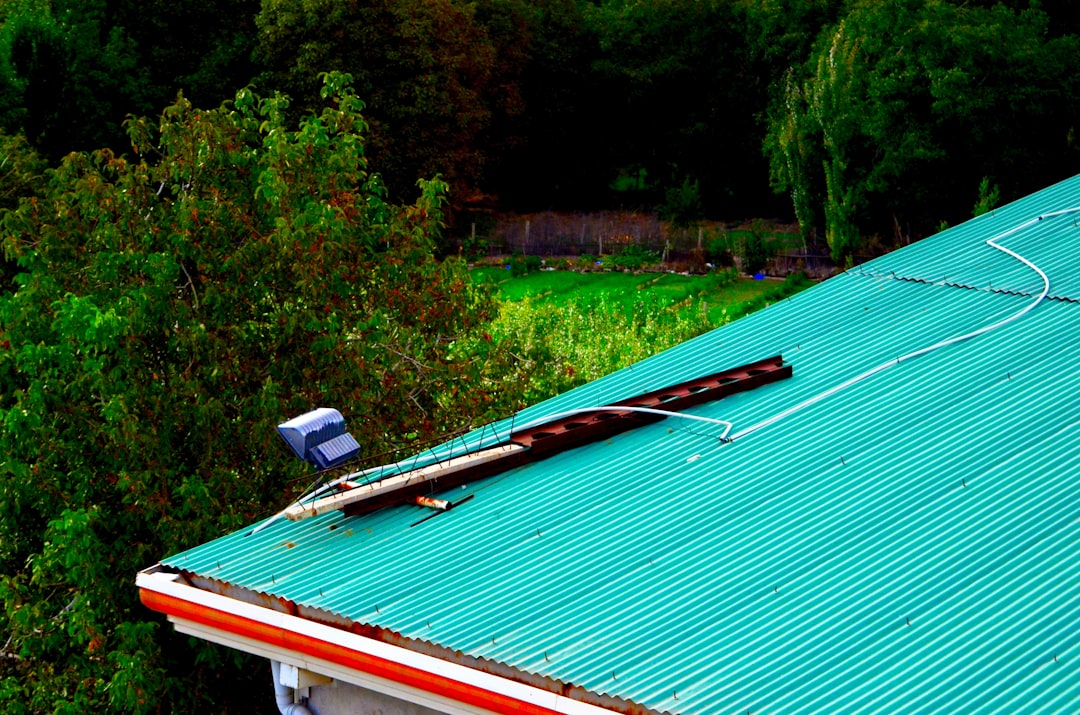
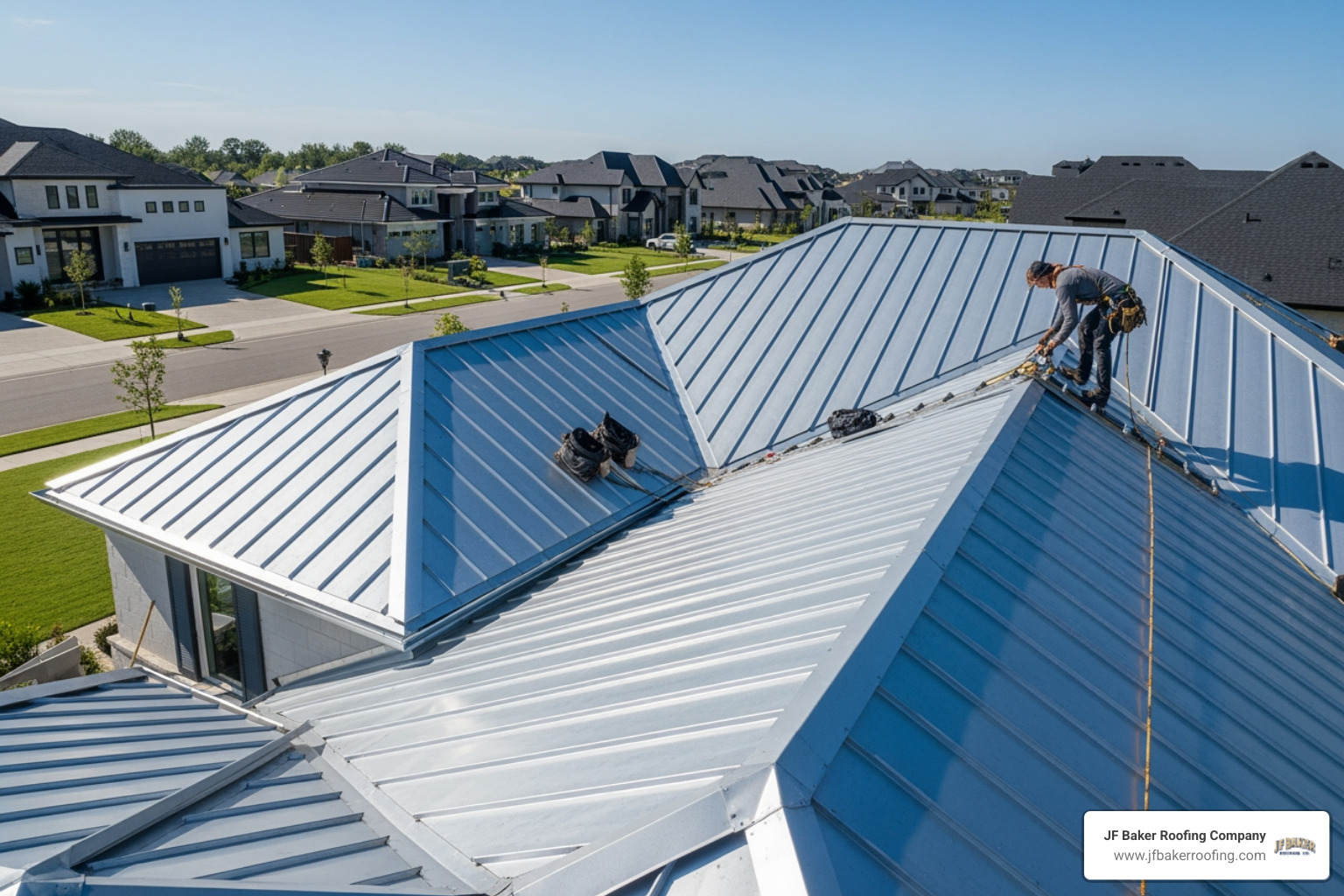
On standing seam or ribbed metal roofing, the installation technique shifts:
- Cut the Collar: Trim the flexible boot opening approximately 20% to 30% smaller than the pipe diameter to guarantee a tight mechanical grip.
- Form the Base: Mold the flexible aluminum or metal-reinforced base ring to follow the contours and ribs of the metal panel profile.
- Apply Sealant: Lay a continuous, heavy bead of approved sealant along the underside of the base perimeter.
- Fasten Securely: Fasten the base using corrosion-resistant screws spaced every 1-1/2 inches around the perimeter, in accordance with United Plumbing Code (UPC) recommendations.
If your property features metal roofing, you can learn more about sealing roof joints in our article on metal roof penetration maintenance.
Fasteners, Lubricants, and Sealant Application
To avoid tearing the elastic collar during installation, apply a small amount of water or the manufacturer's proprietary silicone lubricant to both the outside of the pipe and the inner rim of the bushing. Never use petroleum-based lubricants or grease, as petroleum rapidly breaks down EPDM rubber.
Once the boot is slid into place, premium designs often utilize a rigid PVC compression collar snapped over the flexible elastomer bushing, locking the seal against the pipe wall permanently.
When securing the flashing base, use appropriate roofing nails for shingle decks or self-tapping gasketed screws for metal panels. Apply high-grade elastomeric sealant beneath the base plate to block wind-driven rain. For detailed recommendations on choosing the right caulking compounds, refer to our expert roof flashing sealant guidelines and our breakdown of proper flashing sealant techniques.
Inspection, Lifespan, and Maintenance
A standard builder-grade neoprene or thin rubber pipe boot has an average lifespan of only 6 to 10 years. In contrast, quality architectural shingles often last 25 to 30 years or more. This means the pipe boot is almost always the first component on a roof to fail.
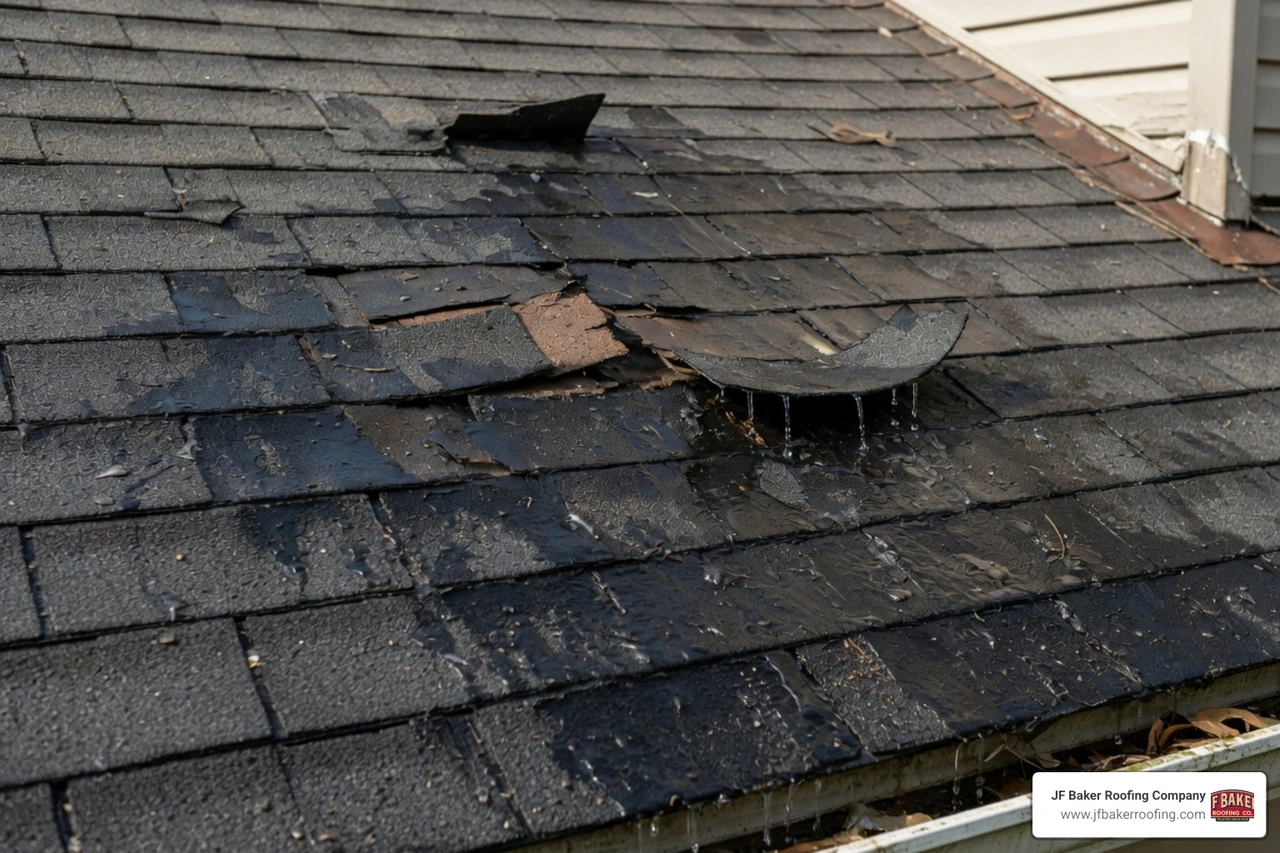
The intense summer sun in Central Ohio bakes the rubber collar, evaporating its plasticizers. Over time, the rubber hardens, loses its elasticity, and develops small fatigue cracks. During winter, water enters these micro-cracks, freezes, and expands, tearing the collar completely away from the vent pipe.
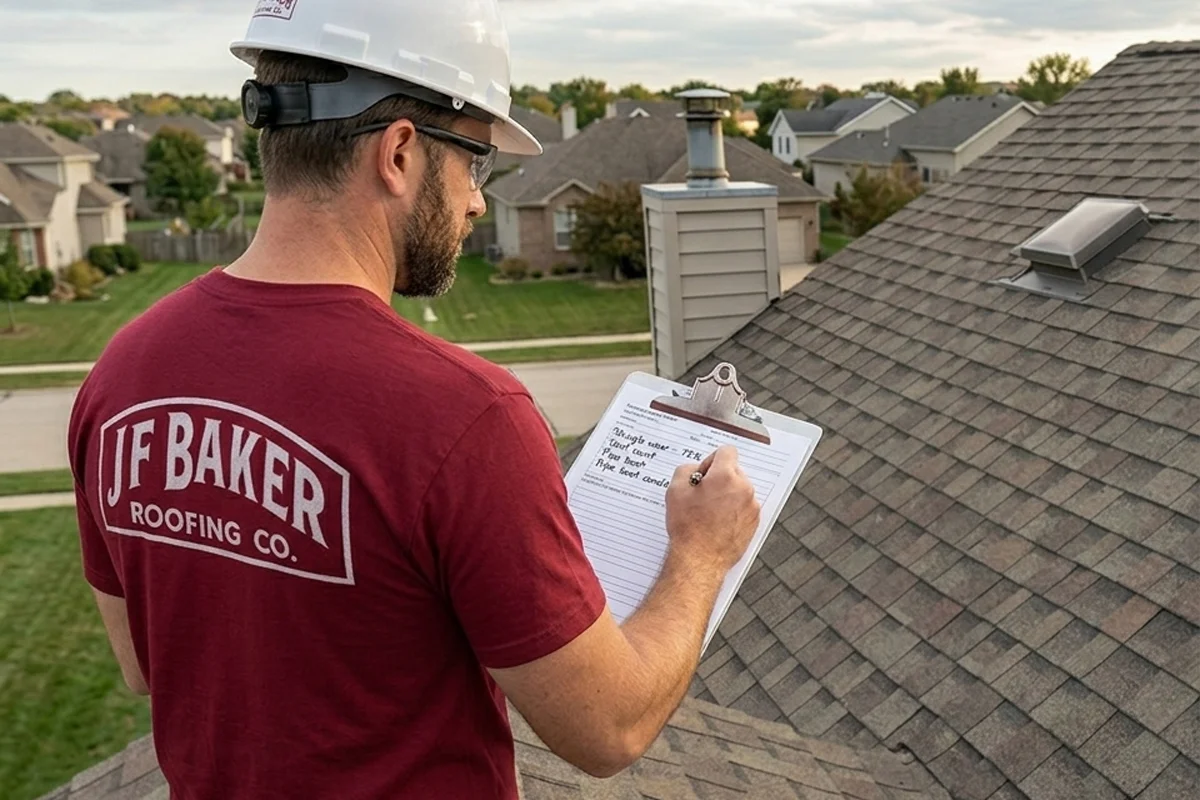
Premium pipe boots made with thick silicone bushings and heavy-gauge coated steel bases carry 20-year to life-of-the-roof warranties. To catch failing boots before water damages your home, schedule regular checkups through our regular roof maintenance services, or contact us about scheduling a roof inspection if your roof is more than five years old.
Frequently Asked Questions About Vent Pipe Seals
When should a split retrofit boot be used instead of a standard slide-over flashing?
A split retrofit boot is necessary whenever an obstruction at the top of the pipe prevents sliding a standard collar down the length of the stack. Common examples include incoming electrical power service masts, roof-mounted weather stations, gas vent caps that cannot be disassembled, and plumbing stacks with exterior bracing. The split boot wraps around the pipe and seals securely using a mechanical seam kit.
How often should plumbing vent pipe boots be inspected for damage?
Plumbing vent boots should be checked at least once per year as part of a routine exterior maintenance plan. Look for signs of dry rot, cracking along the top ring, animal chews (squirrels frequently gnaw on lead and plastic boots), and loose nails around the base plate. If you notice damp spots on your ceiling after heavy rain, reach out for professional roof flashing repair in Central Ohio right away.
Can high-temperature exhaust pipes use standard EPDM pipe flashing?
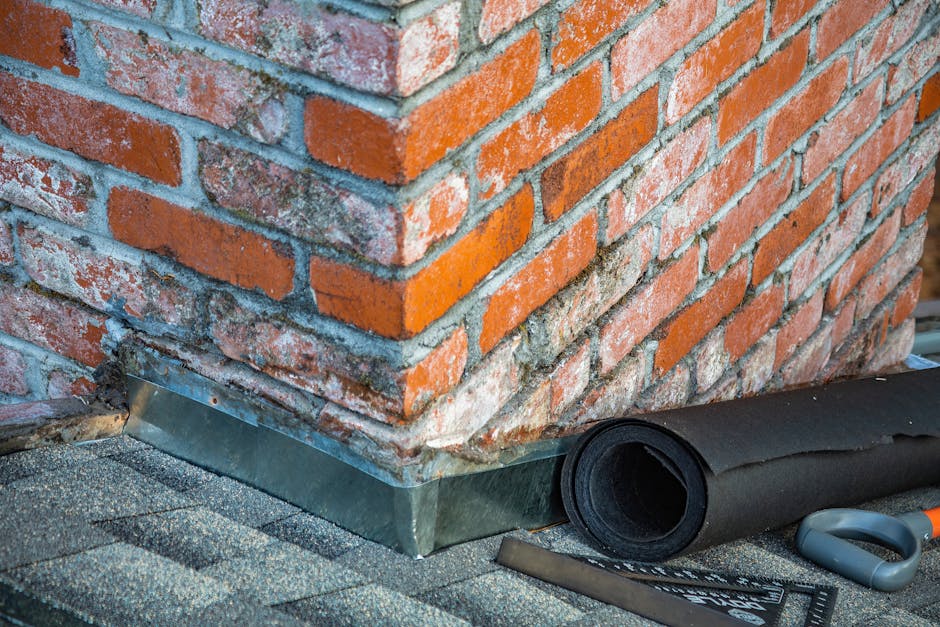
No. Standard EPDM rubber is designed for plumbing vents and has a continuous temperature threshold of 100°C (212°F). Metal chimney pipes, pellet stove flues, and zero-clearance gas exhaust stacks can easily exceed these temperatures, causing EPDM rubber to melt, char, and fail. High-temperature penetrations require red or grey silicone flashing boots capable of withstanding continuous heat up to 225°C (437°F). You can explore our related guide on chimney flashing leak repair to understand how brick and metal chimney transitions are sealed.
Conclusion
A roof is only as dependable as its penetrations. While a plumbing vent pipe may seem like a minor detail, a failed pipe boot can cause thousands of dollars in hidden attic and drywall damage. By investing in heavy-duty flashing materials, choosing the right rubber compounds for your operating temperatures, and ensuring correct installation practices, you can protect your home for decades to come.
At JF Baker Roofing, we have been serving Central Ohio since 1929. Led by third-generation owners Chad and Pat Baker, our team is built on nearly 100 years of family-owned integrity. We are a CertainTeed ShingleMaster Preferred Contractor, a dedicated NRCA member, and a BBB Accredited Business with an A+ rating.
We provide residential roofing, commercial roofing, roof repair, roof replacement, storm damage roofing, gutter installation and repair, and custom sheet metal work across Columbus and surrounding communities, including Dublin, Upper Arlington, Hilliard, Grandview Heights, Worthington, and Westerville.
Our philosophy has remained unchanged for three generations: we provide honest assessments, transparent pricing, and clean job sites with zero high-pressure sales tactics. We recommend simple repairs when repairs suffice, and full replacement only when genuinely needed.
If you suspect a vent leak or want peace of mind regarding your roof penetrations, explore our professional residential roofing services or contact our team today to schedule an honest evaluation. We stand behind every roof we install.




























.jpeg)