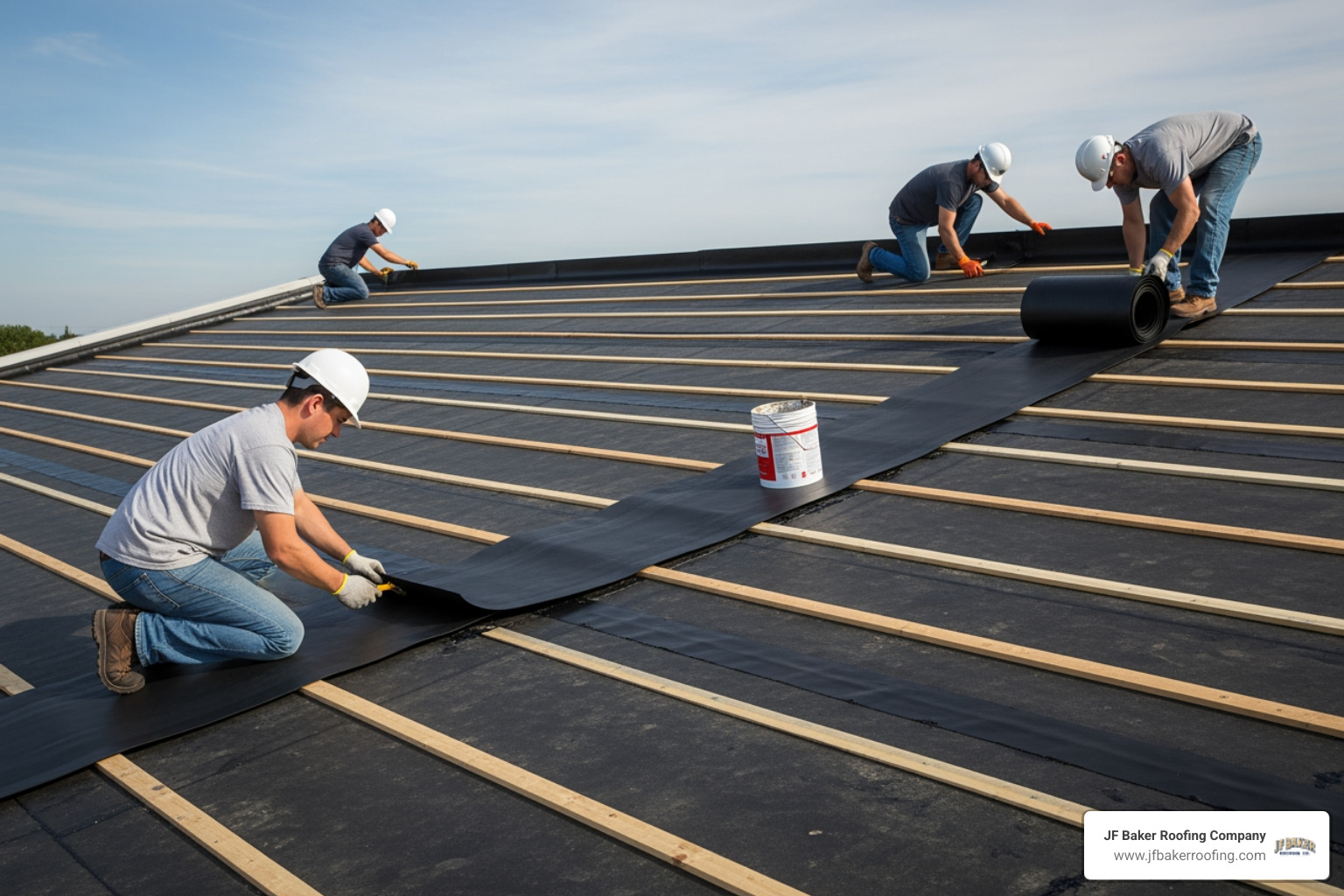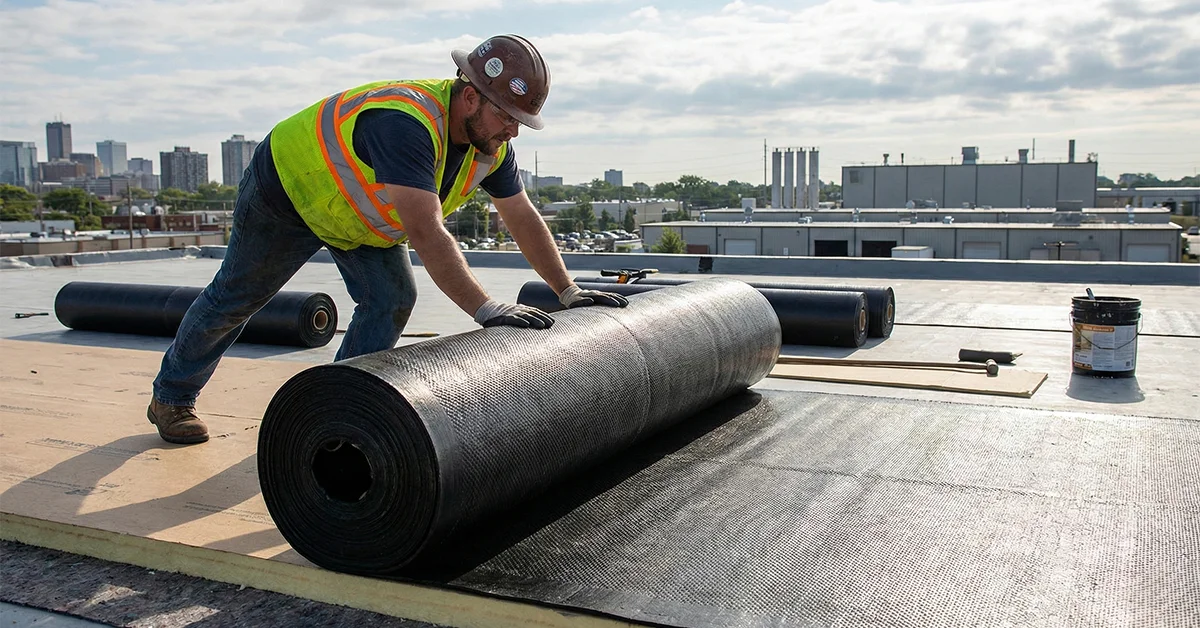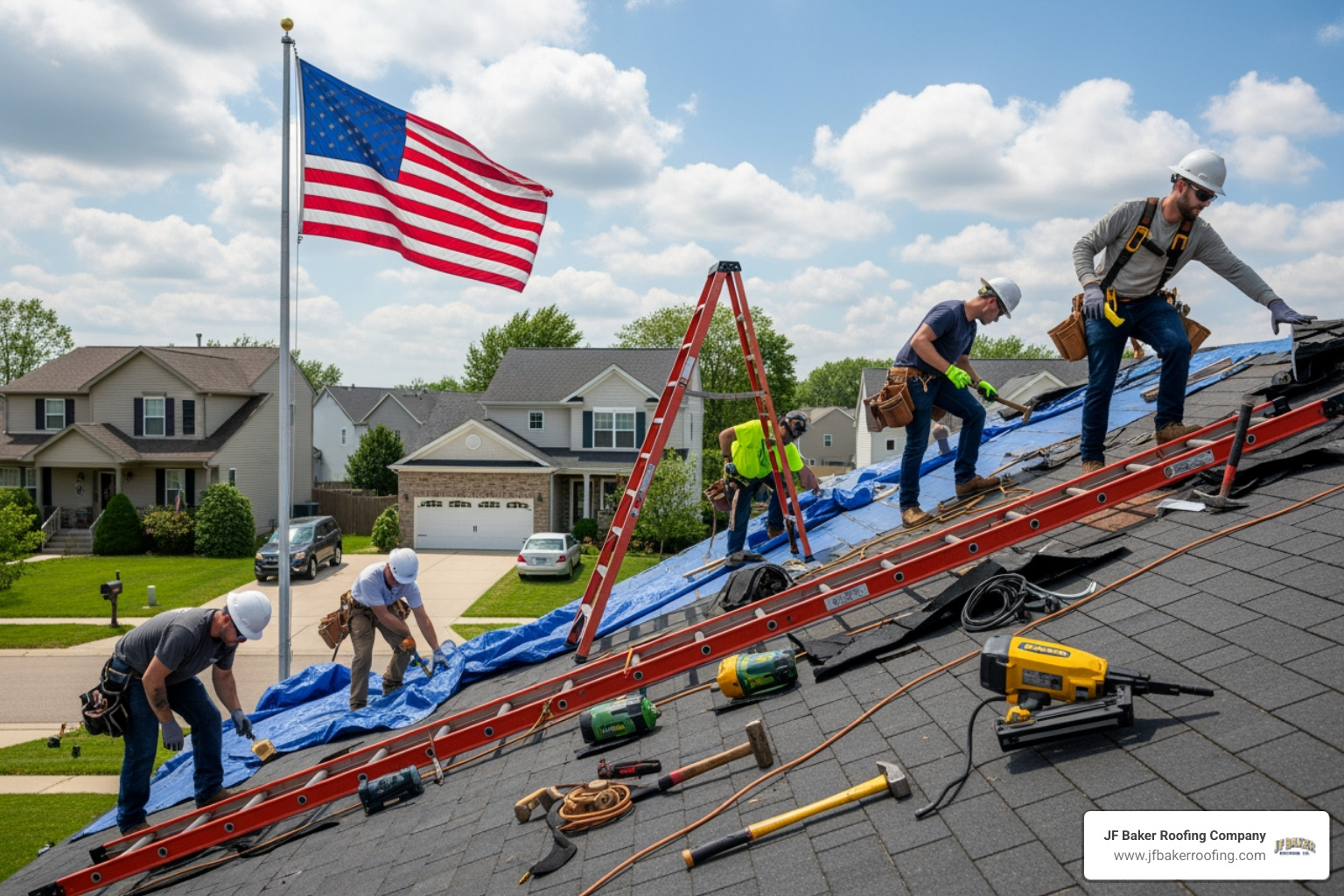
Is Your Flat Roof Storm Damage Claim Worth Filing?

Understanding Flat Roof Systems and Storm Failure Modes
#
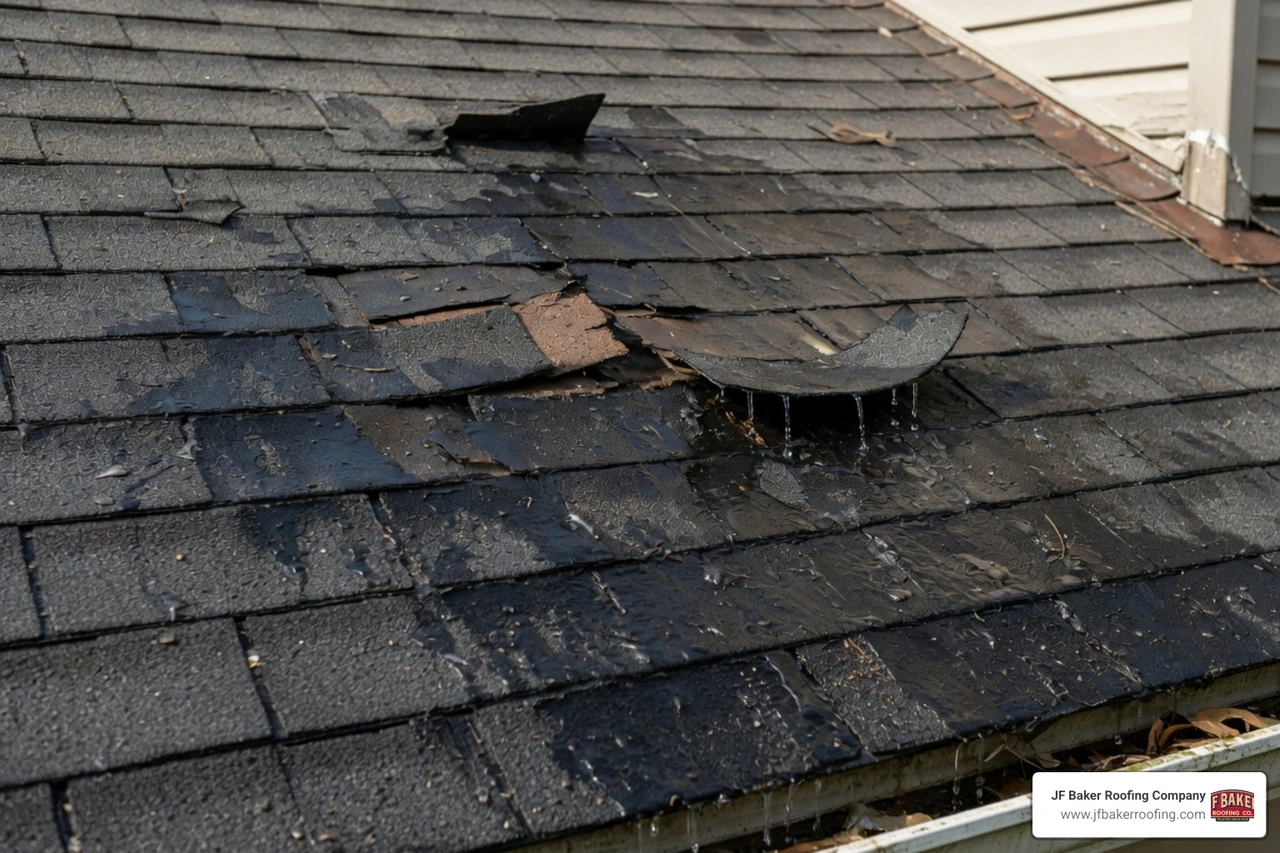
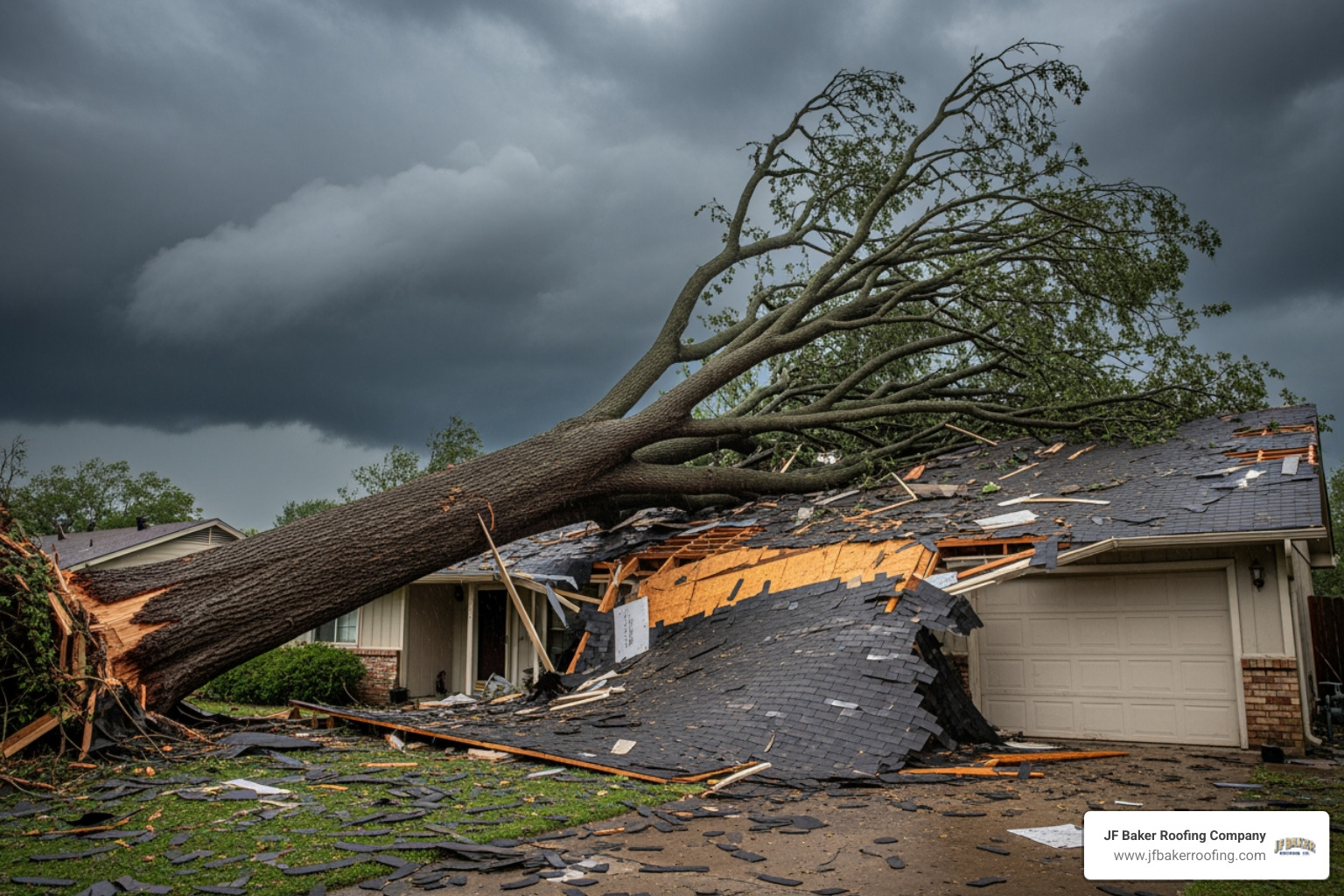
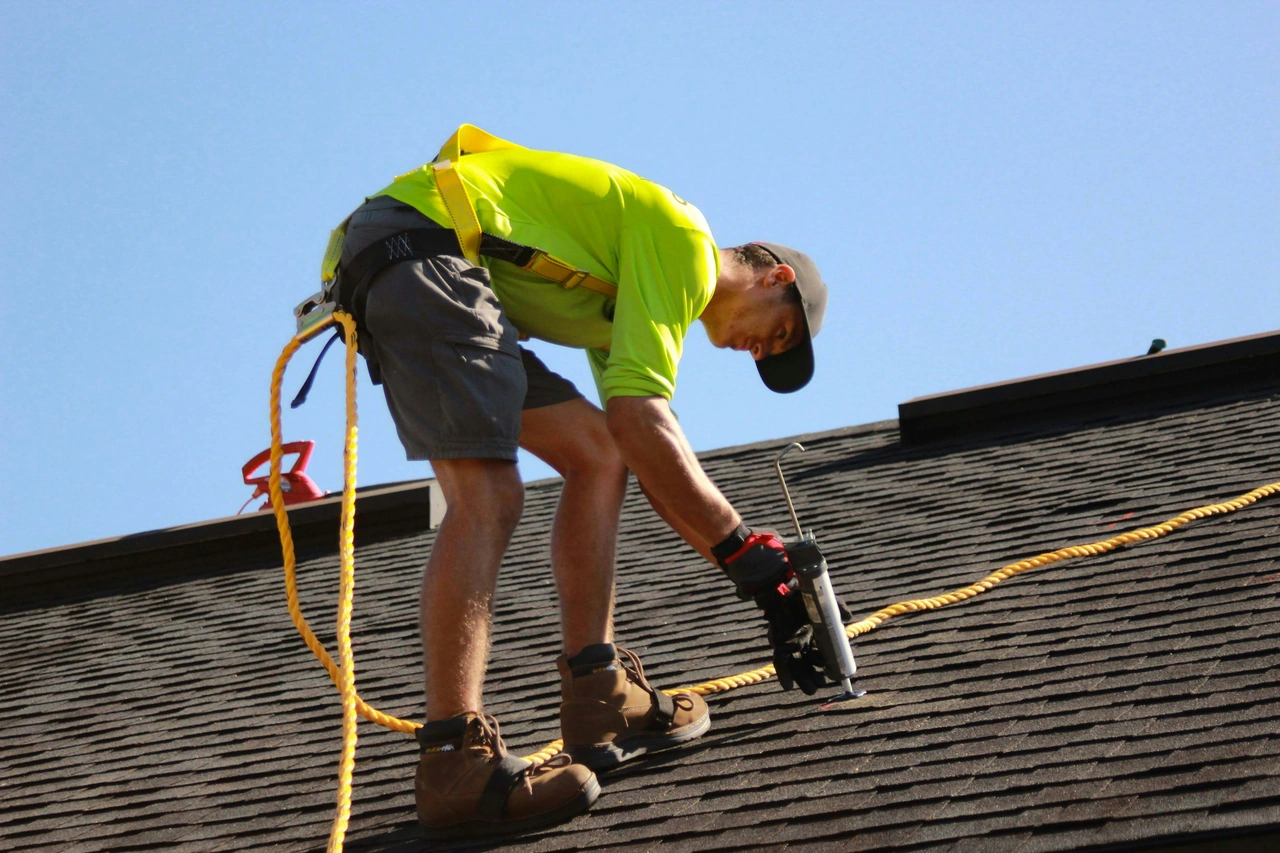
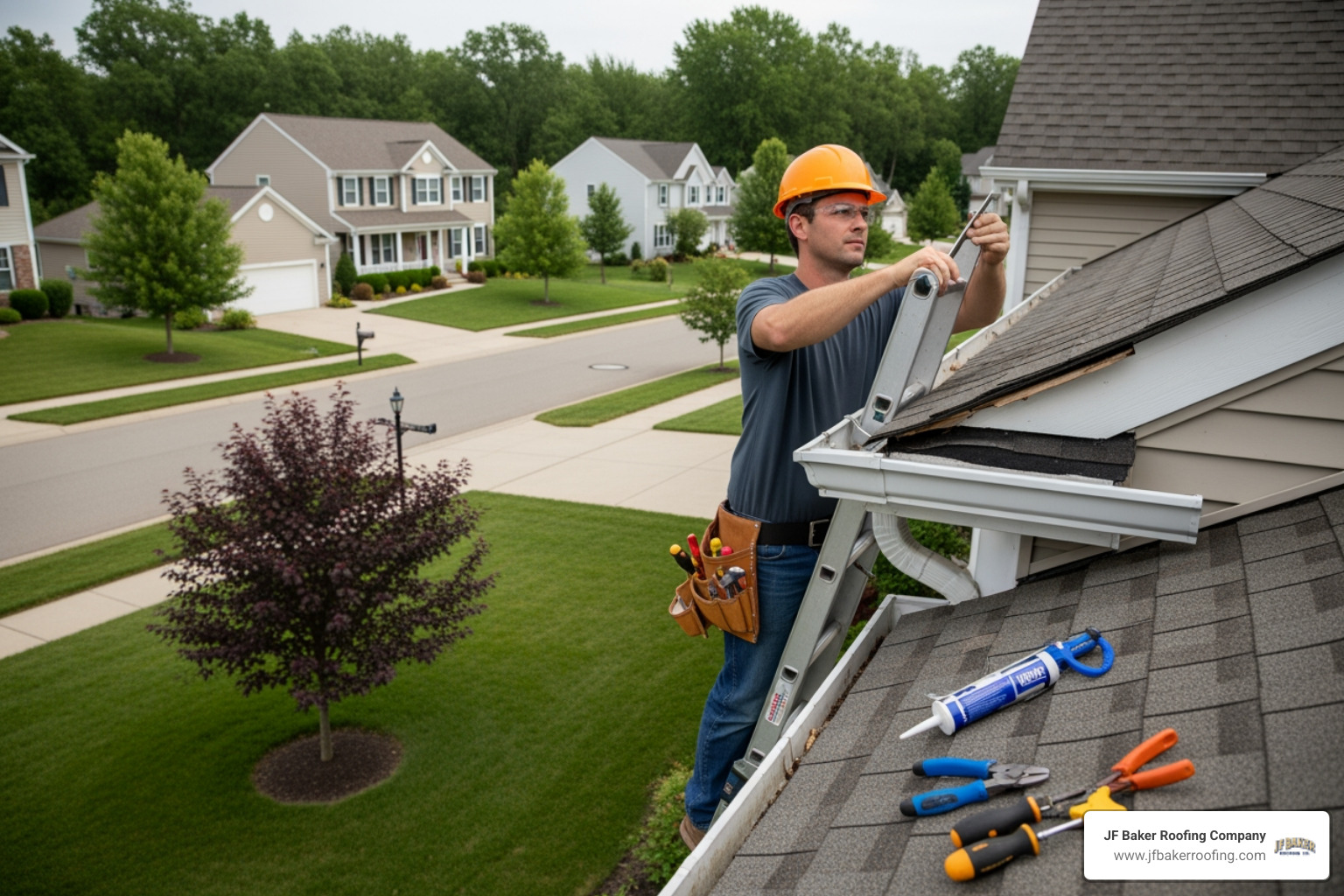
Start with the damage, not the claim form. Take photos of the roof and any leaks, protect the building from further water damage, and have a roofer inspect the membrane and seams. Then compare the likely repair cost with your deductible. A claim may be worth filing when a storm caused damage that costs more than the deductible to fix. Report the loss promptly if you plan to file, and keep records of any temporary repairs.
A flat roof can have wind damage even when the membrane has not blown off. That is why an inspection matters before you decide whether a repair is enough or a larger claim is needed.
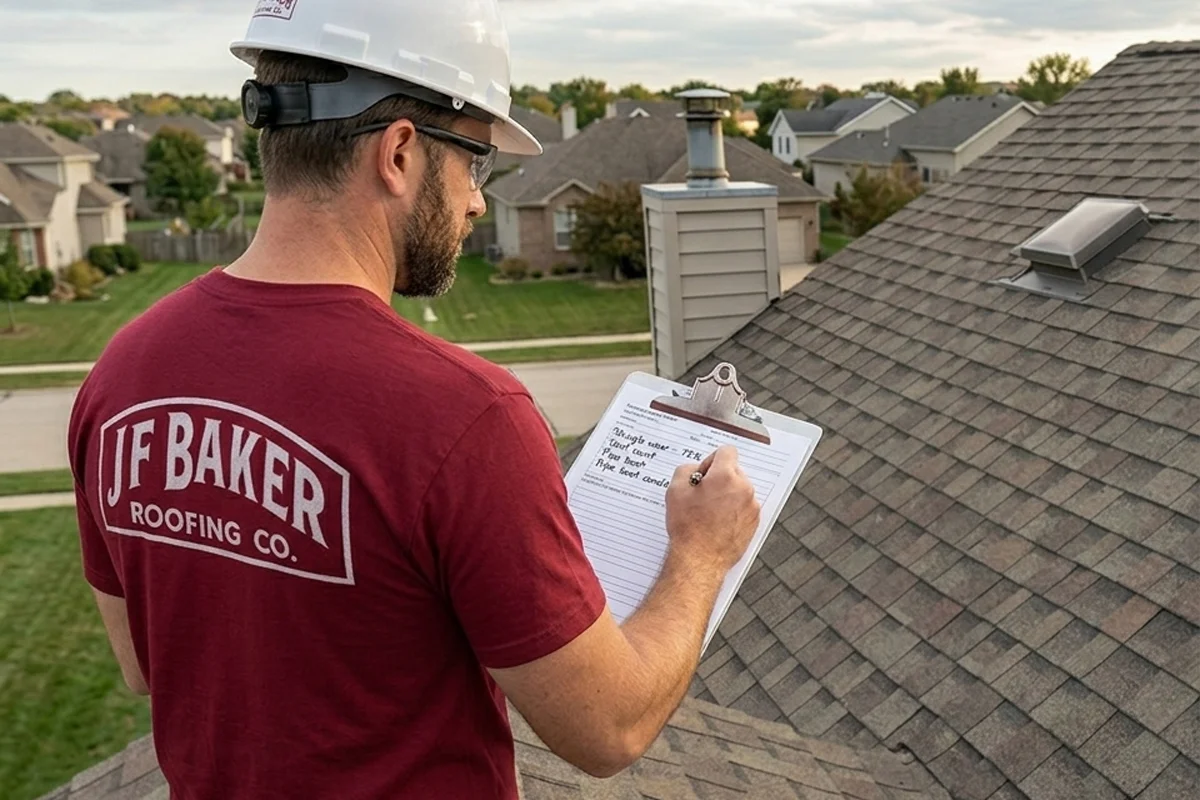
JF Baker Roofing Company has served Central Ohio since 1929. Led by third-generation owners Chad and Pat Baker, we provide residential and commercial roofing, repairs, replacements, storm damage roofing, gutter installation and repair, and sheet metal work. We're a CertainTeed ShingleMaster Preferred Contractor, an NRCA member, and a BBB Accredited Business with an A+ rating. We serve Columbus, Dublin, Upper Arlington, Hilliard, Grandview Heights, Worthington, and Westerville with honest assessments, transparent pricing, and no high-pressure sales tactics.
I'm Chad M. Baker, and I'll help you sort out what to check before you file.
Flat roof storm damage claim terms to remember:
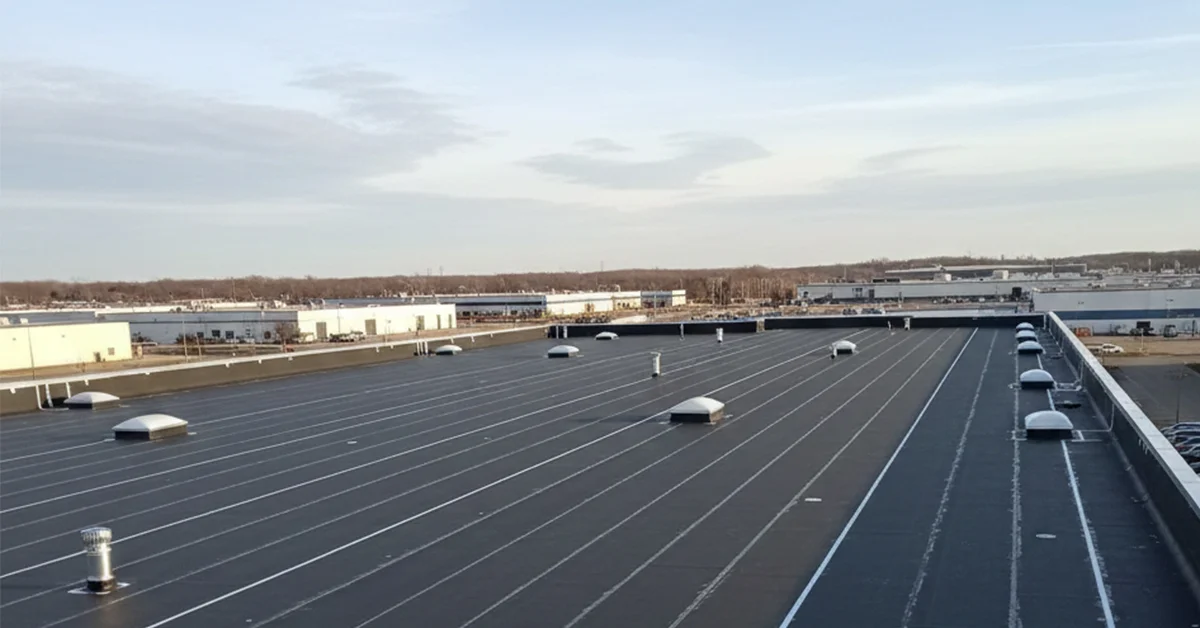
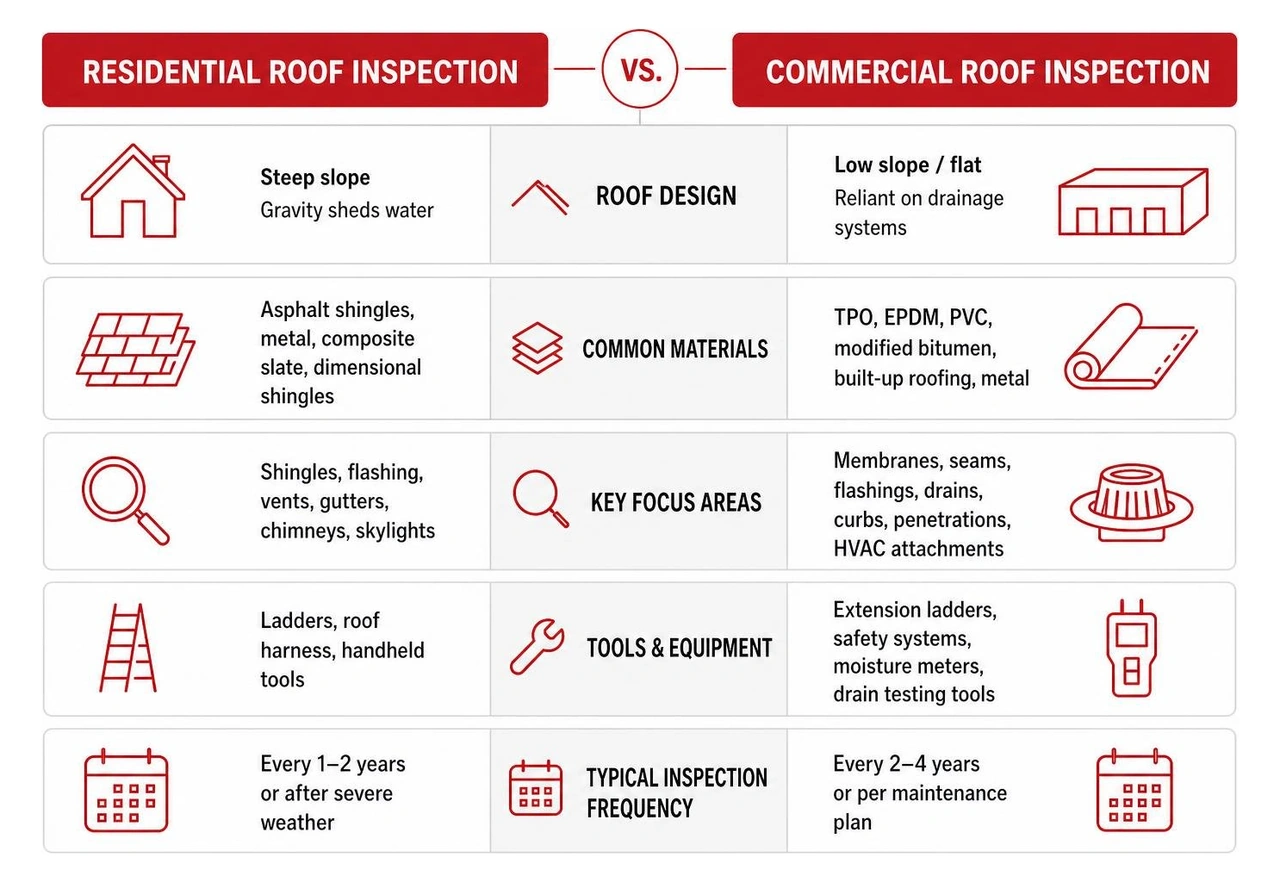
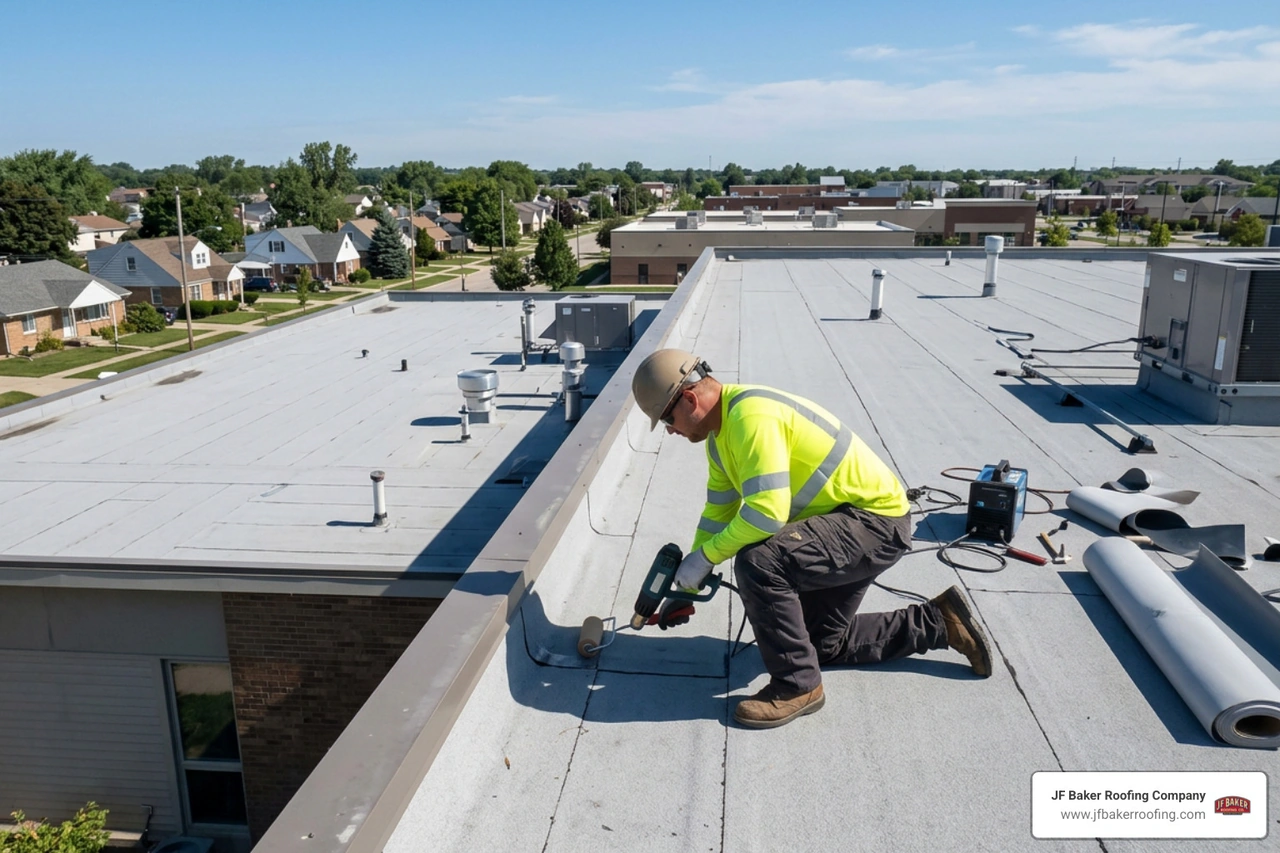
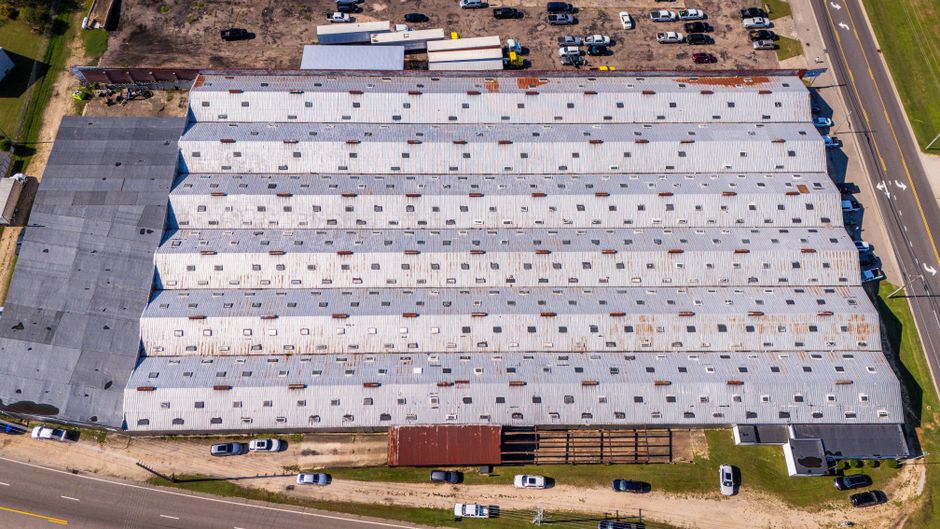
Low-slope roofs function fundamentally differently from standard pitched residential roofs. While a steep-slope roof relies on gravity to shed water across overlapping shingles or tiles, a flat roof forms a continuous watertight basin. In technical terms, a low-slope roof has a pitch of less than 3-in-12 (approximately one-quarter inch of slope per foot). Because water sheds slowly, these systems must remain entirely impervious to standing water, wind shear, and flying debris.
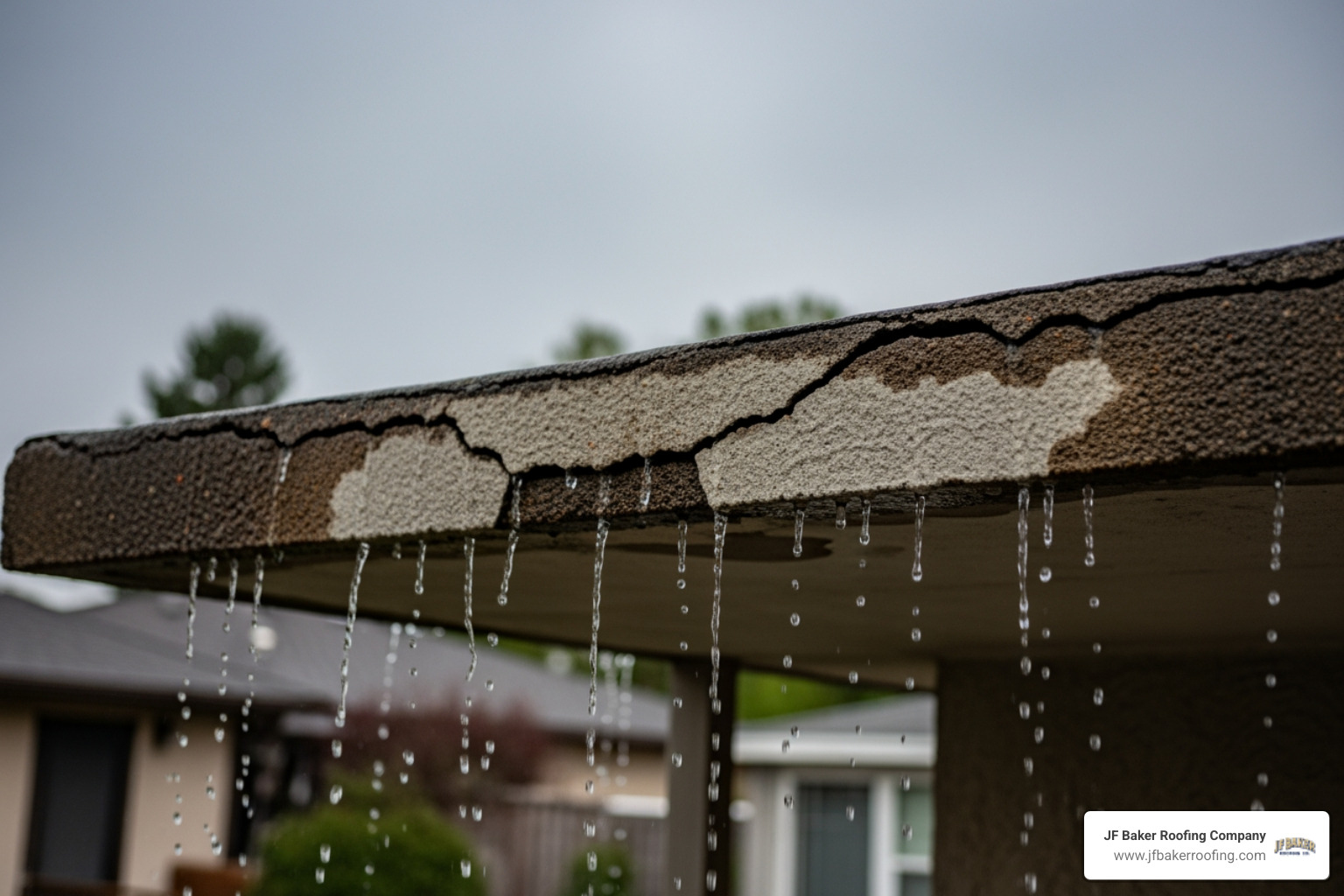
When severe weather sweeps through Central Ohio, low-slope roofs face distinct physical stresses. High-velocity winds create severe negative pressure (suction) across the roof surface, while heavy rainfall tests every seam, drain, scupper, and flashing joint. Understanding how these forces interact with your specific roof build is essential when managing a commercial storm restoration project.
Membrane Types: TPO, EPDM, Modified Bitumen, and BUR
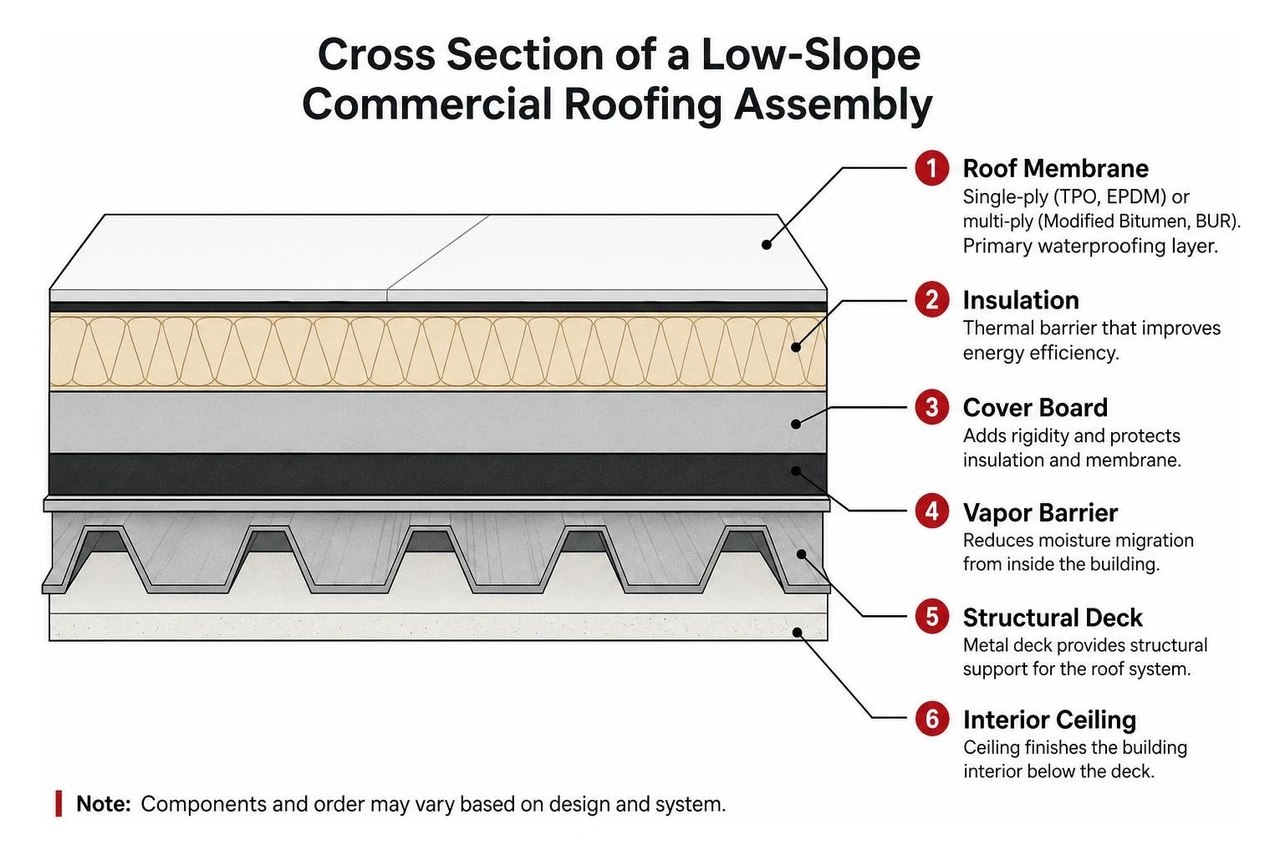
Every single-ply and multi-ply system exhibits unique failure patterns during extreme weather:
- Thermoplastic Polyolefin (TPO): TPO is a single-ply, heat-welded white membrane. In major storms, wind uplift can strain welded seams, and high-impact hail can puncture or shatter the internal reinforcing scrim beneath the surface layer.
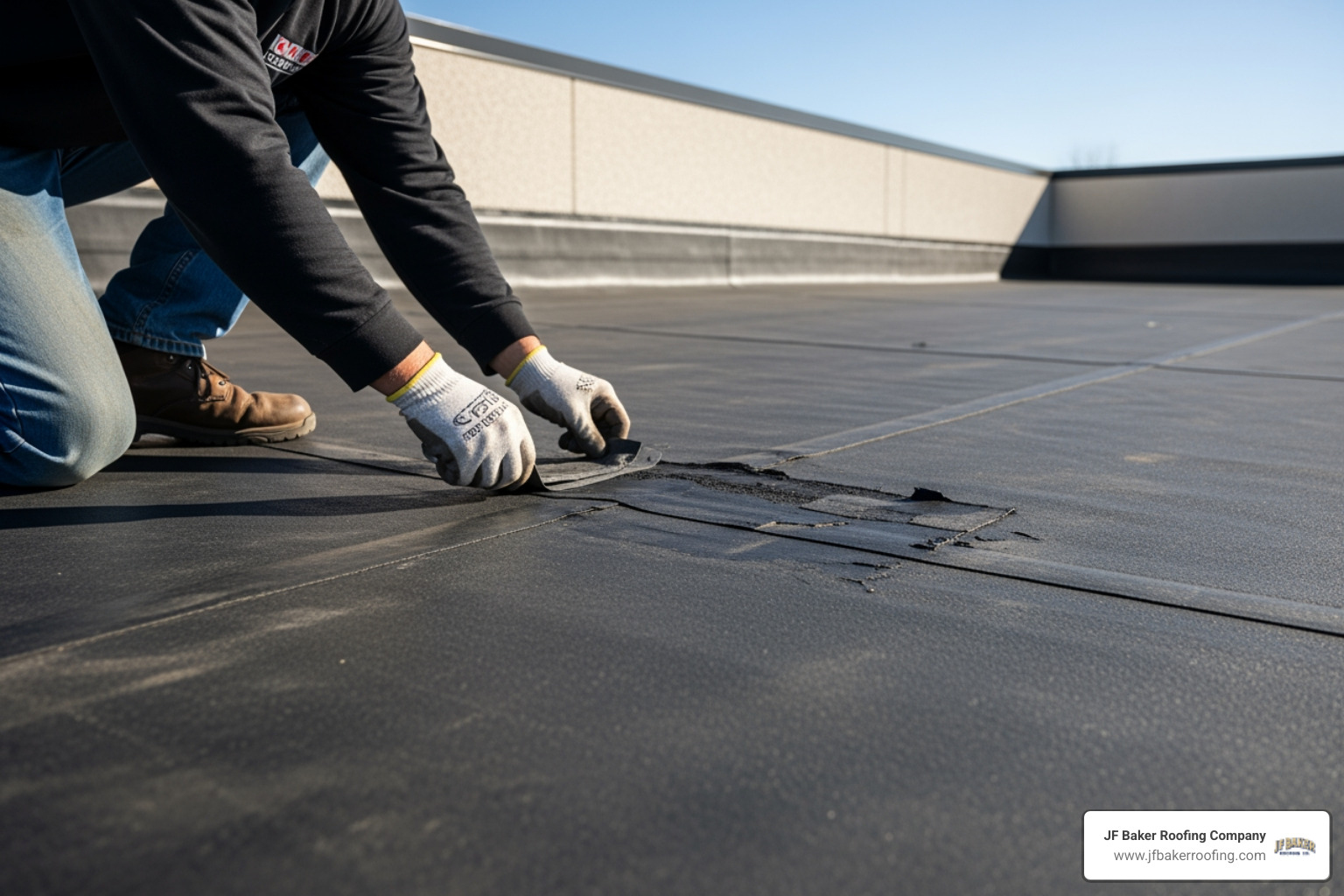
- Ethylene Propylene Diene Monomer (EPDM): EPDM is a synthetic rubber membrane commonly installed with adhesive, tape, or ballast. While rubber expands and contracts naturally, extreme winds can shear glued laps, puncture aged rubber, or scatter ballasted stone into windrows. Property owners managing these systems often rely on specialized rubber flat roof repair protocols to reseal compromised laps.
- Modified Bitumen: This asphalt-based, multi-ply system uses mineral granules for UV protection. Storms typically damage modified bitumen through heavy granule scouring, edge peeling along torch seams, and impact punctures from wind-borne debris.
- Built-Up Roofing (BUR): Often called tar-and-gravel, BUR consists of alternating layers of bitumen and reinforcing fabrics topped with gravel aggregate. Severe wind gusts can strip aggregate layers, exposing the bitumen felts beneath, while hail can crack brittle, sun-aged asphalt blisters.
Wind Uplift and Billowing Damage

Wind damage on flat roofs rarely looks like missing shingles. Instead, severe winds flowing over a building create a pressure differential known as aerodynamic uplift. According to the ASCE 7-22 wind-load standard, uplift forces are not uniform across the roof. They are divided into three specific zones:
- Zone 1 (Field): The central area of the roof, which experiences the lowest uplift pressure.
- Zone 2 (Perimeter): The outer edges along the walls, where uplift forces significantly intensify.
- Zone 3 (Corners): The corners of the structure, which experience localized vortex uplift pressures two to three times higher than the field.
When high-speed winds hit building facades, they roll over the roof edge, exerting intense suction on parapet coping metal, perimeter drip edges, and corner fasteners. If perimeter securement fails, wind gets underneath the membrane, causing it to billow like a parachute. This billowing pulls mechanical fasteners out of the decking, shears glued insulation boards, and tears welded seams, completely destroying the wind-uplift resistance of the roof system even if the membrane drops back into place without tearing.
Hail Impact and Diagnostic Testing
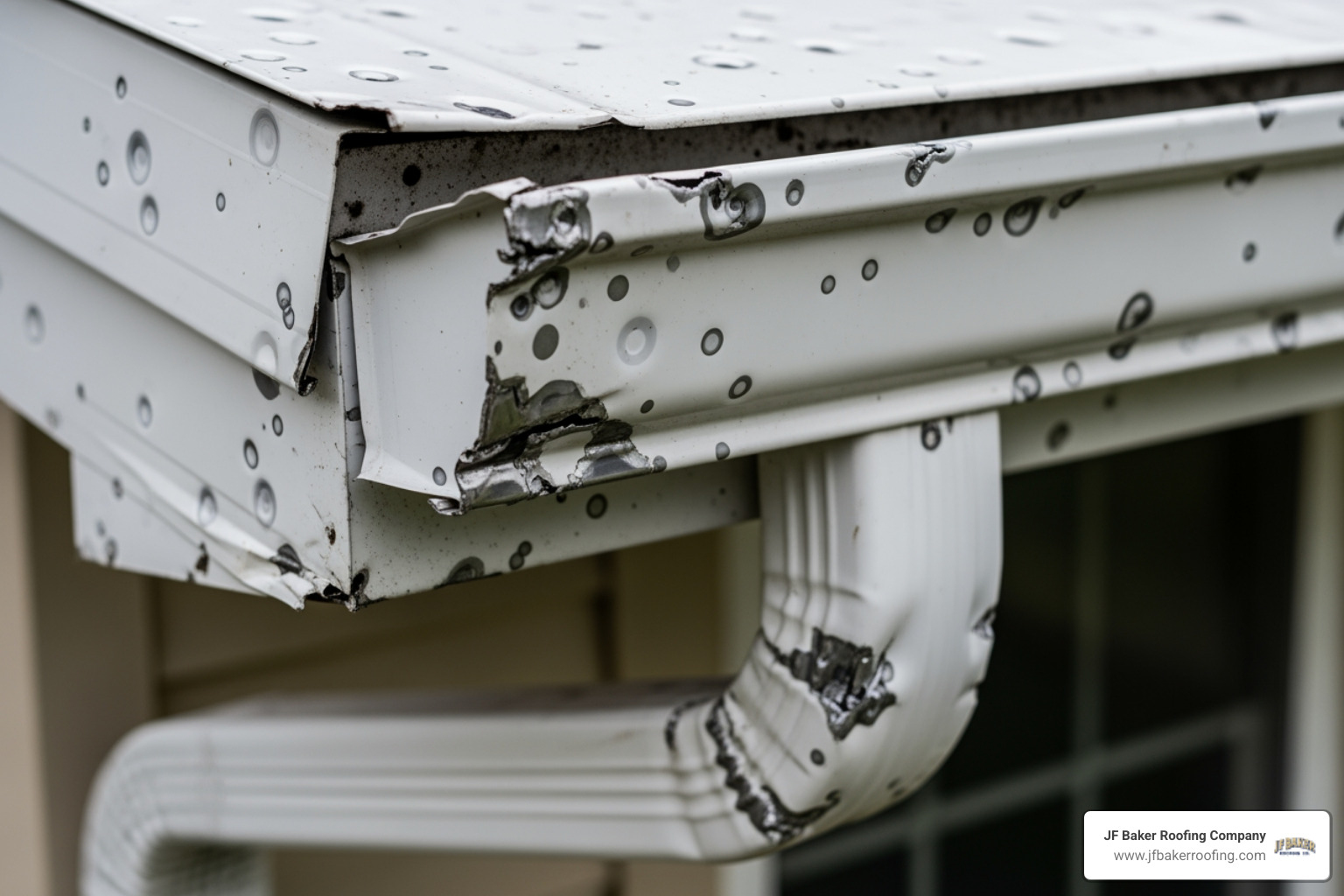
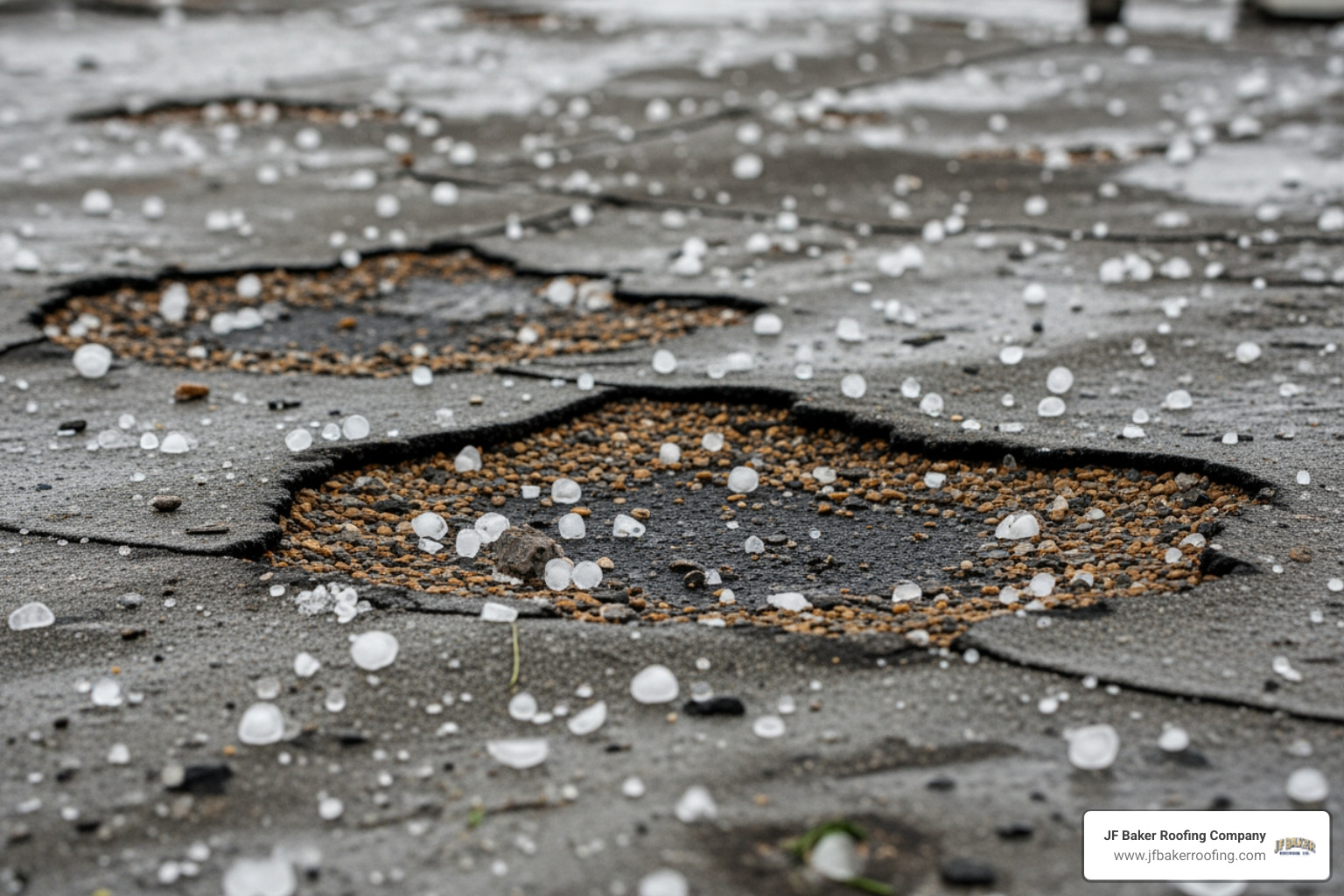
Hail damage on low-slope membranes can be difficult to see with the naked eye. While metal roof panels show visible dents, elastomeric membranes and multi-ply sheets often suffer concealed sub-surface structural fractures.
To determine the true extent of storm damage, certified roofing contractors use non-destructive and exploratory diagnostic methods:
- Chalk-Line Field Testing: Rubbing lumber crayon or sidewalk chalk lightly over suspect membrane sections highlights hidden micro-cracks, surface ruptures, and scrim fractures.
- Infrared Moisture Surveys: Thermographic imaging conducted at dusk detects temperature differences between dry insulation and wet, saturated insulation hidden beneath the membrane.
- Core Sampling: Cutting a small cross-section of the roofing assembly confirms whether water has penetrated the insulation, vapor retarder, or structural deck.
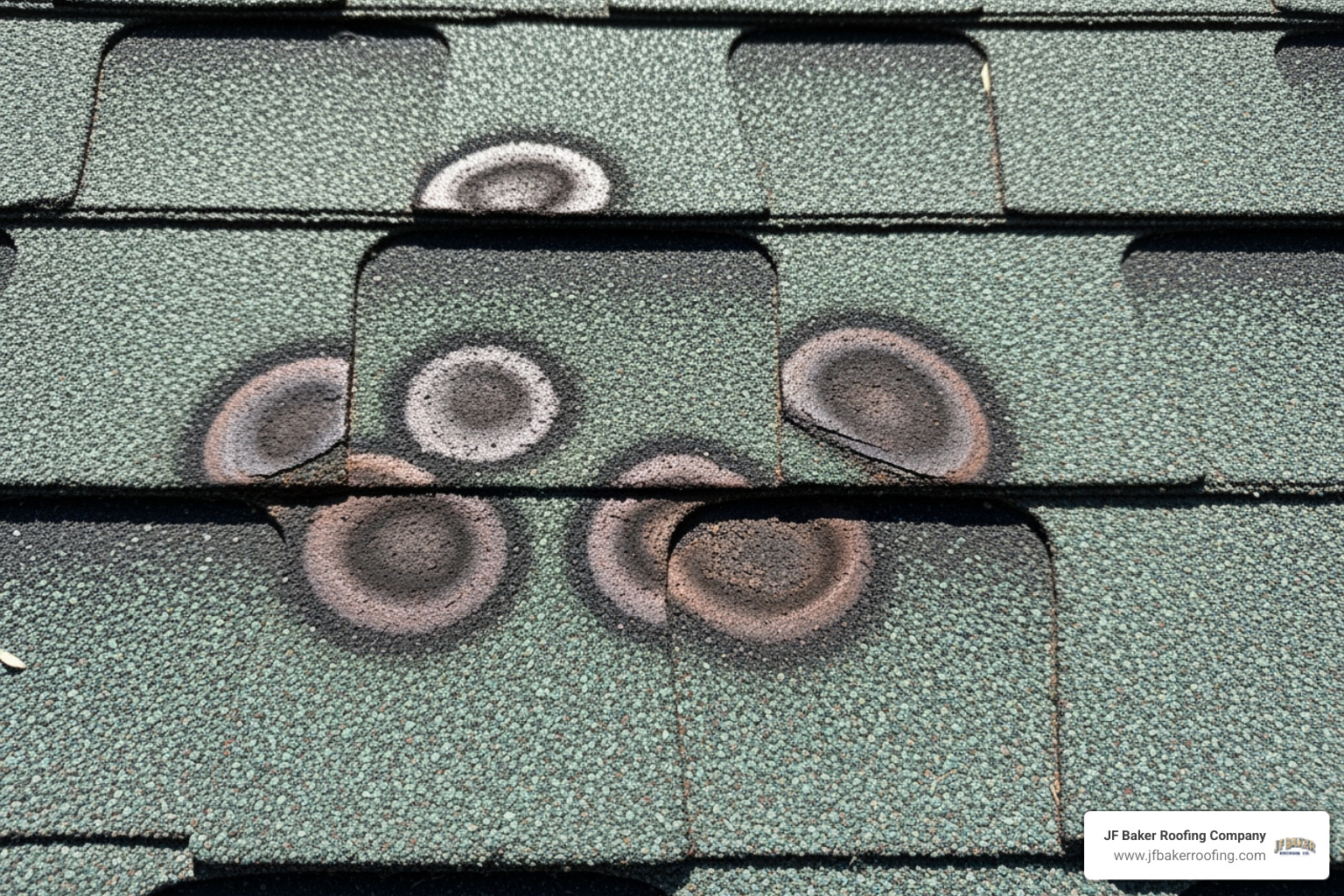
- Granule-Density Assessments: For modified bitumen and asphalt systems, contractors assess the loss of protective granules to determine accelerated aging and baseline degradation caused by hail impacts.
To learn more about diagnosing these impacts, review our in-depth guide on hail damage commercial roofing.
When Is a Flat Roof Storm Damage Claim Truly Worth Filing?
Filing an insurance claim is not always the best financial decision. Because insurance policies carry deductibles, property owners must weigh the actual scope of repairs against their out-of-pocket costs and long-term premium stability.
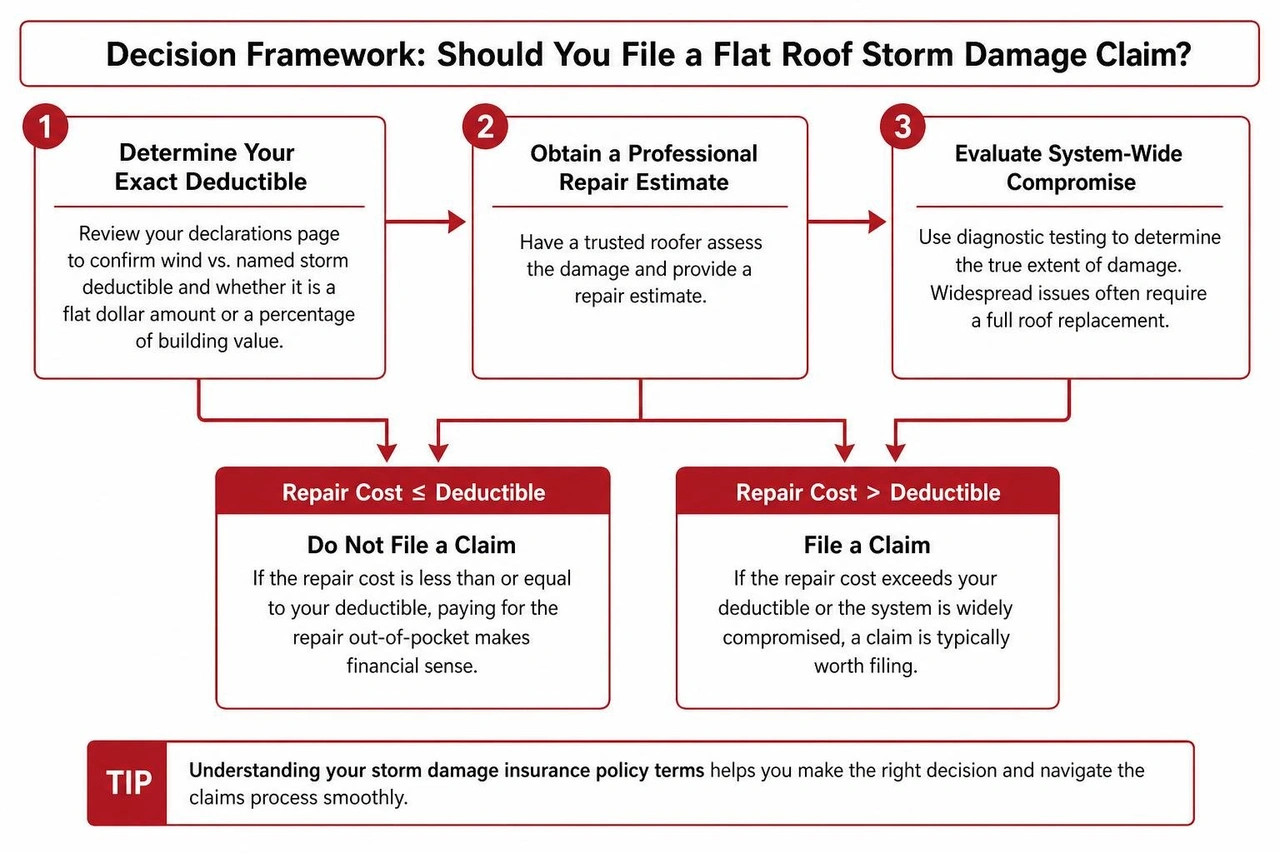
Before contacting your carrier to open a formal flat roof storm damage claim, perform a simple financial threshold evaluation:
- Determine Your Exact Deductible: Commercial and residential policies often have separate deductibles for standard wind versus named storms or hail. Review your declarations page to confirm whether your deductible is a flat dollar amount or a percentage of total building value.
- Obtain a Professional Repair Estimate: Have a trusted roofer assess the damage. If the issue is an isolated corner peel or localized seam repair, the cost may fall below your deductible. In that scenario, paying for the repair directly makes financial sense.
- Evaluate System-Wide Compromise: If diagnostic testing reveals saturated insulation across broad sections, hundreds of hail fractures, or widespread fastener pull-out, a full reroof is necessary. Full replacements easily justify an insurance claim. Understanding your storm damage insurance policy terms helps you navigate this decision smoothly.
Commercial vs. Residential Flat Roof Storm Damage Claim Differences
Commercial property claims involve technical complexities rarely found in residential policies:
- Roof Depreciation Schedules: Commercial policies frequently incorporate restrictive depreciation schedules based on the age of the membrane, shifting claims from Replacement Cost Value (RCV) toward Actual Cash Value (ACV).
- Actual Cash Value Calculations: Carriers calculate ACV by deducting severe depreciation from the full replacement cost. To understand how courts evaluate these calculations, review relevant court rulings on wind-driven rain and ACV standards.
- Business Interruption Coverage: If a roof failure disrupts commercial operations or causes tenant inventory loss, business interruption coverage can reimburse lost revenue while repairs are underway.
- Building Code Upgrades (Ordinance or Law): When repairing more than a specific percentage of a commercial flat roof, local building codes may require upgrading the entire roof assembly to meet modern R-value energy standards and ASCE wind uplift requirements.
Direct Filing, Roofing Contractors, or Public Adjusters
When handling a major property loss, owners have three primary paths:
- Filing Directly: The owner reports the claim and works directly with the carrier's field adjuster. This approach works well for clear-cut, catastrophic damage where the carrier admits full liability quickly.
- Working with a Trusted Roofing Contractor: An experienced local contractor provides comprehensive damage documentation, Xactimate estimates, and diagnostic reports to support your scope of work. They ensure the carrier's adjuster accounts for all components, including insulation, flashings, and decking.
- Hiring a Public Adjuster: For complex, disputed commercial claims involving significant coverage pushback, a licensed public adjuster can negotiate on your behalf. Public adjusters typically charge a contingency fee ranging from 10 to 15 percent of the final settlement. On contested claims, their technical representation can help resolve severe scope disputes.
Overcoming Common Insurance Denials: Ponding and Maintenance
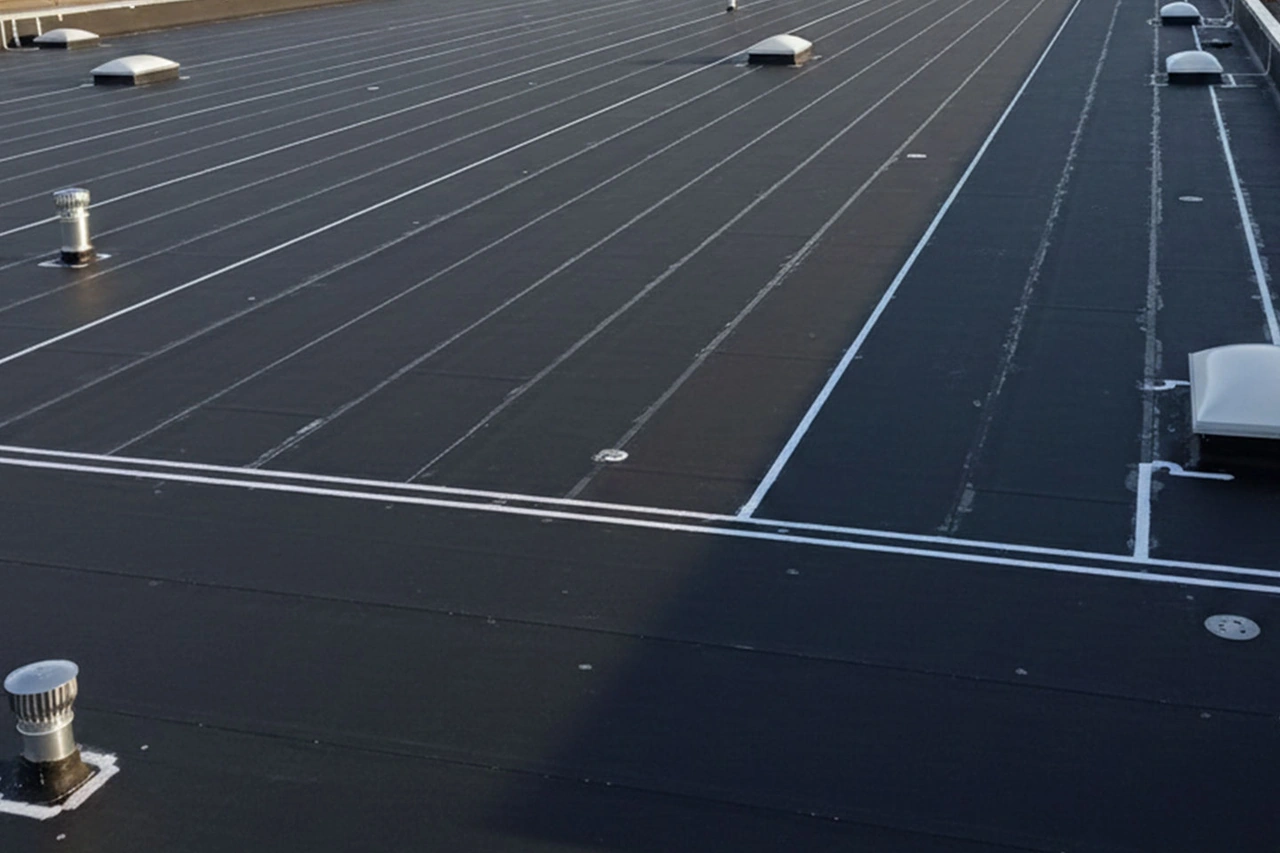
Insurance adjusters frequently look for pre-existing conditions to justify claim denials. On low-slope roofs, the two most common denial arguments are ponding water and lack of maintenance.
The National Roofing Contractors Association (NRCA) defines ponding water as standing water that remains on a roof surface for more than 48 hours after precipitation ends. Most membrane manufacturer warranties and standard insurance policies exclude damage caused by chronic ponding. Chronic ponding roughly halves membrane life, reducing EPDM from 25 years to 12 years, TPO from 22 years to 13 years, and modified bitumen from 20 years to 12 years.
However, an insurer cannot simply label all water accumulation as pre-existing ponding to avoid paying a legitimate storm claim. If a severe windstorm lifted perimeter flashings or tore a seam, water intrusion caused by that storm is covered under the policy's ensuing-loss carve-back provision, even if secondary ponding existed nearby.
Combating the Wear and Tear Exclusion
Insurance companies routinely cite the "wear and tear" or "deferred maintenance" exclusion when denying low-slope claims. To overturn this denial, you must provide physical evidence that distinguishes sudden storm events from gradual aging:
- Clean Seam Fractures: Aged, weathered seam failures show dirt accumulation, oxidation, and slow curling. In contrast, sudden wind uplift causes clean, sharp mechanical tears in the membrane with fresh scrim exposure.
- Ballast Scour Patterns: High-velocity storm winds push gravel aggregate into distinct rows (windrows), leaving bare membrane patches exposed in classic aerodynamic flow lines.
- Historical Maintenance Records: Providing detailed receipts, biannual inspection reports, and documentation of routine commercial flat roof maintenance proves the roof was kept in sound operational condition before the storm.
How to Document Evidence for Your Flat Roof Storm Damage Claim
The first 48 hours following a storm are critical for establishing your evidentiary record:
- Capture 4K Drone Imagery: Aerial photography provides comprehensive, high-resolution documentation of wind-uplift patterns, dislodged coping metal, and perimeter tearing.
- Photograph Ground-Level Debris: Capture photos of dislodged metal flashings, tree limbs, scattered ballast, and interior water intrusion marks.
- Order Certified Weather Reports: Pull official NOAA radar data and wind-velocity records for your exact address on the date of loss.
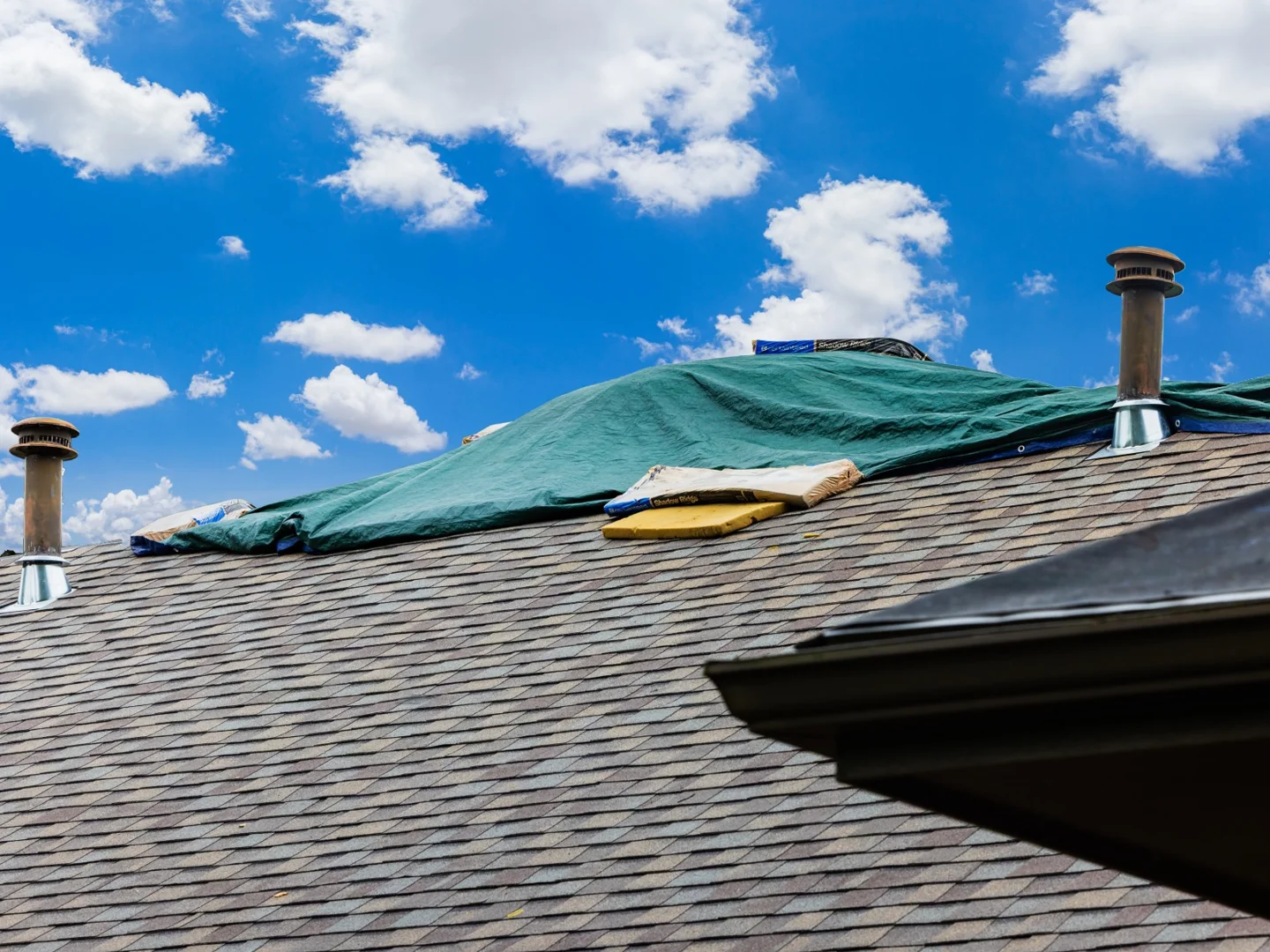
- Perform Weighted Emergency Tarping: Mitigate water intrusion immediately. On flat roofs, tarps must be secured with sandbags or perimeter battens rather than through-deck nails that create additional leak points.
- Schedule a Complete Inspection: Arrange a thorough roof inspection after storm with a qualified roofing specialist before attempting permanent repairs.
Step-by-Step Process to Successfully File Your Claim
Navigating an insurance claim requires an organized, methodical approach. Following these steps helps protect your rights and keeps the process moving forward smoothly:
- Immediate Mitigation and Safety: Ensure the building is structurally safe. Protect tenant spaces and interior inventory from active water leaks.
- Comprehensive Damage Documentation: Collect photos, videos, and diagnostic test results showing every damaged membrane section, flashing joint, and rooftop mechanical unit.
- Review Policy Notice Windows: Check your policy for reporting deadlines. While commercial policies often allow 60 to 90 days, best practice is to provide formal notice of loss within 7 days of the weather event.
- Initial Carrier Notification: Contact your insurance agent or carrier to open the claim. Provide the exact date of loss, certified weather details, and an initial overview of the damage.
- On-Site Adjuster Meeting: Have your roofing contractor present during the insurance adjuster's physical inspection. Your contractor ensures that hidden damage, insulation moisture, and code requirements are fully reviewed.
- Scope and Estimate Review: Compare the insurer's initial estimate with your contractor's detailed scope of work. Negotiate any missing line items, code compliance upgrades, or necessary material allowances.
- Execution of Professional Repairs: Once the scope is approved, complete the permanent storm damage repairs to restore full building integrity.
Frequently Asked Questions About Flat Roof Storm Claims
How do I prove wind uplift caused my flat roof leak instead of ponding water?
You prove wind uplift by presenting physical evidence specific to aerodynamic force rather than gradual water wear. Wind uplift leaves distinct signatures: clean mechanical tears at heat-welded seams, pulled fasteners along perimeter insulation plates, dislodged parapet coping metal, and ballast scoured into windrows. In addition, third-party seam probe testing and certified NOAA storm velocity records establish that extreme gusts exceeded the system's operational threshold on the specific date of loss.
How long do I have to file a low-slope storm damage claim?
Your timeline depends on policy language and state regulations. Most property policies contain "prompt notice" clauses requiring loss reporting within 60 to 90 days. However, filing within 7 days of discovering the damage is always recommended. Prompt reporting prevents insurers from arguing that water damage worsened due to neglected mitigation after the storm.
Can a flat roof membrane be storm-damaged without an active interior leak?
Yes. High winds often pull fasteners loose or fracture the internal reinforcing scrim while leaving the top surface sheet resting in place. Similarly, hail impacts can crush underlying polyisocyanurate insulation boards without puncturing the flexible rubber membrane above. This compromised insulation creates soft spots, breaks thermal barriers, and reduces wind resistance, which will eventually cause premature system failure even if no water enters the building immediately.
Conclusion
Determining whether to file a flat roof insurance claim requires an objective evaluation of physical damage, repair costs, and policy terms. When a severe storm compromises seams, crushes insulation, or pulls perimeter fasteners, prompt documentation protects your property and your investment.
Trusted since 1929, JF Baker Roofing has provided honest assessments and quality craftsmanship across Central Ohio for nearly a century. As a family-owned business led by third-generation owners Chad and Pat Baker, we believe in recommending repairs when repairs suffice and full replacement only when genuinely needed. We stand behind every roof we install with professional crews, clean job sites, and clear communication.
If you suspect recent weather compromised your low-slope roof, let our reputation be your security. Contact us today to schedule a professional storm damage assessment with our team. Honest assessments. No pressure.



.jpeg)