Cheat Sheet to Assessing Storm Damage Roofing Quickly
Immediate Steps to Take After a Severe Storm
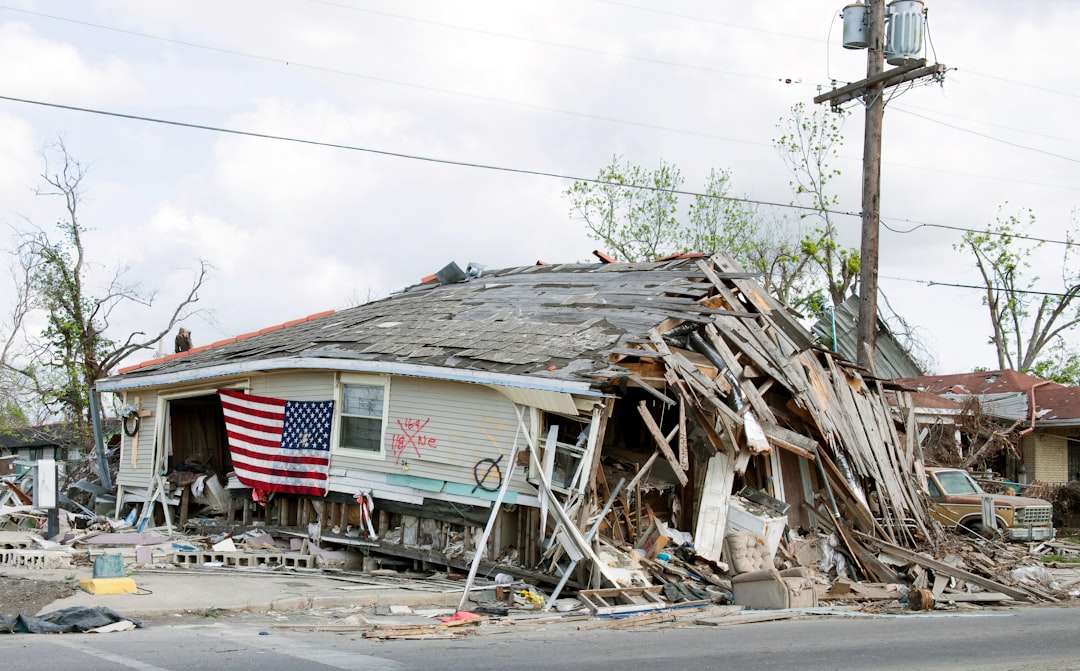
Storm damage roofing is one of the most stressful situations a homeowner can face, and it almost always happens without warning.
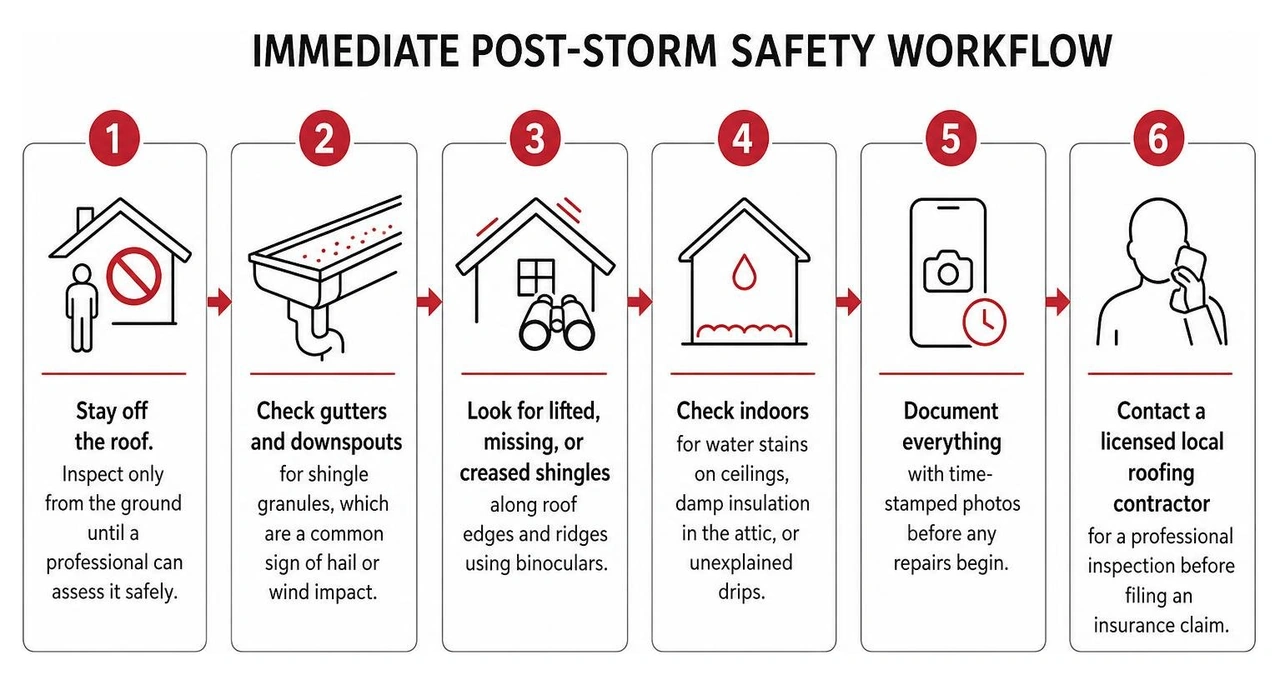
Here's what to do right away if you suspect storm damage:
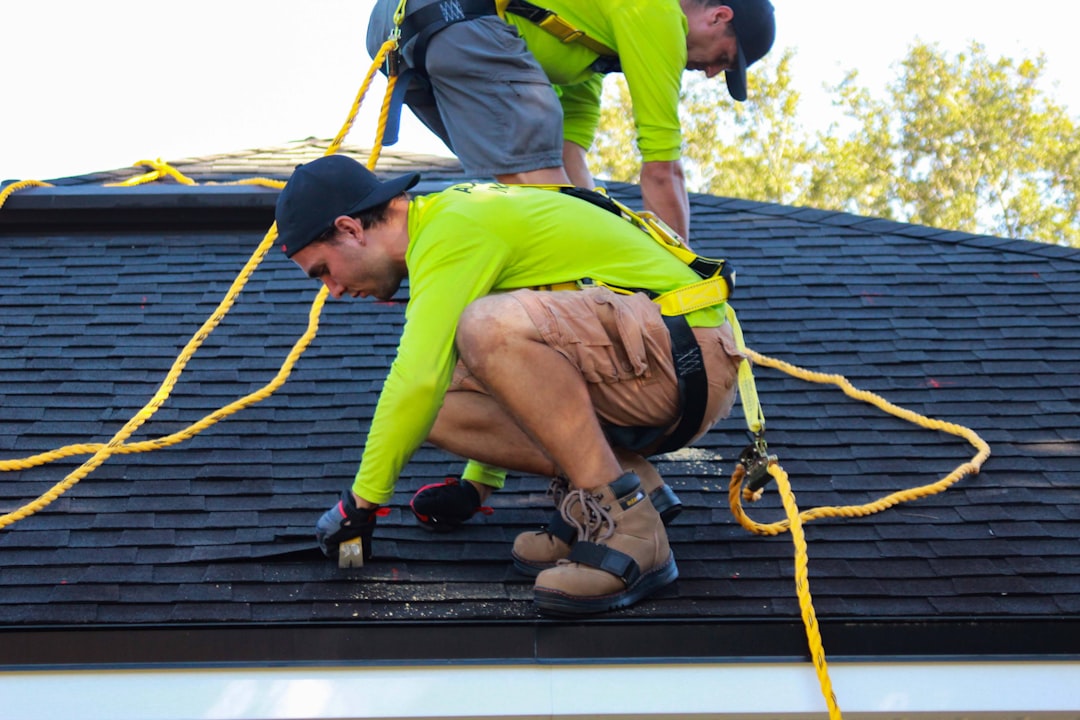
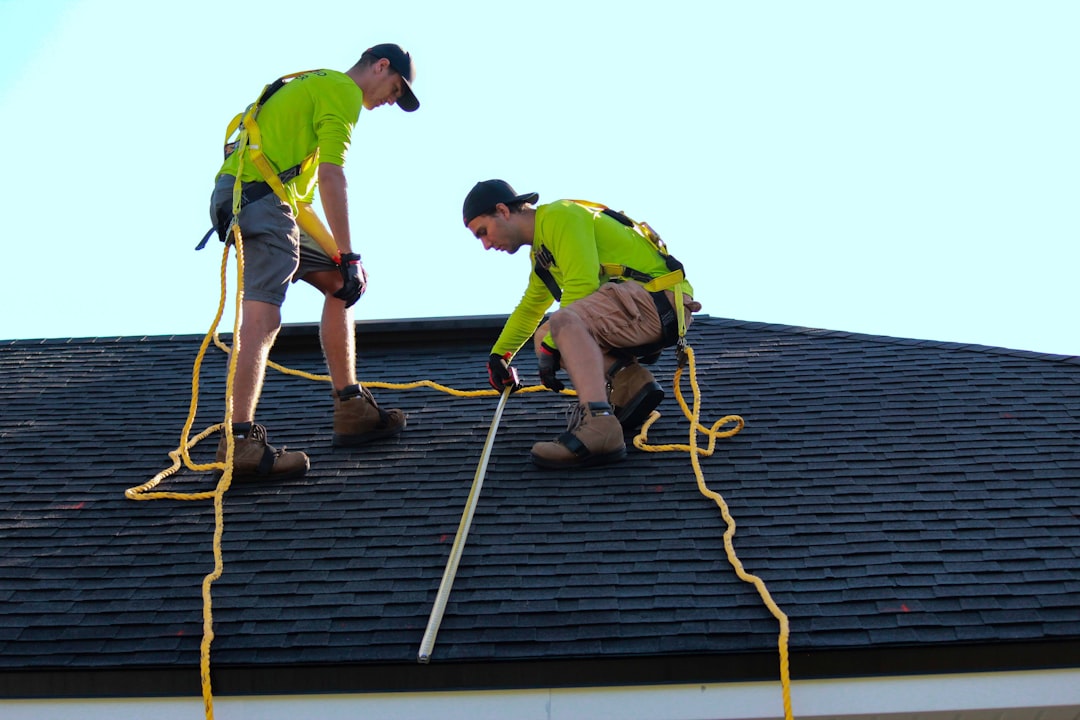
- Stay off the roof. Inspect only from the ground until a professional can assess it safely.
- Check gutters and downspouts for shingle granules, which are a common sign of hail or wind impact.
- Look for lifted, missing, or creased shingles along roof edges and ridges using binoculars.
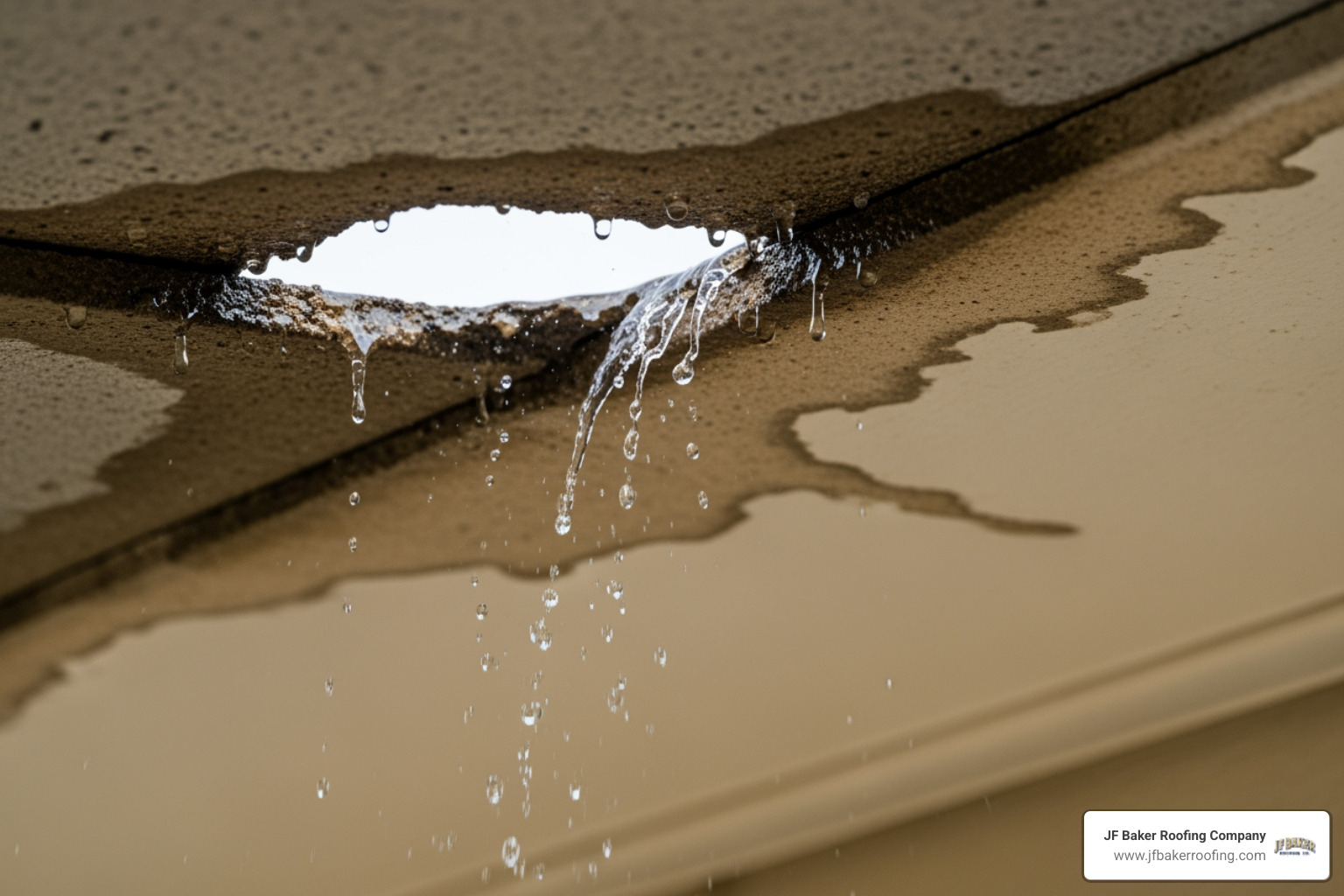
- Check indoors for water stains on ceilings, damp insulation in the attic, or unexplained drips.
- Document everything with time-stamped photos before any repairs begin.
- Contact a licensed local roofing contractor for a professional inspection before filing an insurance claim.
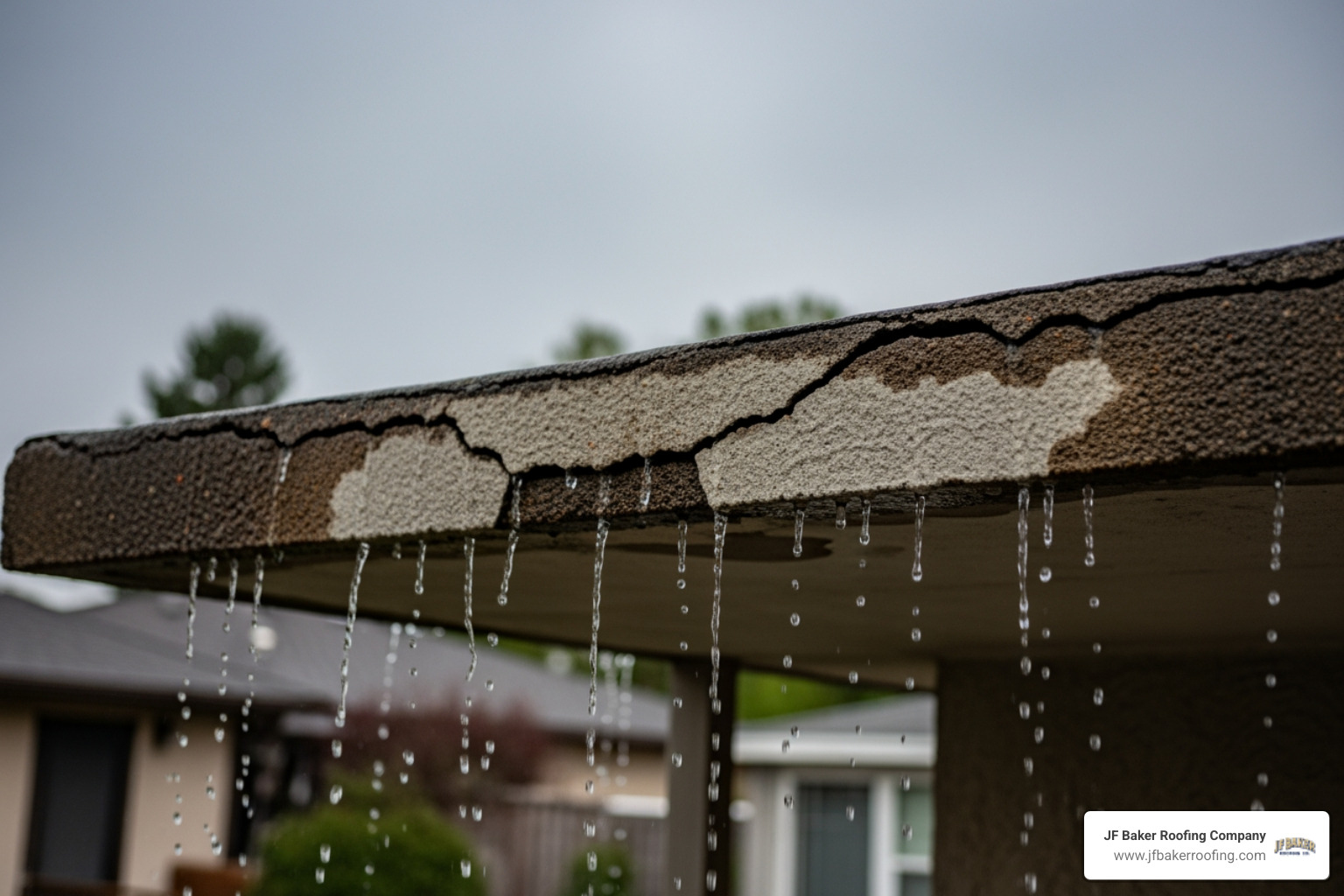
A fast-moving storm can leave damage that looks minor from the driveway but is quietly compromising your roof's ability to shed water. Hail bruises shingles without breaking them. Wind breaks the adhesive seal that holds tabs down. Water finds the smallest gap and travels far from where it entered, often showing up on your ceiling weeks later.
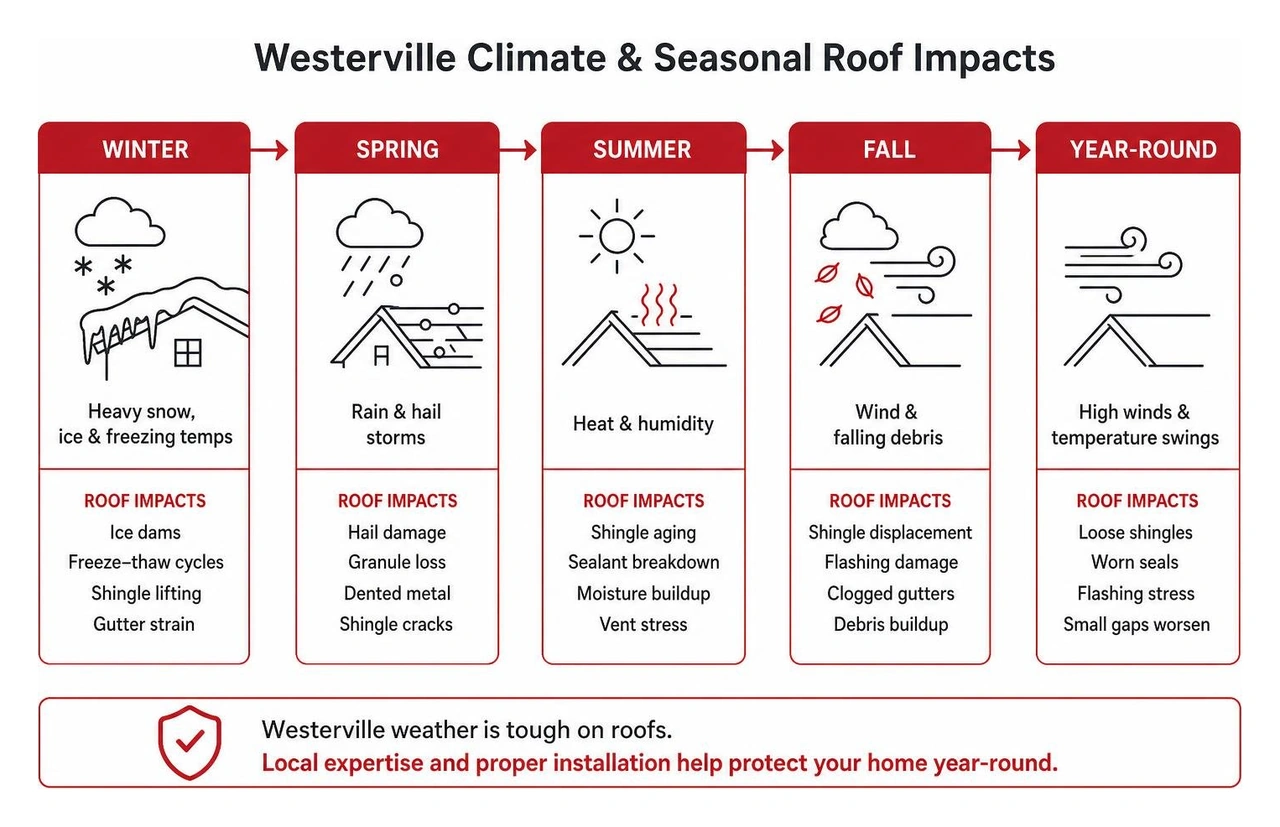
Central Ohio sees its share of severe weather every year, from spring hailstorms to summer wind events and heavy fall rains. At JF Baker Roofing, we've been helping Columbus-area homeowners sort through the aftermath since 1929. This guide gives you a clear, honest cheat sheet so you know exactly what to look for, what to do, and how to protect yourself from making a costly mistake in the hours and days after a storm.

When a severe storm system rolls through Central Ohio, your immediate priority must be safety. High winds, torrential downpours, and falling branches can leave a home structurally vulnerable. Before you worry about calling your insurance carrier or scheduling a full roof replacement, you need to stabilize the situation and prevent secondary damage.
Water is incredibly opportunistic. A single missing shingle or a punctured valley can allow hundreds of gallons of rainwater to saturate your attic insulation, ruin your drywall, and spark mold growth within 24 to 48 hours.
If you suspect your roof has taken a hit, follow these immediate safety and mitigation steps:
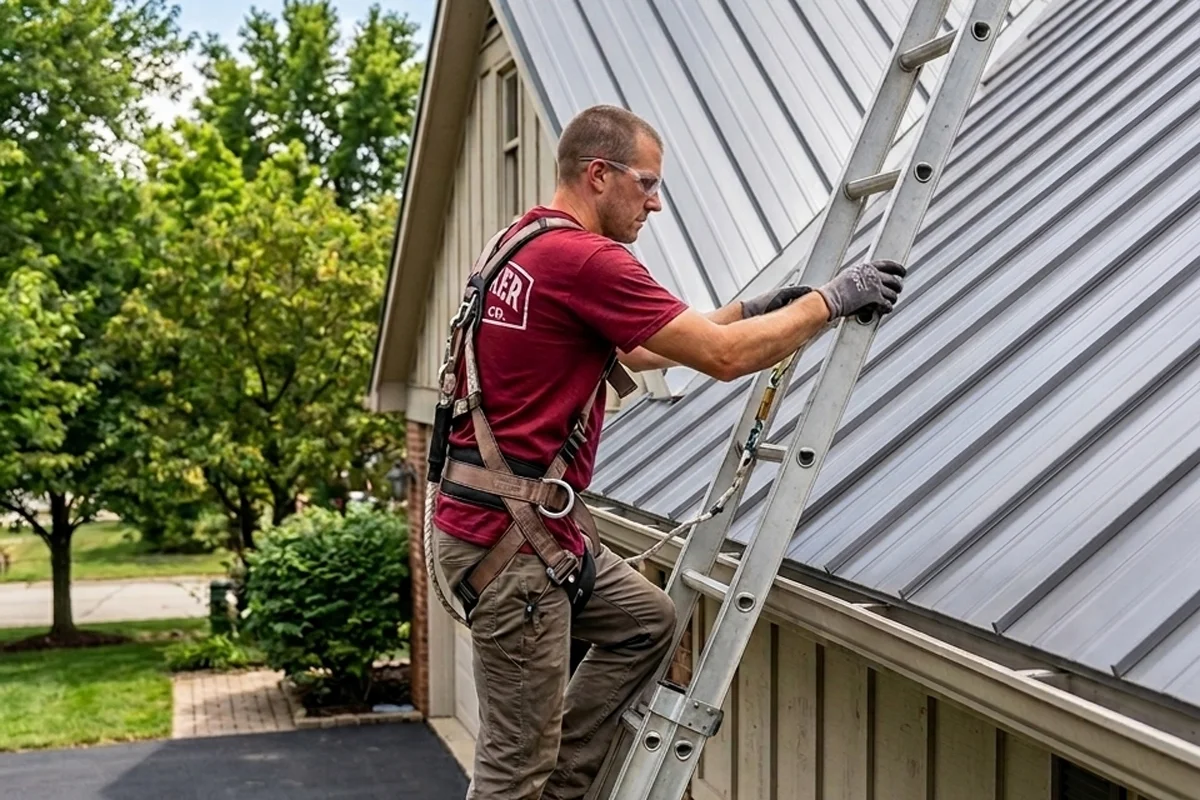
- Ensure Personal Safety First: Do not walk outside while the storm is active or when lightning is nearby. Once the weather clears, watch out for downed power lines, standing water, and unstable tree limbs in your yard. Under no circumstances should a homeowner climb onto a wet, damaged, or structurally compromised roof.
- Mitigate Interior Water Intrusion: If you find active leaks inside your home, move furniture, electronics, and valuables out of harm's way. Place buckets or plastic bins under the drips. If water is pooling on a plaster or drywall ceiling, you may need to carefully puncture the center of the sag with a small nail to relieve the water pressure and prevent a sudden, larger ceiling collapse.
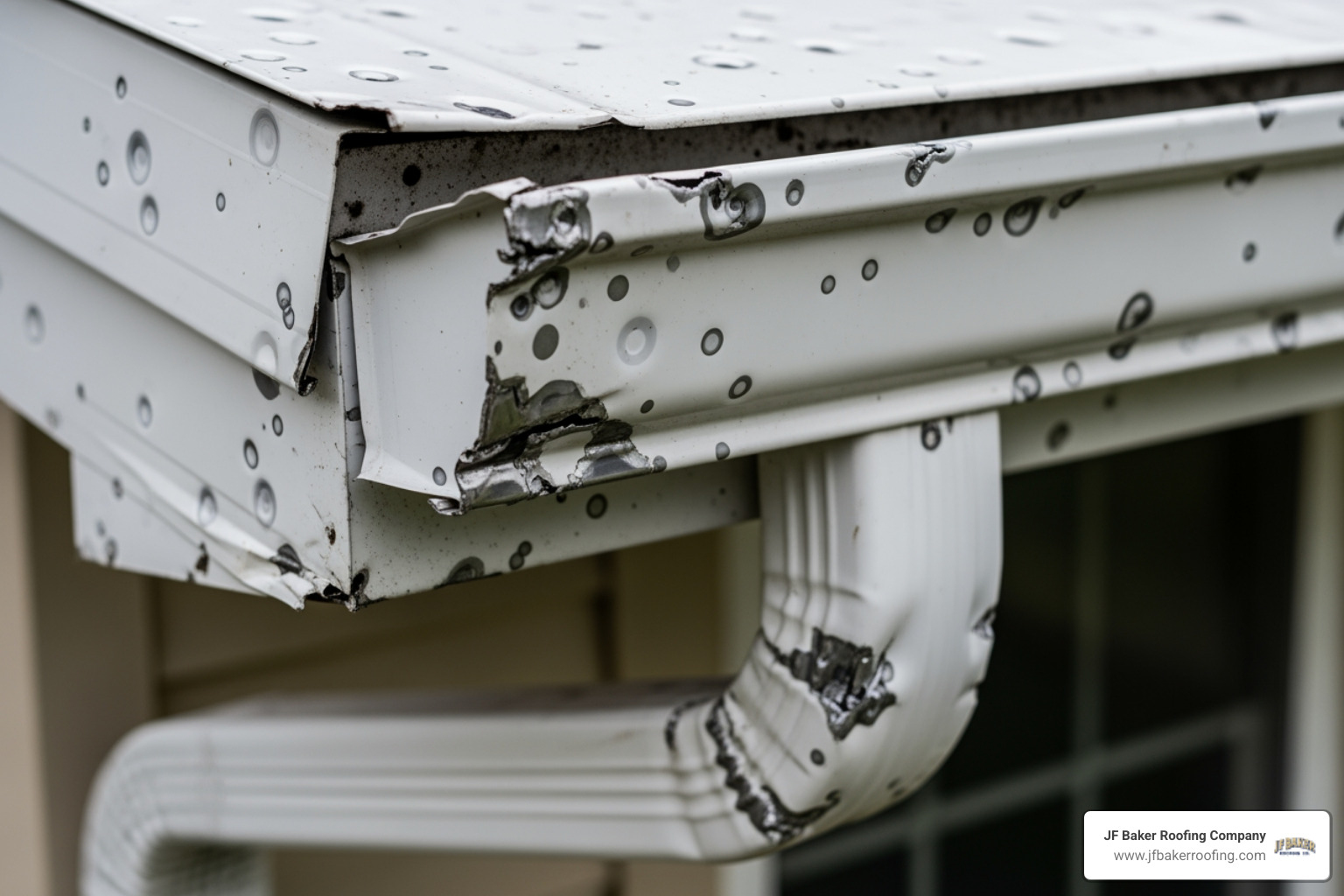
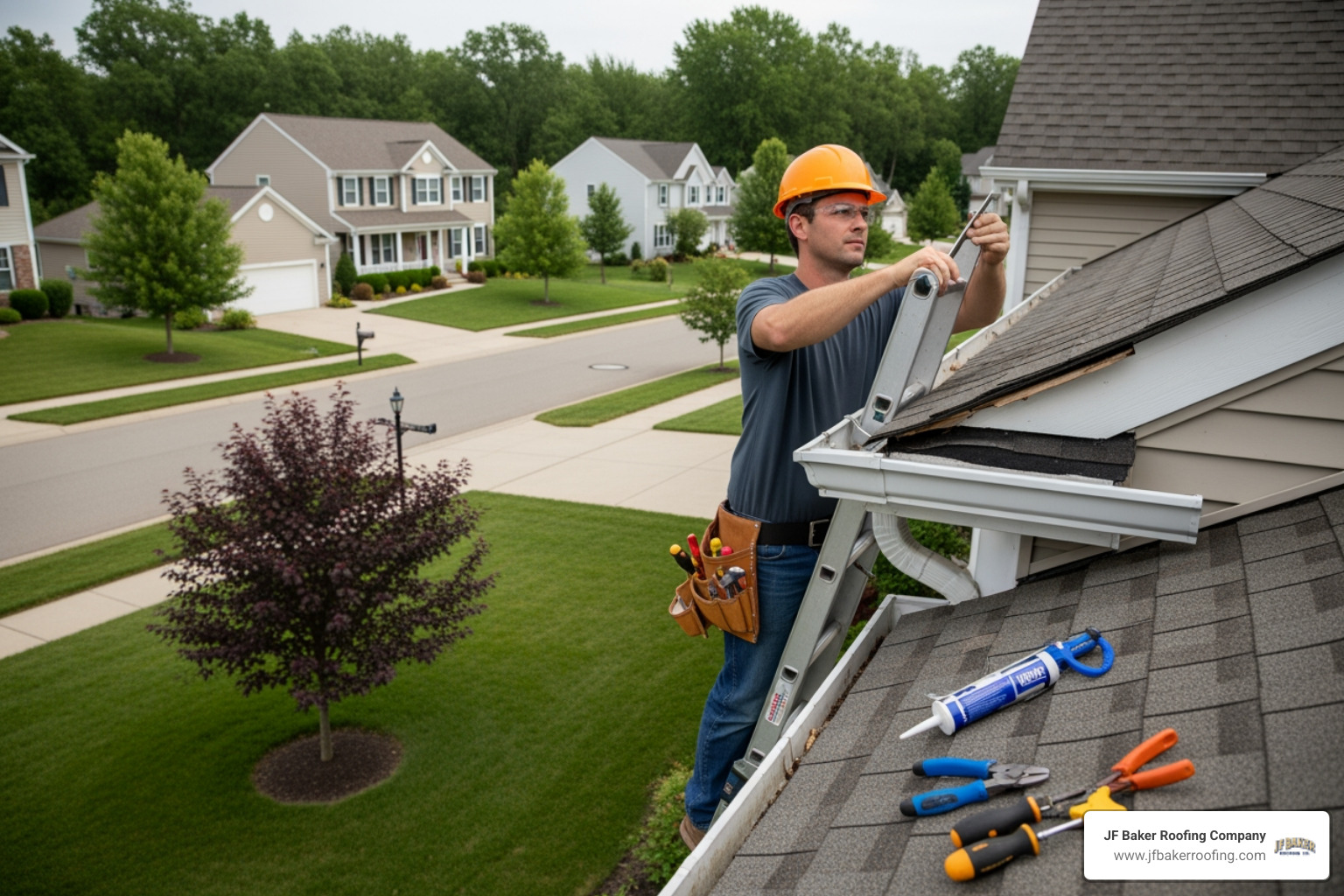
- Inspect Your Gutters: Heavy storms can warp or pull gutters away from the fascia board. If your gutter system is sagging or overflow is pouring directly down your foundation, you may need an Emergency Storm Gutter Fix to restore proper drainage and protect your home's exterior walls.
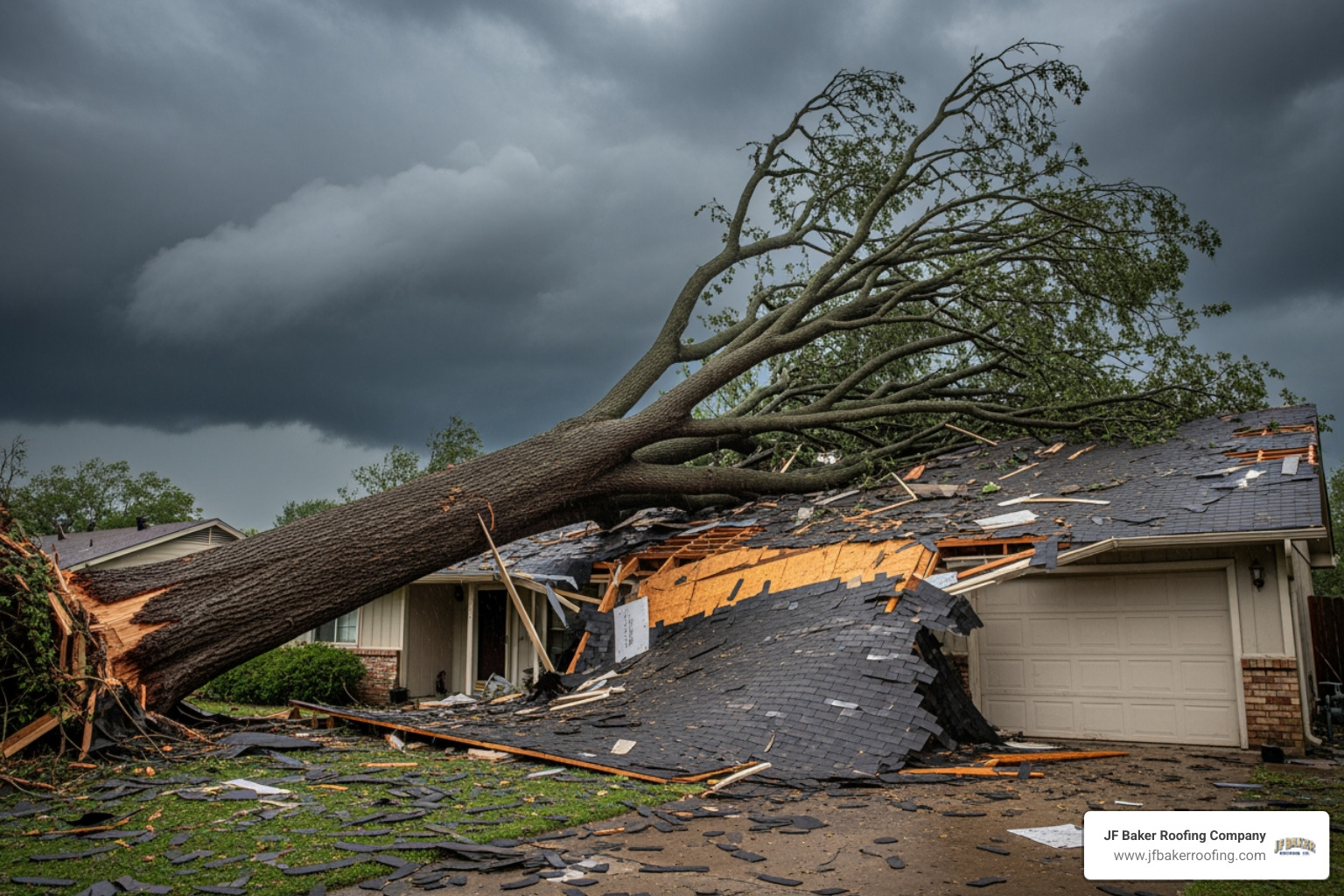
- Assess Tree and Debris Impact: If high winds have knocked a tree or large limb onto your home, do not enter the affected rooms. Structural framing could be cracked. You will need a professional Tree Fallen Roof Repair specialist to safely remove the debris, inspect the underlying rafters, and dry-in the exposed area with heavy-duty tarps.
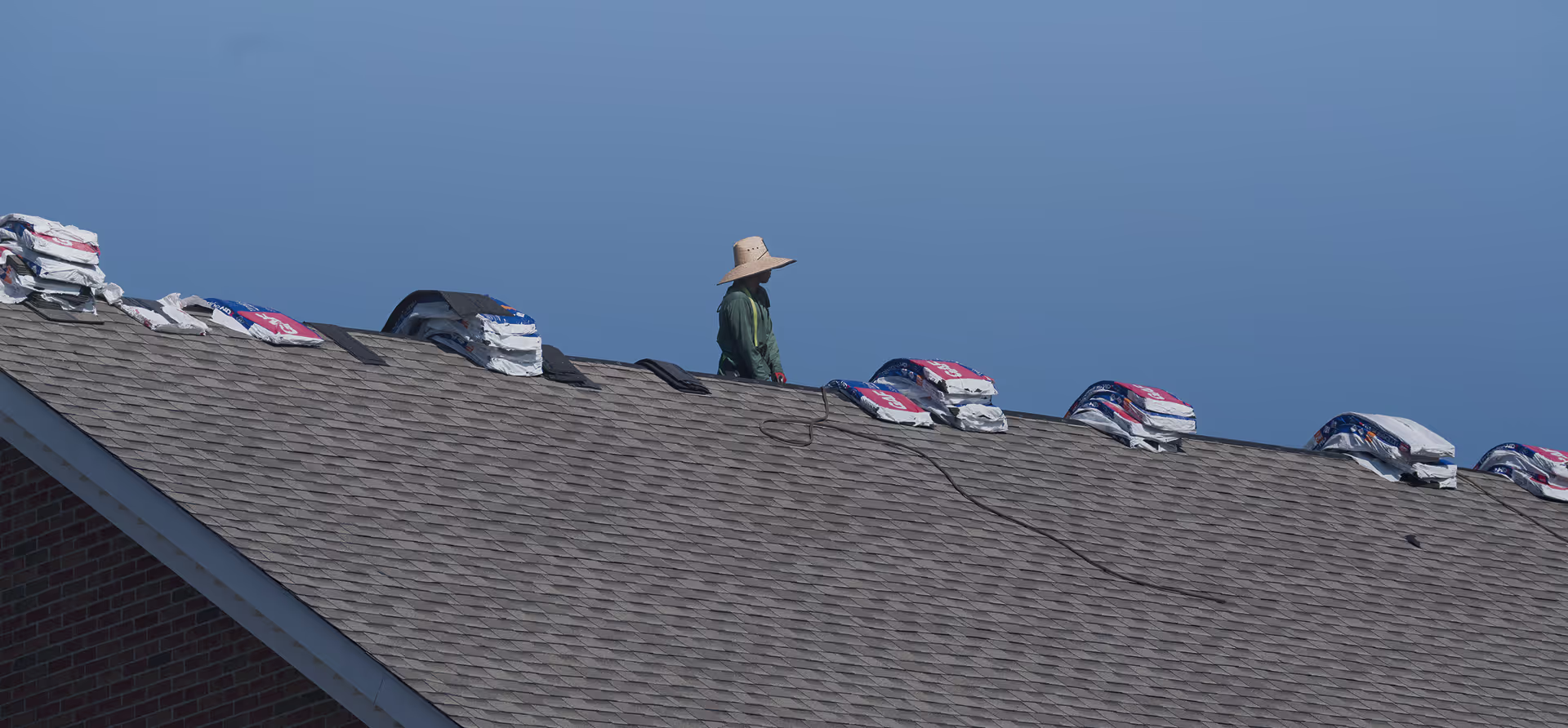
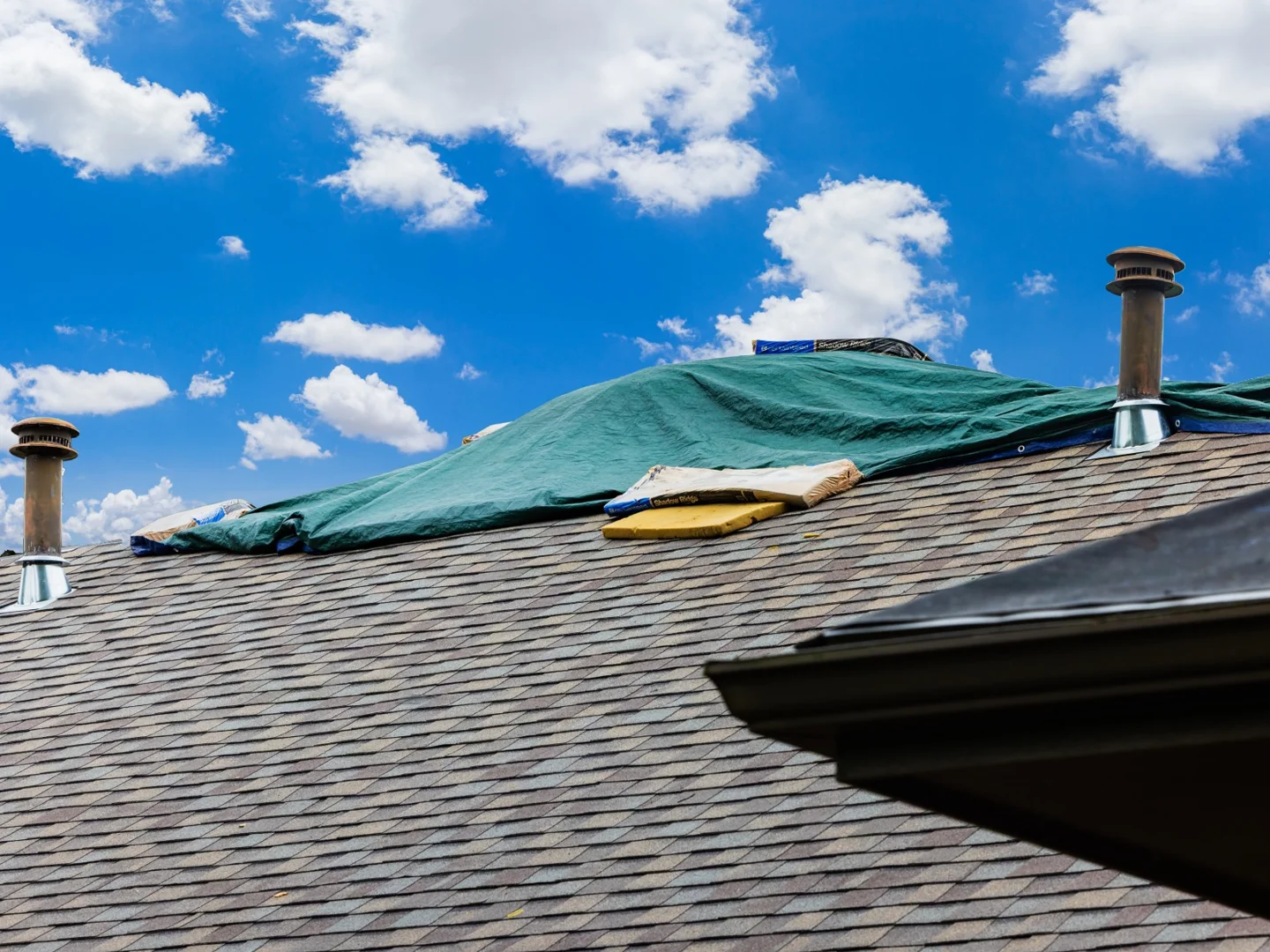
- Perform Emergency Tarping: If your roof has large open holes or missing sections of shingles, temporary tarping is critical. This temporary barrier must be secured properly. Never nail tarps directly through intact shingles if you can avoid it; instead, secure them with 1x3 wooden battens and roofing screws anchored into solid framing. This keeps the wind from catching the edges and blowing the tarp away before permanent repairs can begin.
Identifying Storm Damage Roofing Issues vs. Normal Wear

One of the most challenging aspects of dealing with storm damage is distinguishing between sudden, storm-related issues and the gradual, normal wear-and-tear of an aging roof. This distinction is critical because standard homeowners insurance policies cover sudden, accidental storm perils but do not cover long-term deterioration or neglect.
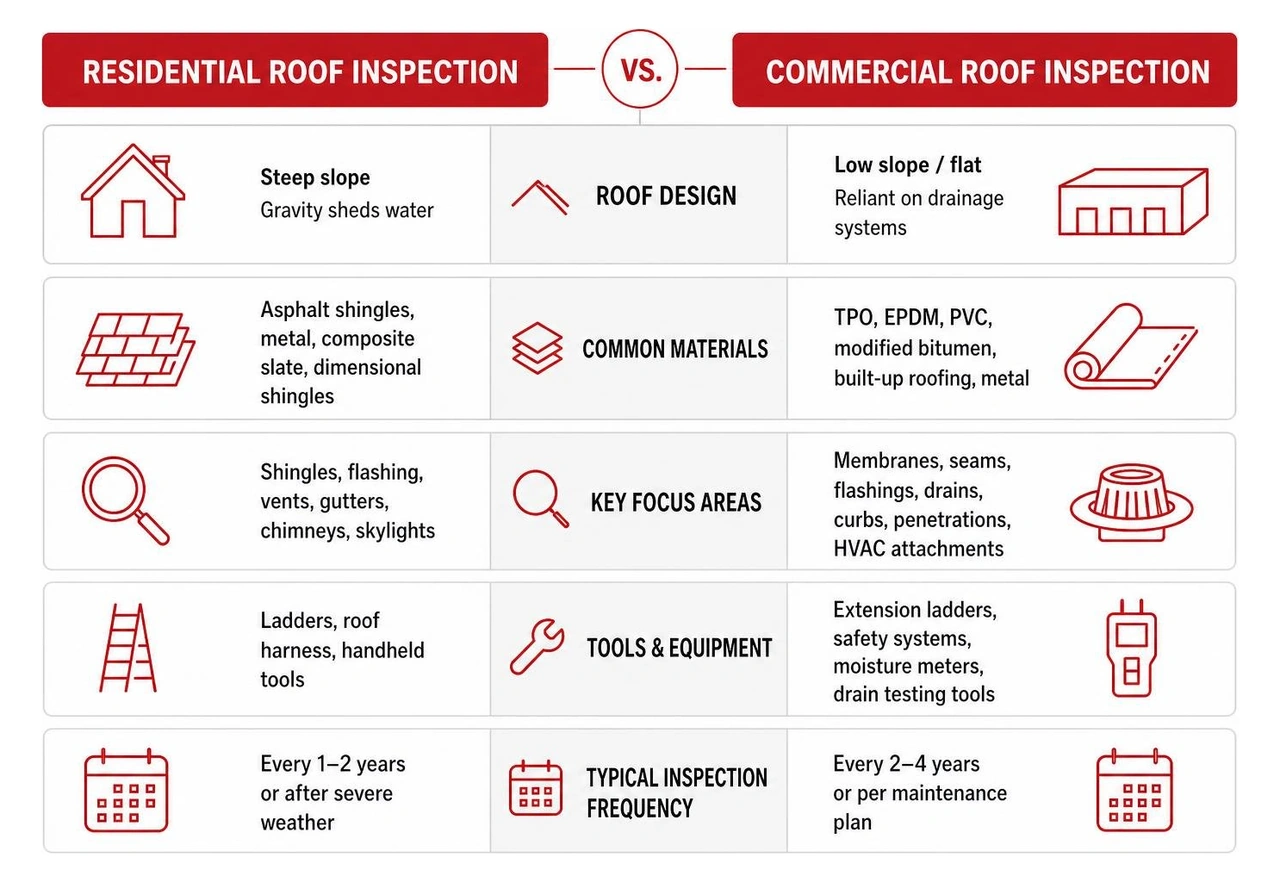
When an insurance adjuster steps onto your roof, they look for distinct patterns. To help you understand what to look for, consult our Storm Damage Repair Guide 2026 or review how we break down the differences below:
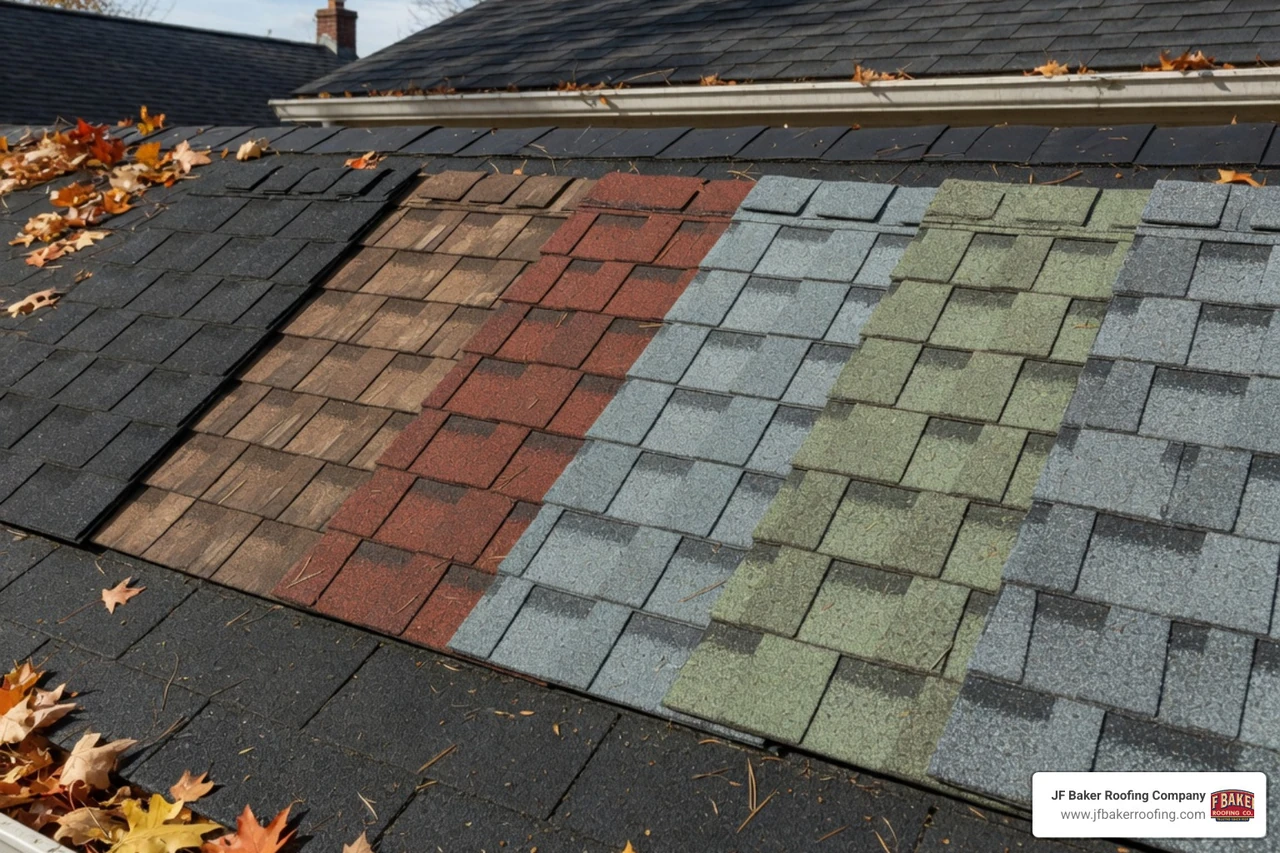
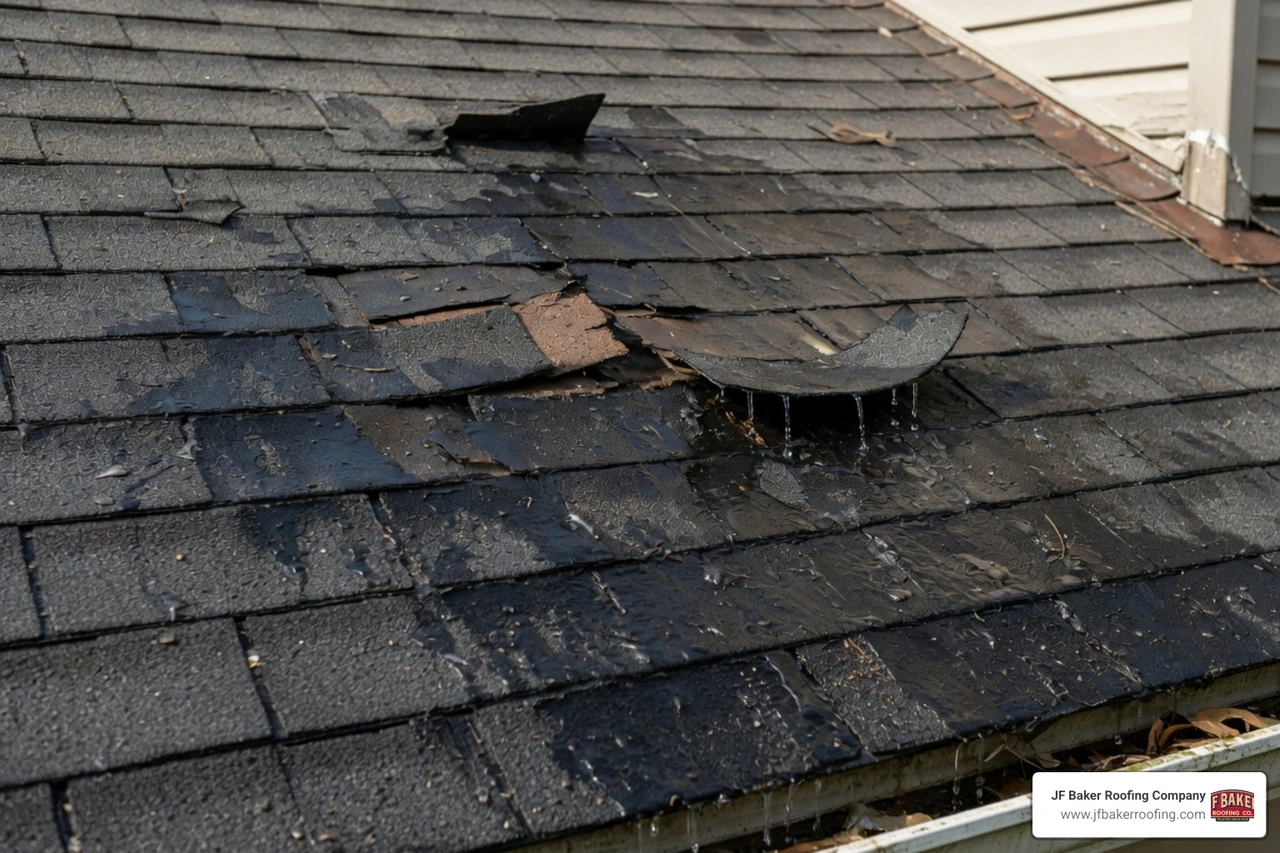
- Wind Damage: Wind does not just blow shingles off; it also creates dynamic pressure changes. High wind gusts can lift shingles and break their factory-applied adhesive seals. Once the seal is broken, the shingle can flap in the wind, creasing the material or tearing it entirely. If you see a clean, dark line across the top of a shingle tab where it has bent upward, that is functional wind damage. In contrast, normal wear-and-tear usually presents as overall brittleness, curling edges across the entire roof plane, or hairline cracks from thermal expansion over many years.
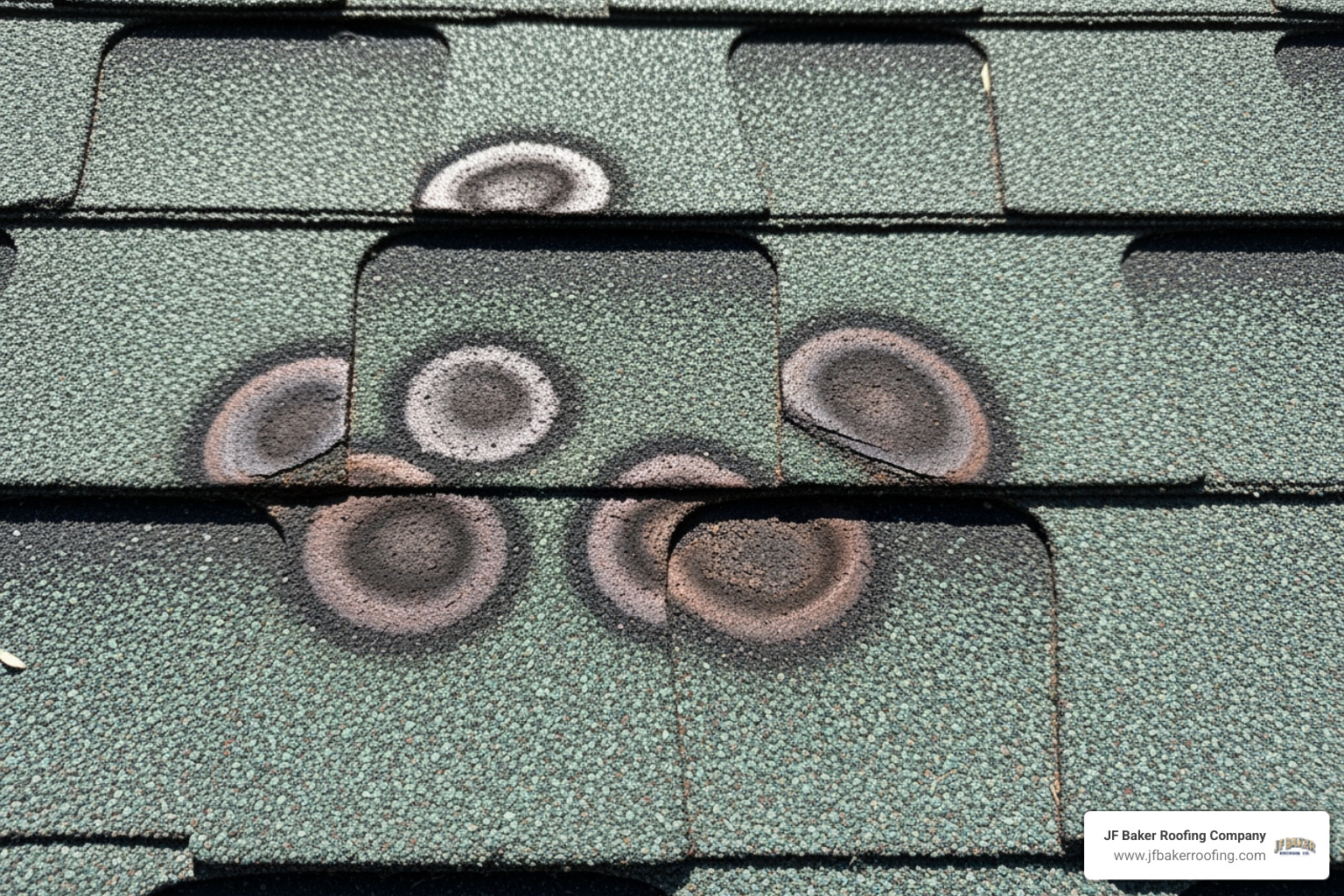
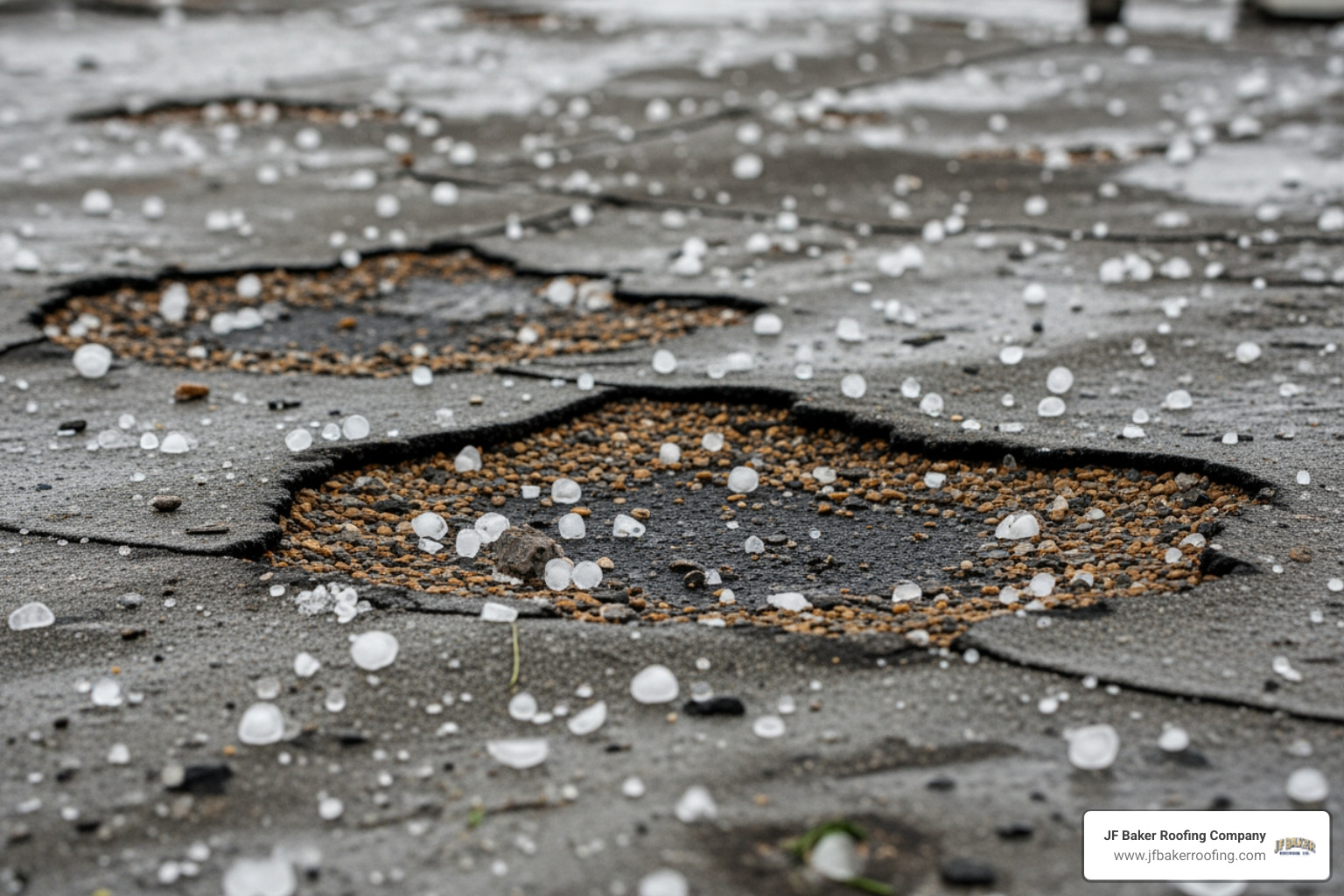
- Hail Damage: Hail impacts leave localized, circular bruises or indentations on asphalt shingles. When a hailstone strikes, it knocks away the protective mineral granules and fractures the fiberglass mat underneath. These impact points are often dark and soft to the touch, like a bruised apple. On the other hand, normal wear-and-tear granule loss is uniform across the roof, often exposing the underlying asphalt layer in wide, even sheets rather than isolated impact craters.
- Debris Damage: A falling branch leaves localized, sharp punctures, gouges, or broken shingle tabs. This is highly distinct from normal aging, which shows up as widespread weathering, fading, and minor surface cracking across all slopes.
To put this into perspective, major weather events across the country often serve as benchmarks for how insurance companies evaluate claims. For example, the severe summer convection systems analyzed in the Florida Storm Damage: Tampa, Jax & Treasure Coast: JUL 10-12, 2026 report showed that even small, fast-falling hail can strip protective granules and hairline-crack tiles, substantially shortening a roof's lifespan even if no immediate leaks occur. In Central Ohio, our summer storms bring similar high-wind and hail dynamics that require close examination to prove the damage was caused by a single, sudden weather event.
Spotting Hidden Storm Damage Roofing Issues from the Ground
You do not need to climb a ladder to find clues that your roof has taken a hit. In fact, some of the most reliable indicators of storm damage are found at ground level. Grab a pair of binoculars and walk the perimeter of your yard to look for these subtle signs:
- Granule Accumulation in Gutters: Asphalt shingles rely on mineral granules to shield the underlying asphalt from harmful UV rays. If you find piles of colored granules in your gutters or washing out of your downspouts after a storm, it is a strong indicator that hail or high winds have stripped your shingles of their protective layer.
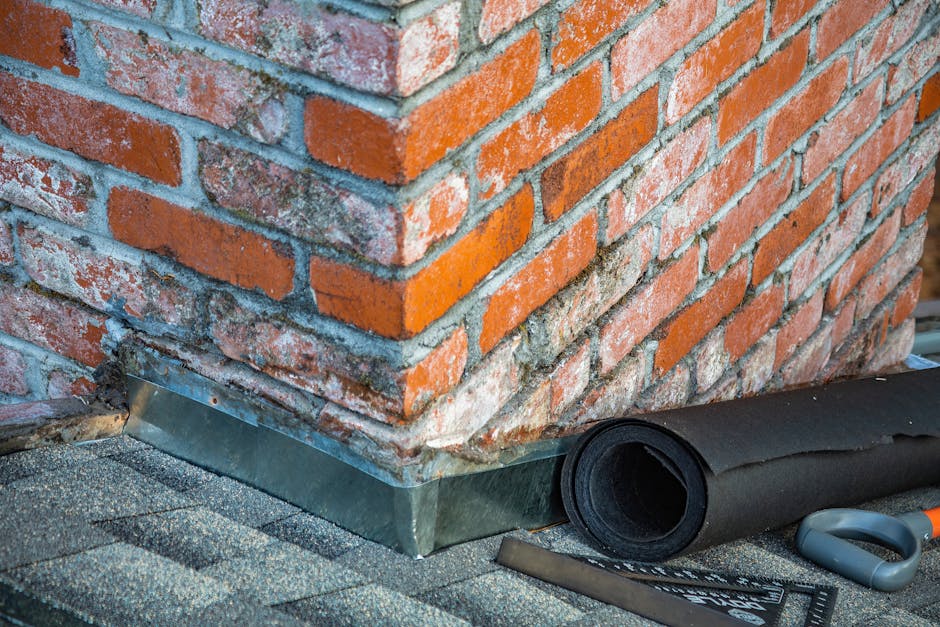
- Dented Metal Flashing and Vents: Soft metals like aluminum roof vents, chimney flashing, and valley linings show hail impacts very clearly. If you notice round dents on your metal vents or siding, your shingles likely took the same beating.
- Lifted or Displaced Shingles: Look closely at the ridges, hips, and rakes of your roof. Are any shingle tabs sitting slightly higher than the others? Do you see exposed underlayment or missing pieces? High winds often start peeling shingles back at the edges where wind uplift is strongest.
If you live in Delaware, OH or surrounding areas, local neighborhood forums often share real-time updates after severe weather. Checking local community reports, such as discussions on Storm damage repair in Delaware, OH, can help you confirm if your specific street was in the direct path of a confirmed hail or wind swath.
Why Professional Storm Damage Roofing Inspections Matter
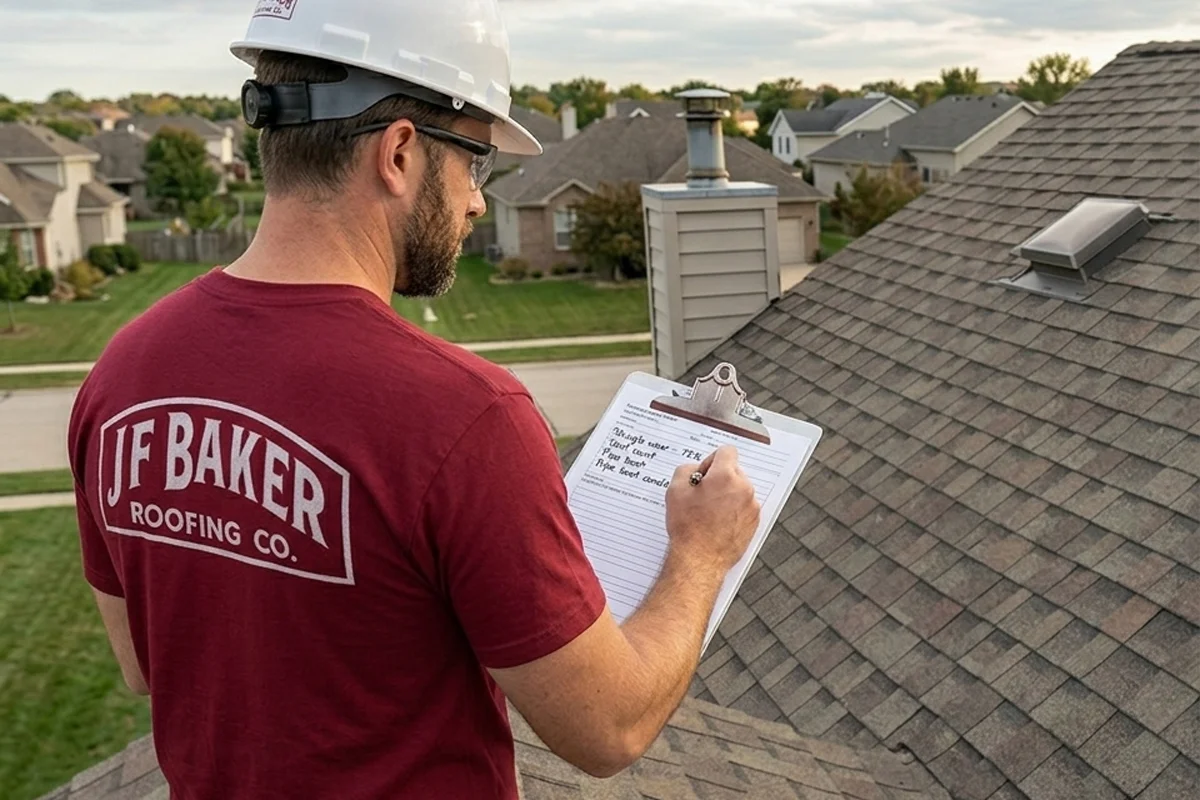
While ground-level observations are a great starting point, they cannot replace a comprehensive, professional inspection. Many storm-related issues are completely invisible to the untrained eye. Shingle bruising, micro-cracks in tile underlayments, and broken adhesive seals often require a hands-on, close-up evaluation.
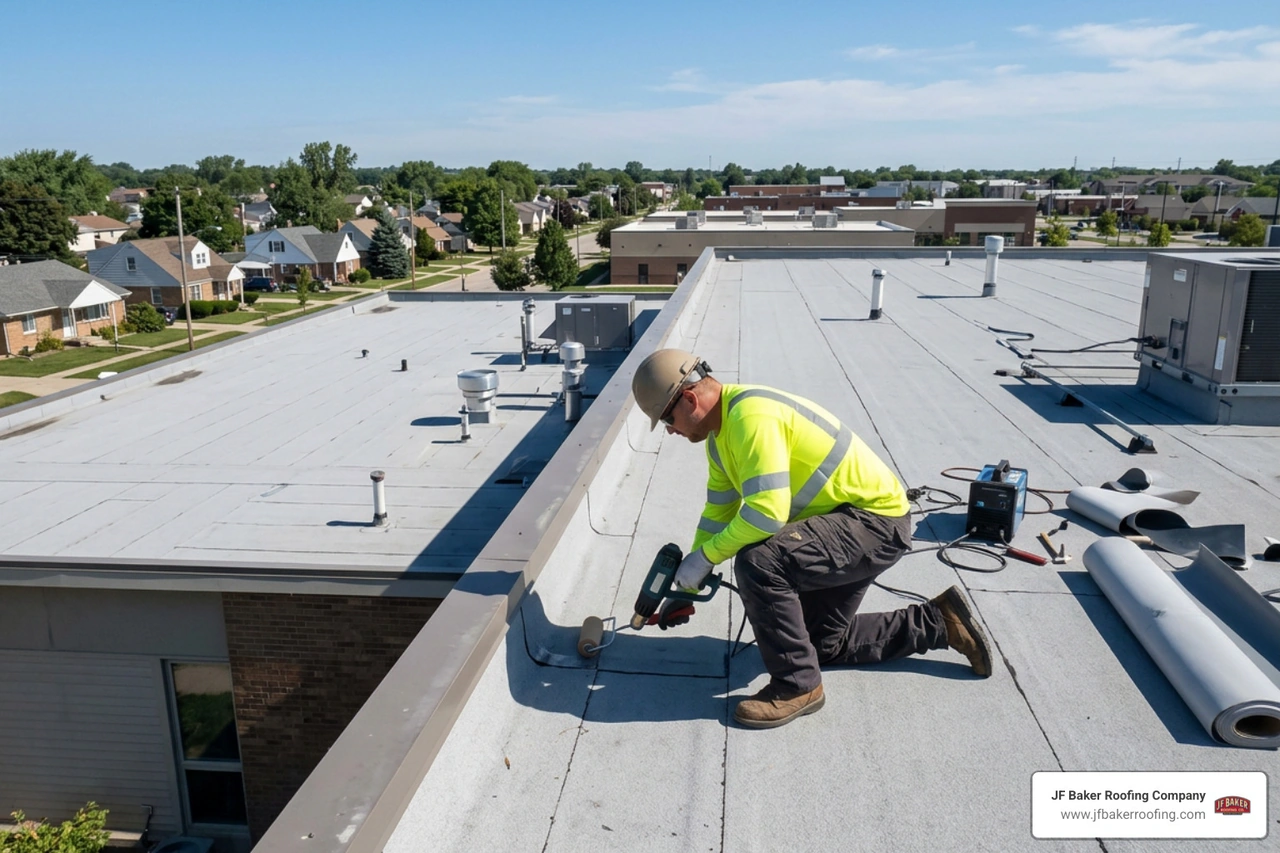
When you hire a licensed, established local contractor for a Roof Inspection After Storm, you receive a detailed, evidence-backed assessment. A professional inspection typically includes:
- A thorough check of all roof slopes, valleys, flashing, and penetrations.
- Close-up photographic documentation of shingle bruising, wind creases, and collateral damage.
- An inspection of the attic space to check for moisture, compromised decking, and compressed insulation.
- The use of advanced diagnostic tools, such as infrared thermography, to detect hidden moisture pockets behind walls and ceilings before they turn into major mold problems.
Using a local, licensed contractor is also your best defense against predatory out-of-state "storm chasers" who swarm neighborhoods after severe weather. These traveling crews often use high-pressure sales tactics, offer low-ball estimates, and perform substandard work before disappearing, leaving you with no recourse when warranties fail.
As noted in the meteorological reports of the July 15 Storm Roof Damage Repair – Passaic & Bergen NJ storms, having a detailed, written inspection report from an established professional is far more valuable to an insurance adjuster than a few blurry photos taken from your driveway. It establishes a clear, undeniable record of functional damage.
Navigating the Insurance Claims Process Successfully
Filing an insurance claim for storm damage roofing can feel overwhelming, but it does not have to be. The key to a successful claim is thorough documentation, prompt action, and clear communication.
Insurance companies typically cover wind and hail damage because they are considered sudden, accidental physical losses. However, the burden of proof lies on the homeowner to show that the damage occurred during a specific weather event within the policy's filing window.
Here is how the standard storm damage insurance claim process works:
To give your claim the best chance of approval, keep these best practices in mind:
- Document Immediately: Take clear, high-resolution photos of all visible damage to your roof, gutters, siding, and interior ceilings. If possible, take photos of any hail resting in your yard next to a tape measure or coin to verify its size.
- Verify the Storm Date: Insurance carriers require a specific date of loss. You can cross-reference your address with official NOAA (National Oceanic and Atmospheric Administration) weather reports to confirm that a qualifying storm event occurred in your area. For residential properties, check out our guide on Hail Damage Roof Repair Near Me for tips on verifying storm dates. For business owners, our resource on Hail Damage Commercial Roofing explains how to handle larger-scale commercial claims.
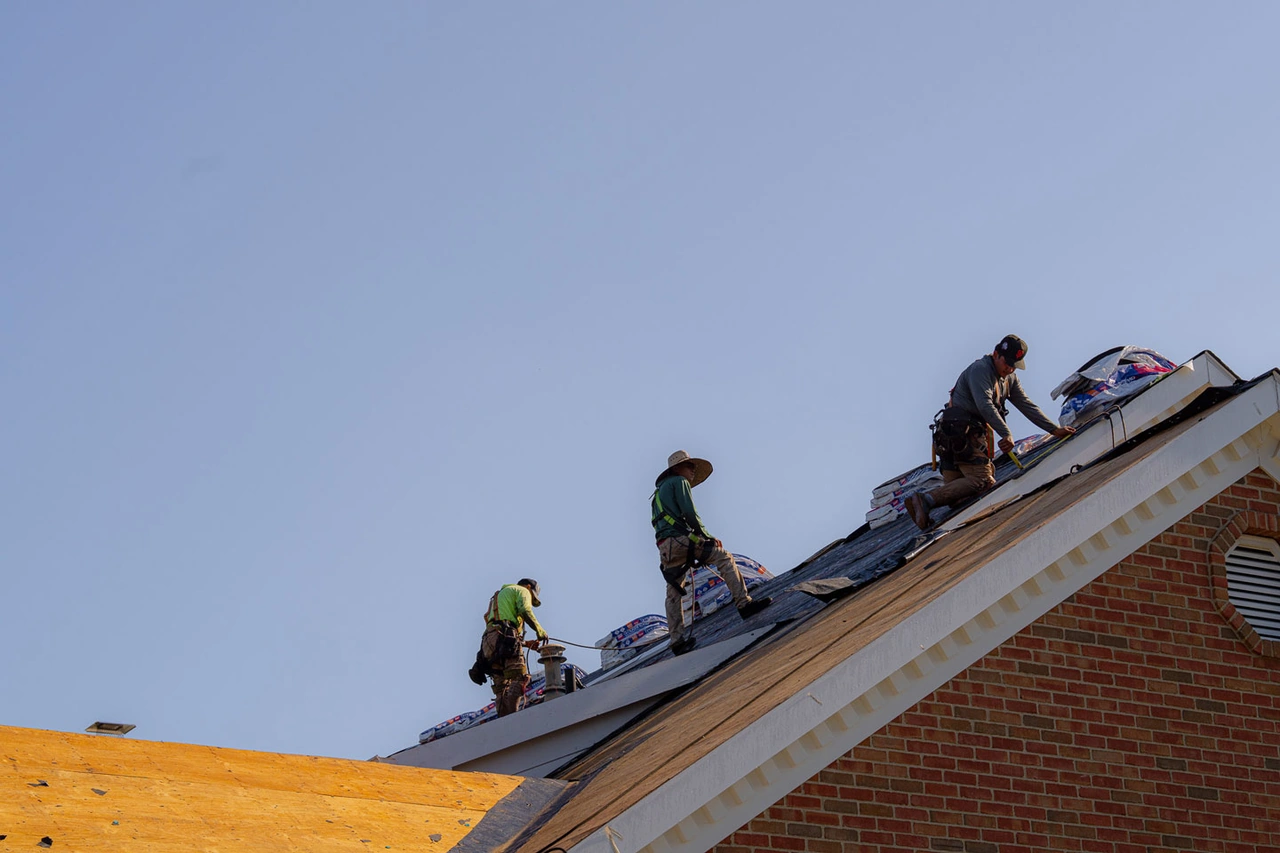
- Coordinate with Your Contractor: It is highly beneficial to have your roofing contractor present on-site when the insurance adjuster performs their inspection. A professional roofer can point out subtle shingle bruising, wind-lifted tabs, and damaged flashing that the adjuster might otherwise overlook, ensuring your scope of work is accurate and complete.
- Understand ACV vs. RCV: Review your policy to see if you have Actual Cash Value (ACV) or Replacement Cost Value (RCV) coverage. An ACV policy pays out the depreciated value of your roof based on its age, while an RCV policy covers the actual cost of replacing the roof at today's market rates, minus your deductible.
Choosing Between Roof Repair and Full Replacement
Once your roof damage has been documented and evaluated, you must decide whether a targeted repair or a complete roof replacement is the best path forward. This decision depends on several critical factors, including the extent of the damage, the age of your roofing materials, local building codes, and insurance requirements.
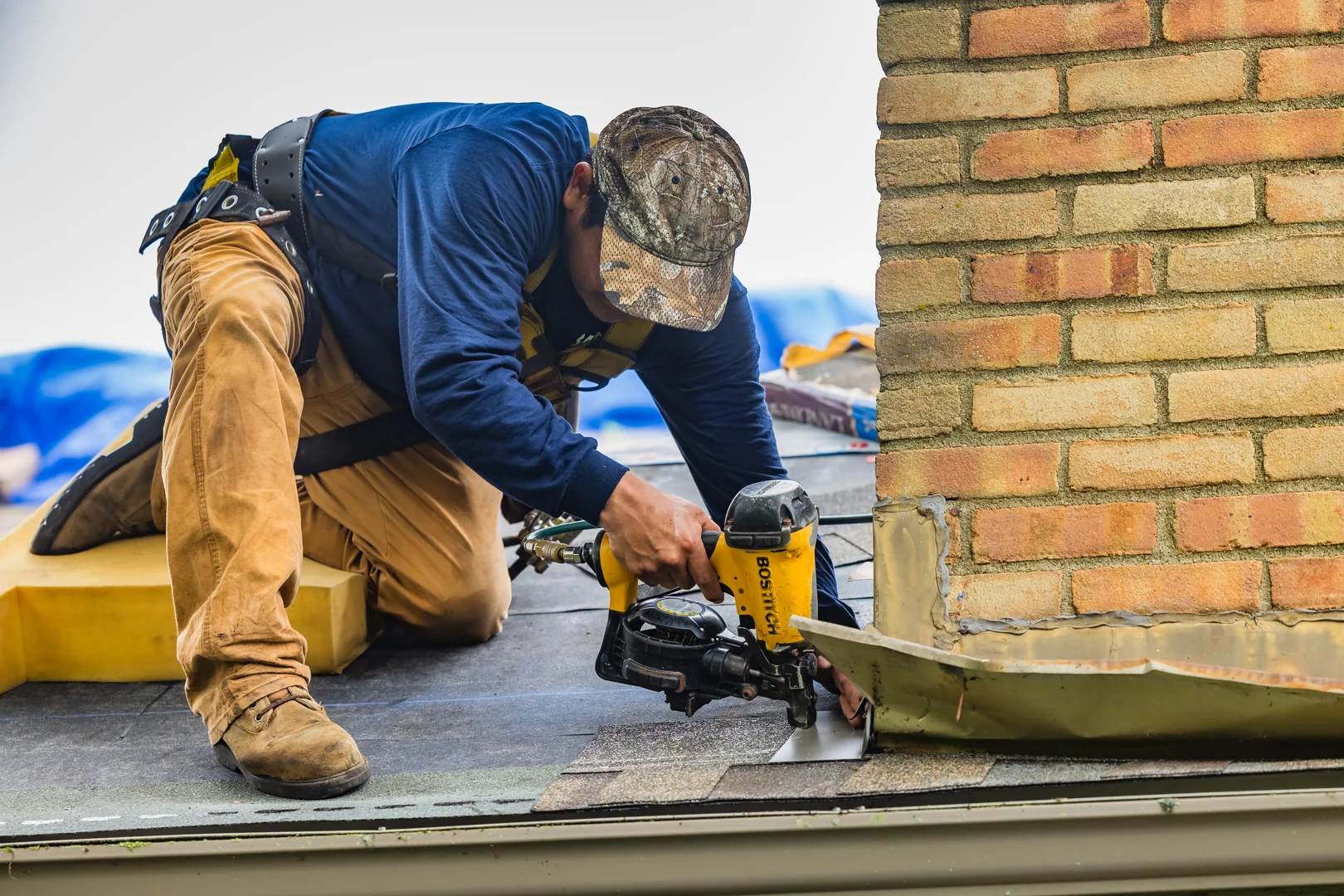
To help you weigh your options, our Roof Damage Repair Guide 2026 outlines the technical differences between these two approaches. For a real-world look at how a complete restoration is executed with modern, high-durability materials, you can also read about the Lincoln RI Storm Roof — CertainTeed Landmark | Pinnacle project, which demonstrates how stripping a roof down to the wooden deck is the only way to identify hidden rot and build a truly resilient system.
Consider these key decision factors when choosing between repair and replacement:
- The 25–30% Rule: As a general industry standard, if storm damage affects 25% to 30% or more of your total roof surface area, a full replacement is usually recommended and often required by insurance carriers. Patching a massive portion of a roof leaves it highly vulnerable to future leaks and creates an unsightly, mismatched appearance.
- Material Age and Condition: If your roof is nearing the end of its natural lifespan (typically 15 to 20 years for standard asphalt shingles), investing in repairs is often a temporary band-aid. A severe storm can easily compromise the brittle, aged materials, making a full replacement the more cost-effective long-term solution.
- Local Building Codes: Many municipalities in Central Ohio enforce strict building codes regarding roof repairs. For example, if your roof already has two layers of shingles installed, building codes typically prohibit adding a third layer or performing extensive patches without tearing the entire system down to the bare wood deck.
- Wind and Impact Ratings: If you are replacing your roof after a storm, it is a great opportunity to upgrade to high-performance materials. Class H shingles are rated to withstand wind speeds up to 150 mph under ASTM D3161 and ASTM D7158 standards. Additionally, upgrading to Class 4 impact-resistant shingles can protect your home from future hailstorms and may qualify you for a substantial discount on your homeowners insurance premiums.
Frequently Asked Questions About Storm Damage
How long do I have to file an insurance claim after a storm?
The timeline for filing a storm damage insurance claim varies by state and insurance policy. In many cases, policyholders have between one and two years from the confirmed date of loss to file a claim. However, we always recommend taking action as quickly as possible. Waiting months to file a claim makes it much harder to prove that the damage was caused by a specific storm event rather than normal, gradual wear-and-tear, which could lead to a claim denial.
Can small hail actually damage my roof?
Yes. Homeowners often assume that only large, golf-ball-size hail can damage a roof, but even small, pea-size or marble-size hail can cause significant issues. When small hail falls rapidly during a high-wind event, it acts like a sandblaster, stripping away the protective mineral granules on asphalt shingles. This exposes the underlying asphalt to UV rays, causing the shingles to dry out, crack, and fail prematurely.
What are the red flags of a storm chaser scam?
If a contractor knocks on your door unsolicited immediately after a storm, tread carefully. Common red flags of a "storm chaser" scam include:
- Out-of-state license plates or phone numbers.
- High-pressure tactics demanding you sign a contract or assignment of benefits before they perform an inspection.
- Offers to "waive" or cover your insurance deductible, which is illegal insurance fraud in many states.
- A lack of local references, physical office address, or verifiable online reviews.
For trustworthy, community-rooted support in Columbus, consult our guide on Storm Restoration Services Columbus to learn how to verify a roofer's local credentials and protect your home.
Conclusion
Dealing with storm damage is never easy, but you do not have to navigate the recovery process alone. Since 1929, JF Baker Roofing has provided honest assessments, transparent pricing, and quality craftsmanship to families across Central Ohio. We are built on integrity and proven by performance.
We recommend repairs when repairs will do the job, and we only recommend a full replacement when it is genuinely needed. Let our reputation be your security. If you suspect your roof has taken a hit from recent severe weather, contact us today to schedule a professional, pressure-free evaluation of your Storm Damage Repairs. We stand behind every roof we install.











.jpeg)