All About Finding the Best Flashing Sealant for Your Roof
Why Choosing the Right Flashing Sealant Matters for Your Roof
A good flashing sealant is one of the most important tools for keeping water out of your home. Here is a quick overview of what you need to know:
- What it is: A flexible, weatherproof compound applied around roof penetrations, joints, and transitions to stop water intrusion
- Where it is used: Chimneys, vent pipes, skylights, window and door frames, sheathing joints, and metal flashing edges
- Common types: Hybrid elastomeric, silicone, polyurethane, STPE (Silyl-Terminated Polyether), and SEBS thermoplastic
- What to look for: High elongation, UV resistance, low VOCs, and compatibility with your roof substrate
- When it is not enough: Sealant cannot fix poorly installed flashing. If the flashing itself was done wrong, sealant is only a temporary patch
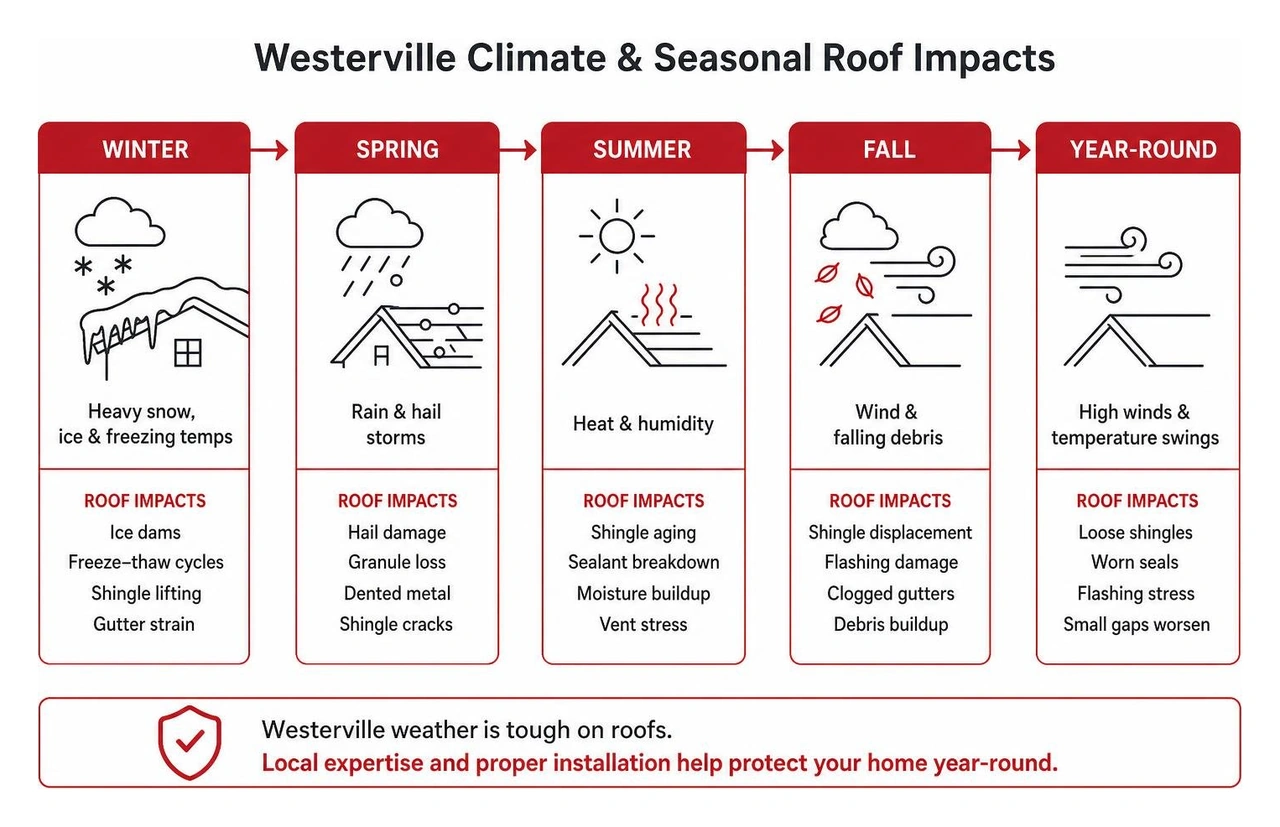
If your roof is leaking around a chimney, pipe boot, or metal edge here in Central Ohio, there is a good chance the flashing or its sealant has broken down. Ohio's freeze-thaw cycles, summer heat, and spring storms put serious stress on any sealant over time. Knowing which type to use, and when not to rely on sealant alone, can save you from a costly repair down the road.
I'm Chad Baker, third-generation owner of JF Baker Roofing, and in this guide I'll walk you through everything you need to make a confident, informed decision about flashing sealants.
Understanding Flashing Sealant and Its Role in Roof Protection
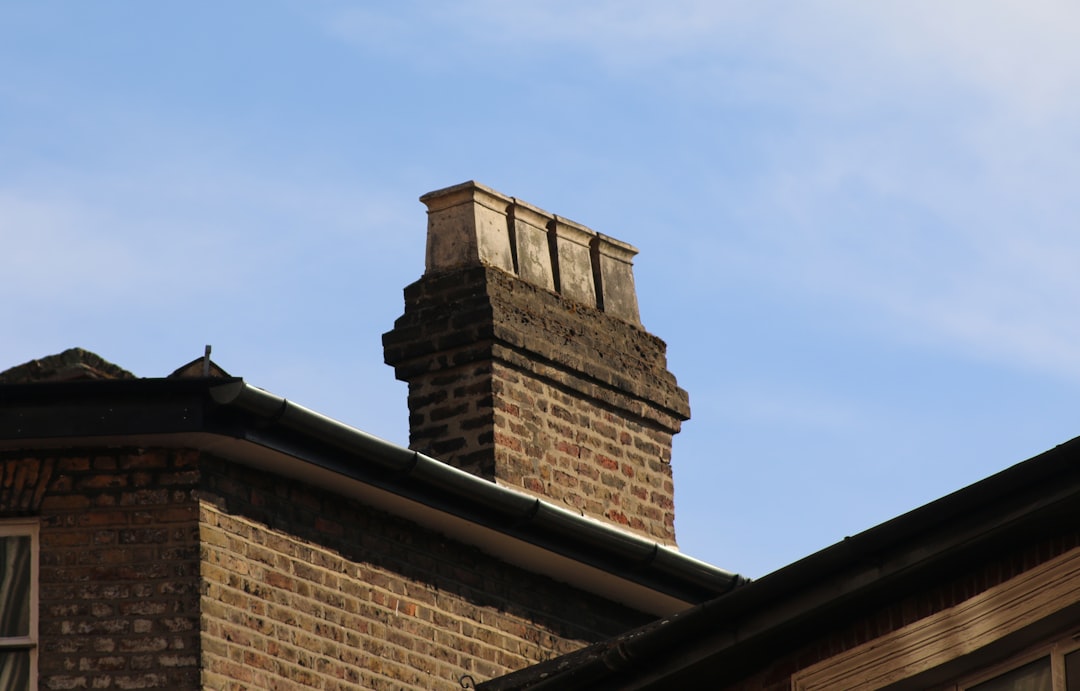
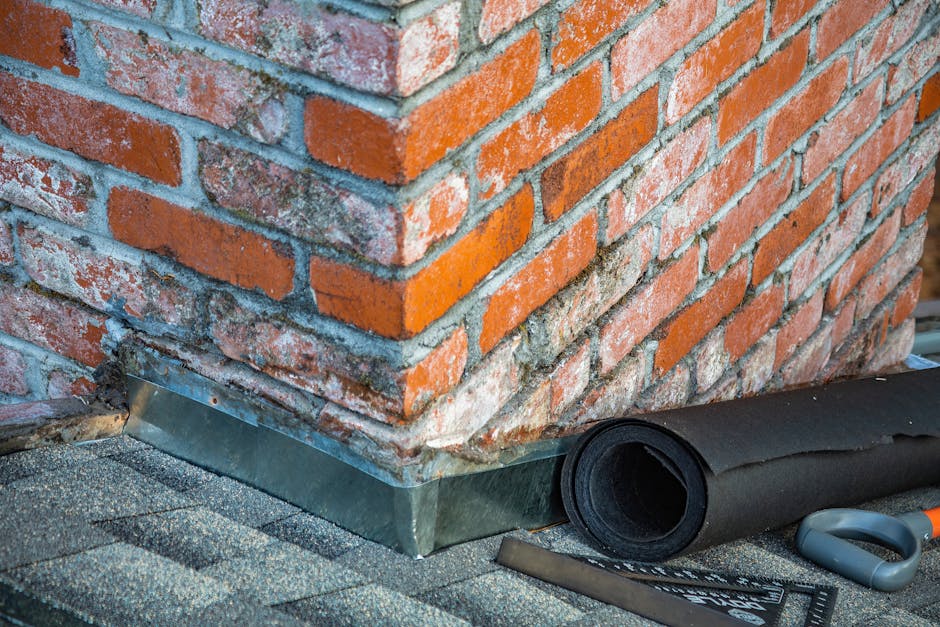
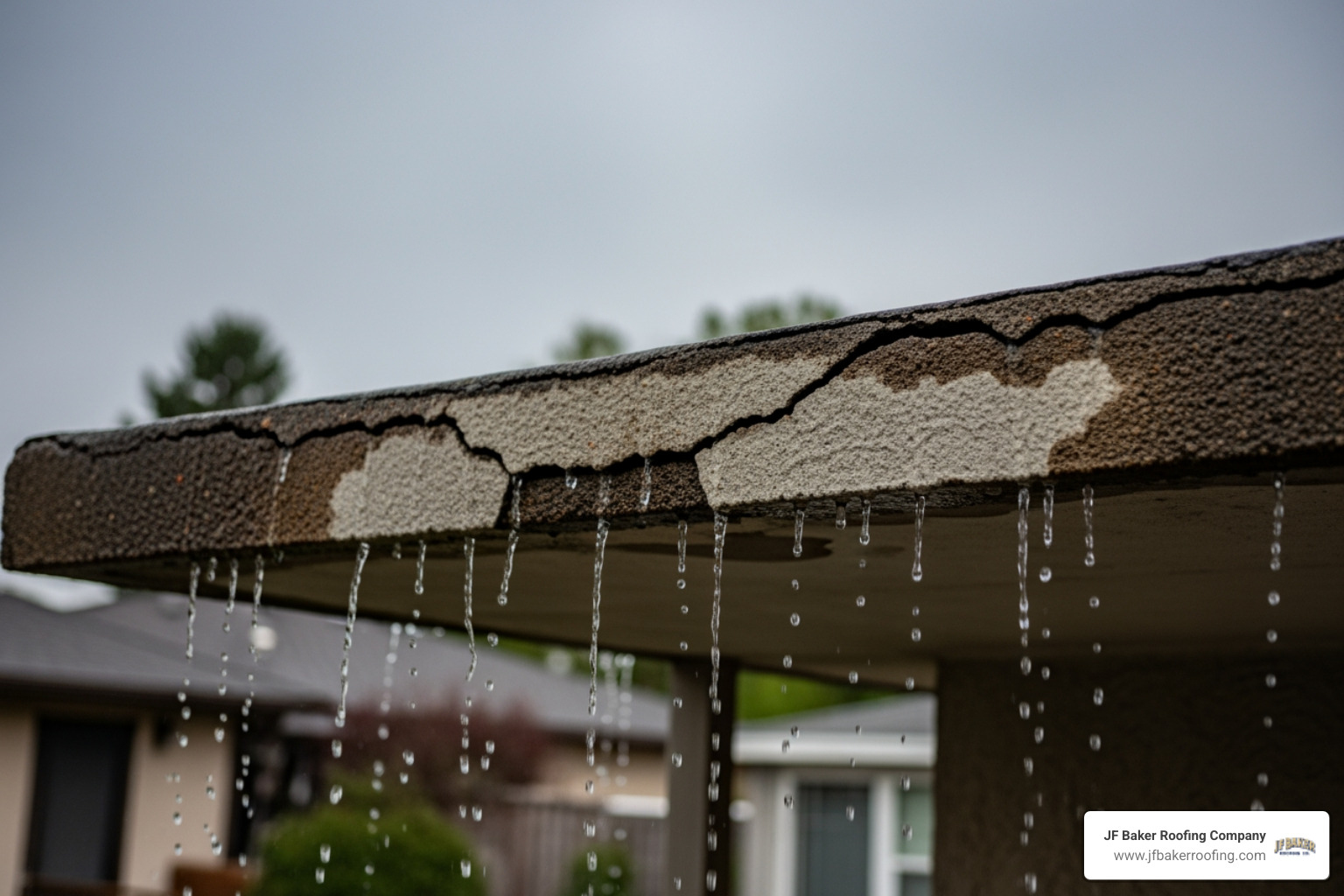
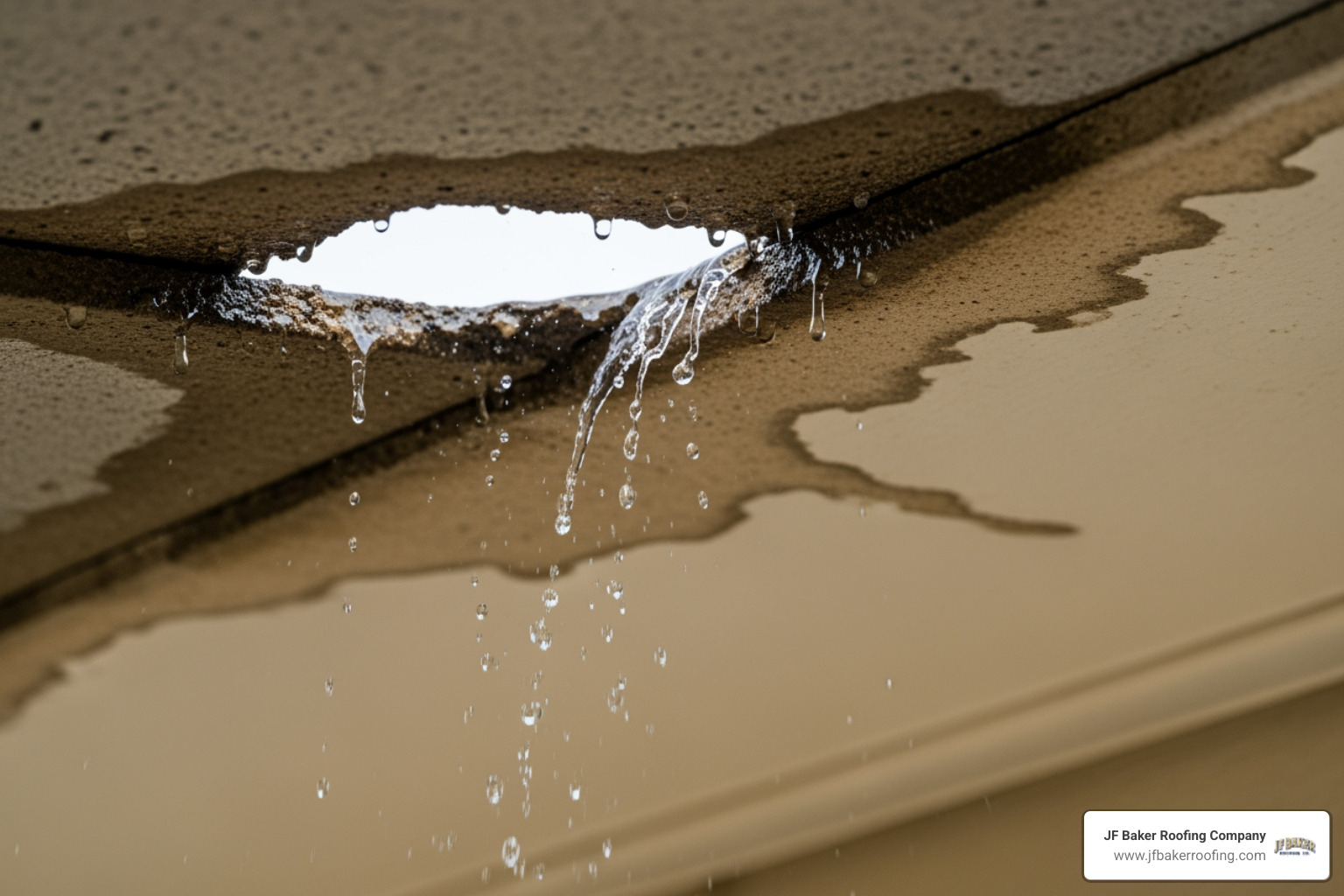
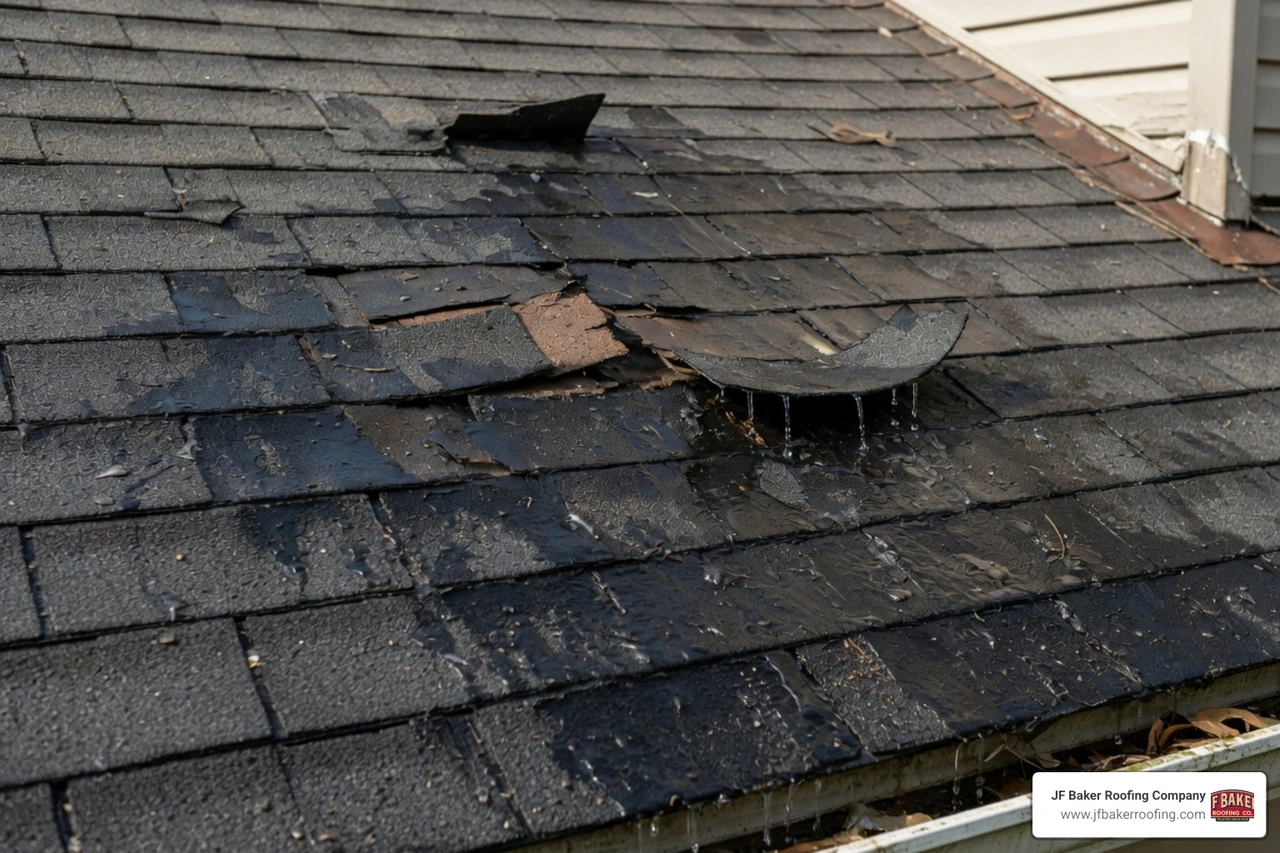
To understand why a high-quality flashing sealant is so critical, we first have to look at how your roof handles water. The vast majority of roof leaks do not happen in the middle of your shingles. Instead, they occur at transition points: where the roof meets a brick chimney, where plumbing vent pipes stick out, or where different roof planes come together.
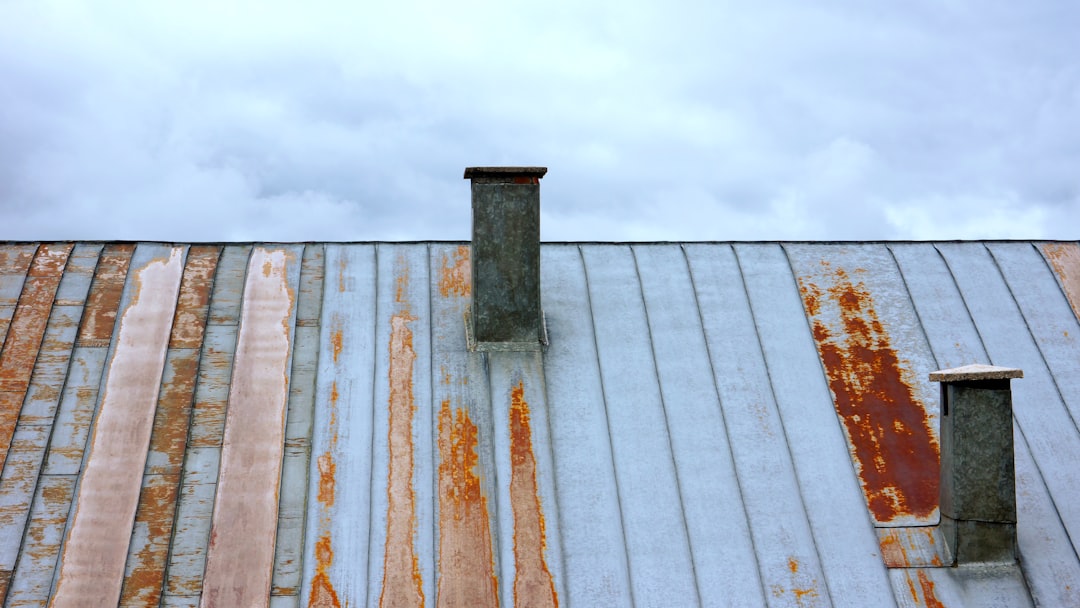
Flashing is the physical barrier: usually made of galvanized steel, aluminum, or copper: designed to divert water away from these vulnerable areas. However, metal cannot easily bend around every single corner, nor can it create an airtight bond with materials like brick, wood, or PVC on its own. That is where flashing sealant comes into play.
The sealant acts as a flexible, waterproof gasket. It fills the tiny gaps between the flashing and the roof penetration, keeping wind-driven rain and melting ice from finding a way underneath. This is especially important during Ohio's intense seasonal transitions. In the heat of July 2026, your roof can reach temperatures well over 140 degrees Fahrenheit, causing the metal flashing to expand. In the freezing depths of winter, that same metal contracts.
If your sealant lacks the elasticity to handle this constant shifting, it will crack and pull away, leading to issues like a Metal Roof Ridge Cap Leaking or requiring a professional Chimney Flashing Leak Repair. A premium sealant must also resist the intense UV radiation that beats down on your roof daily, which rapidly degrades cheaper, hardware-store caulks.
Comparing the Different Types of Roof Sealants
Not all sealants are created equal. Using the wrong formula on a specific roofing material can lead to chemical incompatibility, poor adhesion, and premature failure.

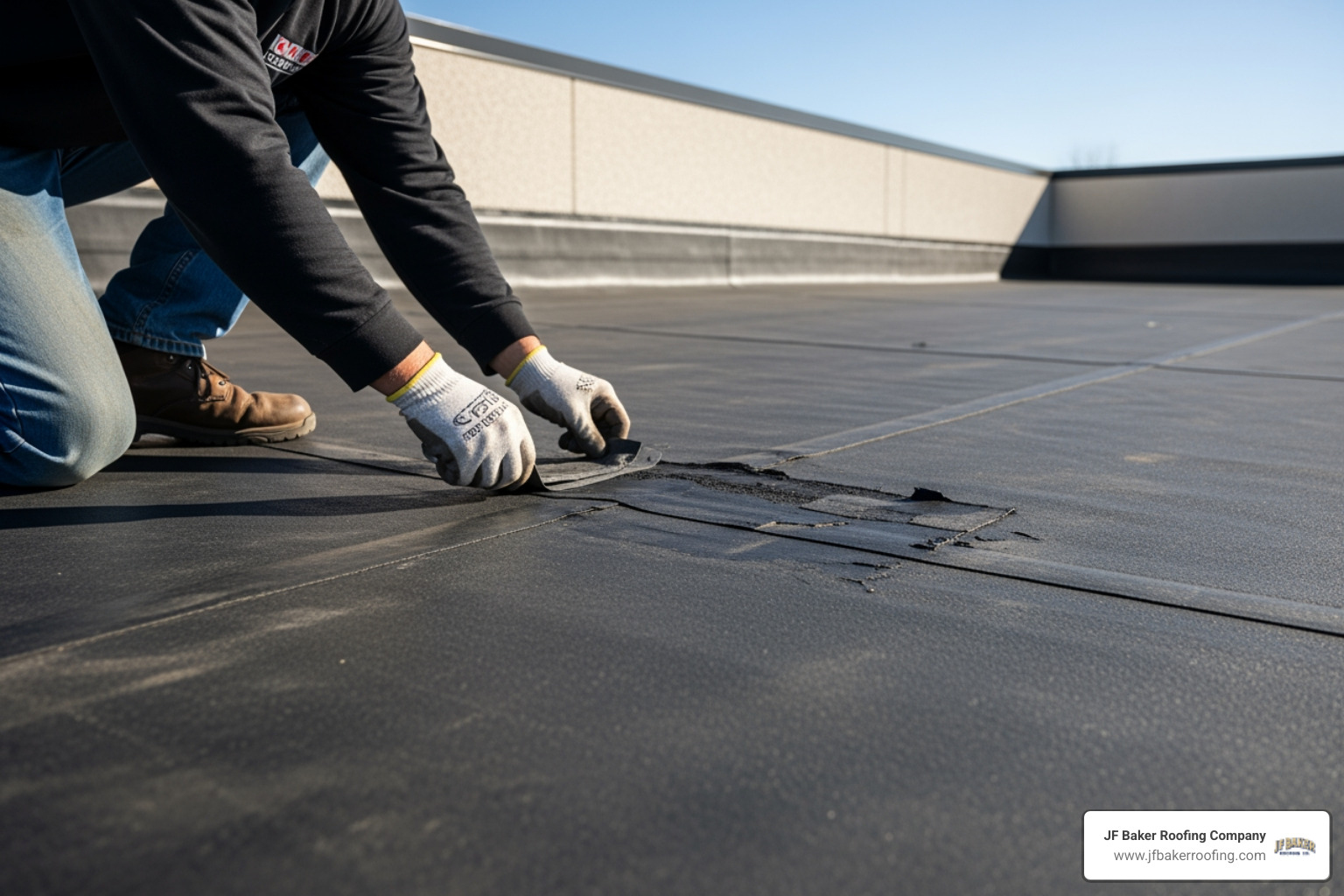
When we evaluate options for a Rubber Flat Roof Repair or a standard residential shingle roof, we look closely at the chemical makeup of the product. Let us break down the most common types of flashing sealants used in modern construction.
Hybrid Elastomeric Flashing Sealant
Hybrid elastomeric sealants represent some of the most versatile technology on the market today. These products combine the best traits of polyurethane (strength and paintability) with the best traits of silicone (weather resistance and fast curing).
A major benefit of a premium hybrid option, such as FLASHING SEALANT , is its ability to eliminate the need for traditional reinforcing tapes at joints and corners. This reduces surface preparation time significantly. Additionally, hybrid sealants are highly forgiving of weather conditions. They can be applied directly to damp surfaces and will still cure reliably.
According to the FLASHING SEALANT Product Datasheet , these hybrids typically have a very low Volatile Organic Compound (VOC) content (around 18 g/L) and fully cure in about 40 hours. They also meet rigorous ASTM D 1970 Nail Sealability requirements, making them excellent for preventing water leaks around fasteners. However, you must avoid using them with any bitumen or petroleum-based products, as they are chemically incompatible.
Silicone Flashing Sealant
Silicone is a classic choice for high-movement areas and flat roofing systems. A premium 100% silicone flashing sealant offers outstanding UV stability and will not dry out or crack under direct sunlight.
Silicone is particularly well-known for its incredible flexibility. Some formulations can achieve up to 500% elongation, meaning they can stretch to five times their original size without tearing, while maintaining a tensile strength of 300 psi. This makes silicone highly effective for sealing around pipes and HVAC units that experience significant thermal movement.
Silicone also stands up incredibly well to ponding water, which is why it is frequently used during an EPDM Rubber Roof Installation Guide process. The main drawbacks are that silicone cannot be painted, it can attract dirt over time, and it requires a completely dry, clean surface during application to bond properly. It typically skins over in 1 to 2 hours but can take 3 to 7 days to reach a full cure.
Polyurethane and STPE Sealants
Silyl-Terminated Polyether (STPE) and polyurethane sealants are heavy-duty options favored for their extreme toughness and adhesive strength.
Products like ZIP SYSTEM® LIQUID FLASHING utilize STPE chemistry to create an incredibly strong, seamless weather barrier. These sealants can achieve a tensile strength greater than 150 psi and an elongation at break greater than 350%. They bond tenaciously to damp or dry substrates without a primer and skin over in as little as 30 minutes.
Other high-performance hybrid polymers, like POLYFLASH ® MPS , offer a joint movement capability of plus or minus 35% with zero shrinkage. This zero-shrinkage property is crucial because it ensures the sealant will not pull away from the edges of a joint as it cures.
For projects requiring rapid strength development, POLYFLASH ® HPS features a skin-over time of just 15 minutes at 70 degrees Fahrenheit and reaches its optimum strength in 7 days, with a full cure in 21 days. These sealants remain permanently elastic across a massive temperature range (from -40 to 200 degrees Fahrenheit), making them ideal for the wild temperature swings we see in Central Ohio.
SEBS Thermoplastic Sealants
Styrene-Ethylene-Butylene-Styrene (SEBS) sealants are thermoplastic elastomers designed for excellent performance in extreme cold and wet weather.
If you are dealing with an emergency repair in the middle of a freezing Ohio winter, POLYFLASH ® SEBS is a highly reliable option. It can be applied to damp surfaces (though not in standing water) and remains highly flexible in temperatures ranging from -40 to 200 degrees Fahrenheit.
With an elongation at break greater than 500% and a tensile strength exceeding 350 psi, SEBS sealants offer incredible durability. They skin over in about 20 minutes, but because they contain solvents (such as Xylene), they have a higher VOC content (around 322 g/L) and require proper safety precautions, including adequate ventilation during application.
Key Features of a High-Quality Sealant
When you are sorting through the options at a supplier, it is easy to get overwhelmed by the technical jargon. To find the best option for a durable Best Flat Roof Patch, focus on these key physical properties:
- Elongation and Elasticity: Look for a sealant with high elongation (ideally 350% or greater). This ensures the product can stretch as your roof moves without tearing or losing its bond.
- UV Resistance: Roof sealants are subjected to brutal, direct sunlight. Pure polyurethanes can degrade and become brittle under UV rays if they are not shielded, whereas silicones, STPEs, and high-quality hybrids are naturally UV-stable.
- Shrinkage Rate: Cheaper caulks contain water or solvents that evaporate as they cure, causing the sealant to shrink. This shrinkage puts stress on the bond line and can cause the edges to peel. Look for 100% solids formulas that offer 0% shrinkage.
- VOC Content: Low-VOC sealants (like hybrids at 18 g/L or STPEs at under 30 g/L) are safer for installers and better for the environment. They also tend to have less offensive odors during application.
- Substrate Compatibility: Always verify that the sealant is rated for the materials on your roof. For example, some sealants will damage polystyrene insulation, while others cannot adhere to treated wood unless the wood has weathered for at least six months.
Best Practices for Applying Sealant to Roof Flashing
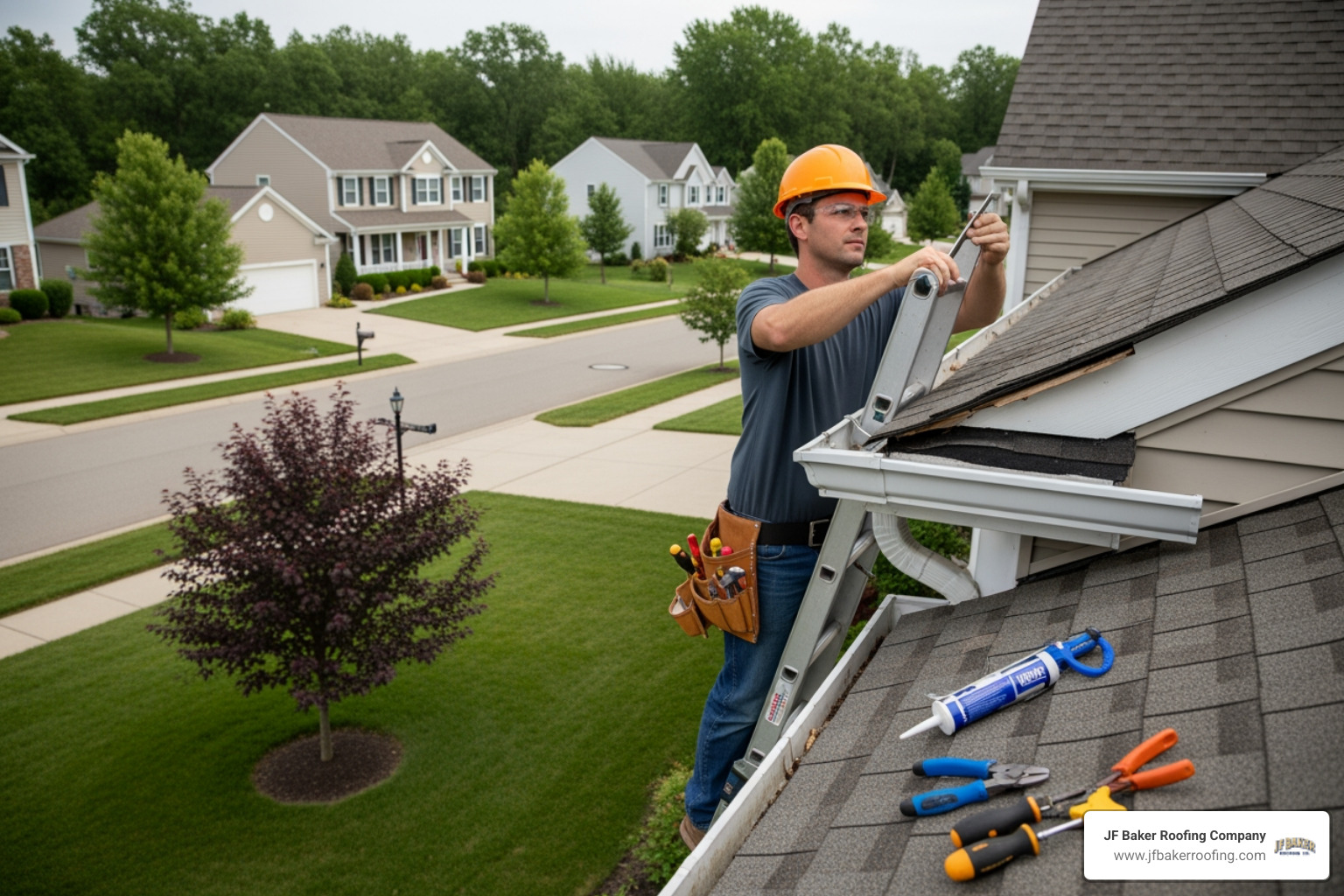
Even the most advanced, expensive flashing sealant will fail if it is applied incorrectly. Proper installation is a precise process that requires patience and attention to detail.
Here is the step-by-step process our crews follow to ensure a watertight seal:
- Clean the Surface Thoroughly: Adhesion is everything. The substrate must be structurally sound and completely free of dirt, dust, oil, grease, rust, and old, peeling caulk. For metal surfaces, we use a wire brush to remove rust and scale, followed by a solvent wipe. Avoid using household detergents or soaps, as they can leave a film that prevents the sealant from bonding.
- Address the Gaps: Sealant is designed to fill joints, not bridge massive chasms. If you have a joint or gap wider than 1/4 inch, you must install a foam backer rod first. This prevents "three-point bonding" (where the sealant adheres to the bottom and both sides of a joint), which restricts the sealant's ability to stretch and leads to early failure.
- Respect the Temperature Limits: Most high-performance sealants should be applied when ambient temperatures are between 35 and 100 degrees Fahrenheit. If it is too cold, the sealant will be incredibly difficult to pump out of the gun; if it is too hot, it may skin over too quickly before you can tool it.
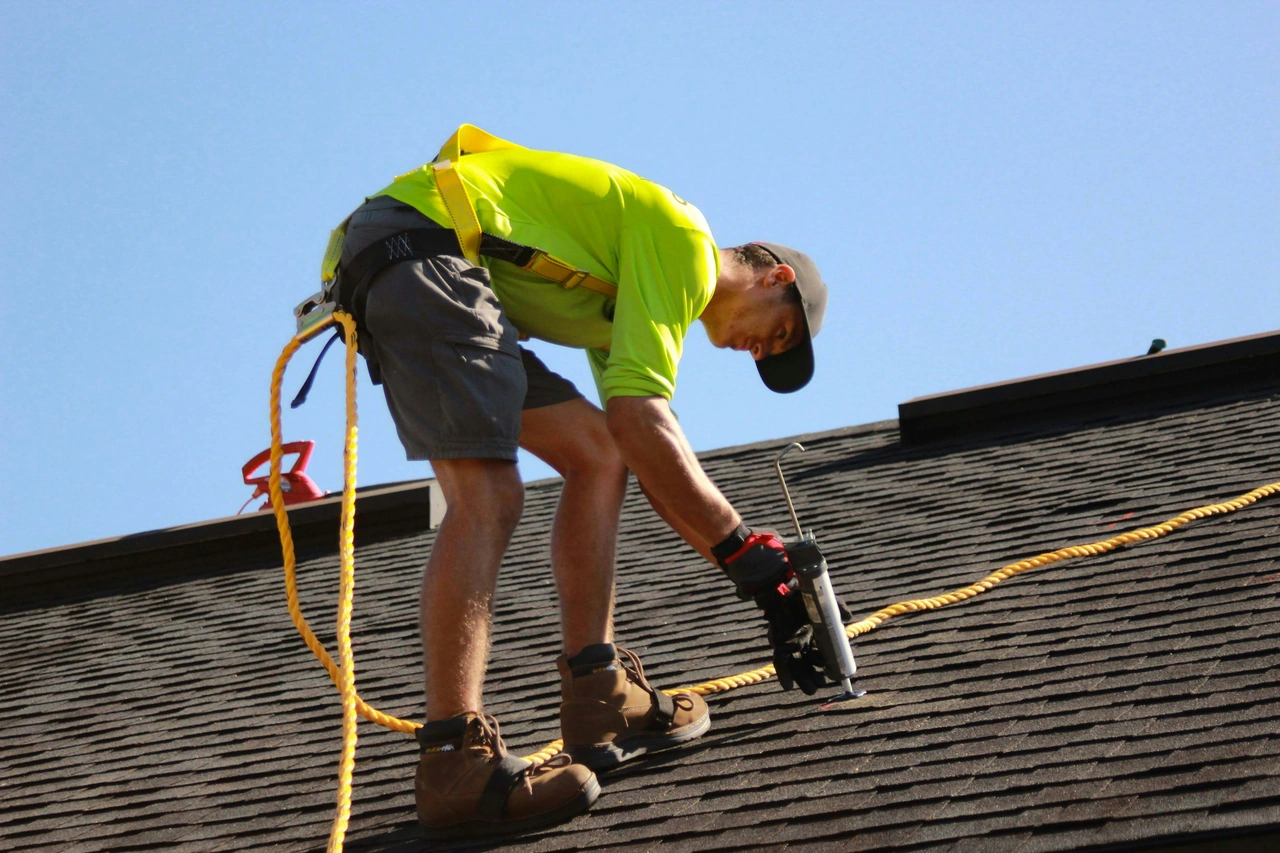
- Apply and Tool Promptly: Gun a continuous, smooth bead of sealant into the joint. You must tool the sealant (flatten and smooth it out) before it begins to skin over. For many hybrid and SEBS sealants, this skin-over window is only 15 to 20 minutes. Tooling forces the sealant deep into the joint and ensures maximum contact with the sides.
- Let It Cure: Protect the fresh sealant from foot traffic and heavy rain until it has had sufficient time to cure.
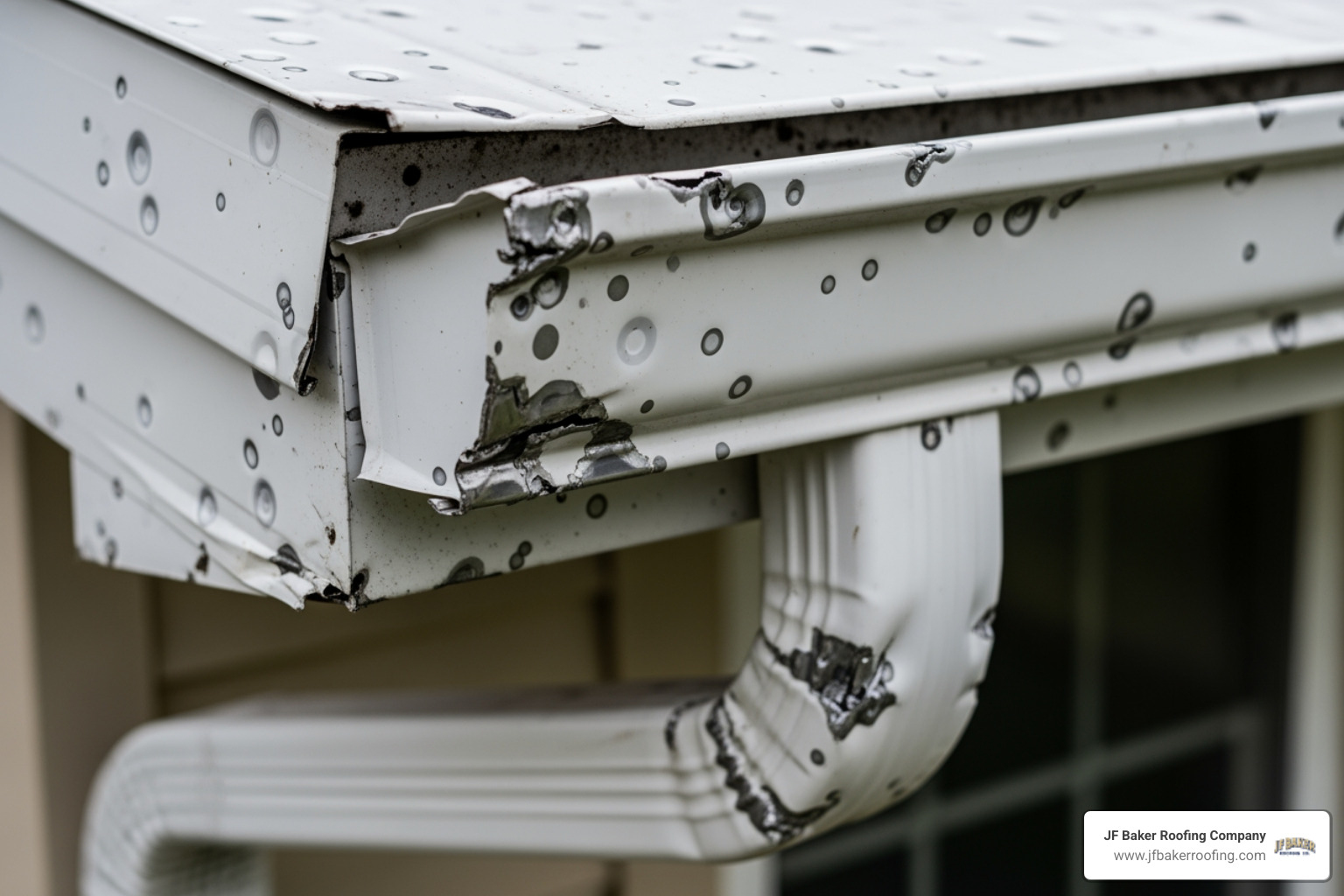
These steps are especially critical when you Replace Drip Edge or perform custom Services - Sheet Metal Work where metal-to-metal joints must remain completely sealed against wind-driven rain.
Common Mistakes and When Sealant is Not Enough
One of the most common mistakes we see homeowners and inexperienced handymen make is treating flashing sealant as a cure-all. It is important to remember: sealant is a secondary line of defense, not a primary one.
Flashing must always be designed to shed water mechanically using gravity. This means upper layers of roofing or metal must always overlap lower layers, directing water naturally down and off the roof.
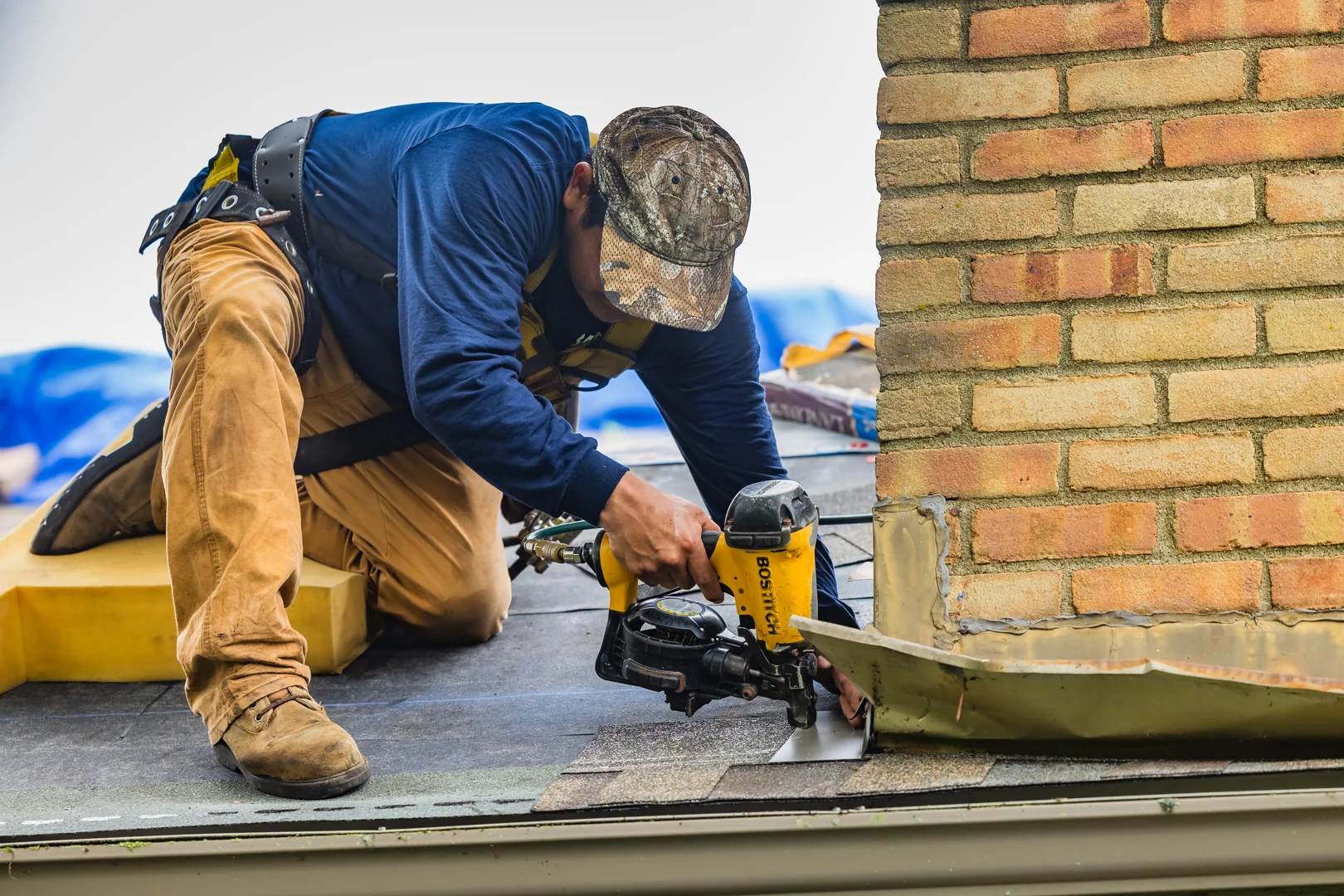
If a contractor tries to fix a leaking chimney by dumping a gallon of thick black tar or mastic over a rusted, improperly installed step flashing, they are setting you up for future failure. That thick layer of mastic will eventually dry out, crack, and trap water behind it, accelerating wood rot and making a proper Chimney Leak Fix much more difficult and expensive down the road.
Another common issue is over-applying sealant. Applying a massive, messy glob of caulk actually reduces its effectiveness. Thick layers of sealant are highly prone to cracking because they cannot expand and contract evenly. A neat, properly tooled bead of high-quality sealant is always more durable than a sloppy smear of cheap mastic.
Conclusion
Finding the right flashing sealant and applying it correctly is a science. It requires matching the chemistry of the sealant to your specific roofing materials, preparing the surfaces with care, and understanding the physical limits of the products.
At JF Baker Roofing, we have been serving our neighbors across Columbus and Central Ohio since 1929. Built on integrity and proven by performance, our family-owned business has spent nearly a century providing honest assessments and quality craftsmanship. We do not believe in high-pressure sales tactics or temporary, sloppy patches. If your roof flashing can be safely repaired with a high-performance sealant, we will tell you exactly how we plan to do it. If the metal is too damaged and needs to be replaced, we will explain why.
Whether you live in Dublin, Upper Arlington, Hilliard, or right here in Columbus, we stand behind every roof we install and repair. If you suspect you have a leak around your chimney, pipe boots, or roof edges, let our reputation be your security.
Schedule a Roof Repair with us today for a straightforward, professional evaluation of your roof.










.jpeg)