EPDM Adhesive Secrets for a Leak-Free Finish
Why the Right EPDM Roofing Adhesive Makes or Breaks Your Flat Roof
Choosing the right EPDM roofing adhesive is one of the most important decisions in any flat roof installation or repair. Get it right, and your roof stays watertight for decades. Get it wrong, and you're dealing with lifted seams, blistering, and leaks that are expensive to fix.
Quick answer: The most common EPDM roofing adhesive options are:
- Solvent-based bonding adhesive - strong contact bond, applied to both surfaces, best for most substrates
- Water-based (latex) bonding adhesive - lower VOCs, one-sided application, good for fleece-backed EPDM
- Neoprene bonding adhesive - bonds EPDM to wood, metal, or concrete
- Seam tape - pressure-sensitive tape for splicing EPDM membrane edges
- Seam primer + edge sealant - used to prep and finish seam areas for a watertight seal
EPDM rubber roofing is one of the most durable flat roofing systems available. But the membrane itself is only as good as what holds it in place.
Here in Central Ohio, roofs face wide temperature swings, wet springs, humid summers, and hard winters. That puts real stress on every bond and seam. Choosing the wrong adhesive for the conditions or the substrate can cause failure long before the membrane itself gives out.
At JF Baker Roofing, we've been installing and repairing flat roofs across Columbus since 1929. This guide covers everything you need to know about EPDM adhesives, from types and application to coverage rates and common mistakes, so you can make a confident, informed decision.
Must-know epdm roofing adhesive terms:
Understanding the Types of EPDM Roofing Adhesive
When you start looking at epdm roofing adhesive options, it is easy to get overwhelmed by the chemical names and various pails. However, these products generally fall into a few specific categories based on their chemical makeup and how they are applied.
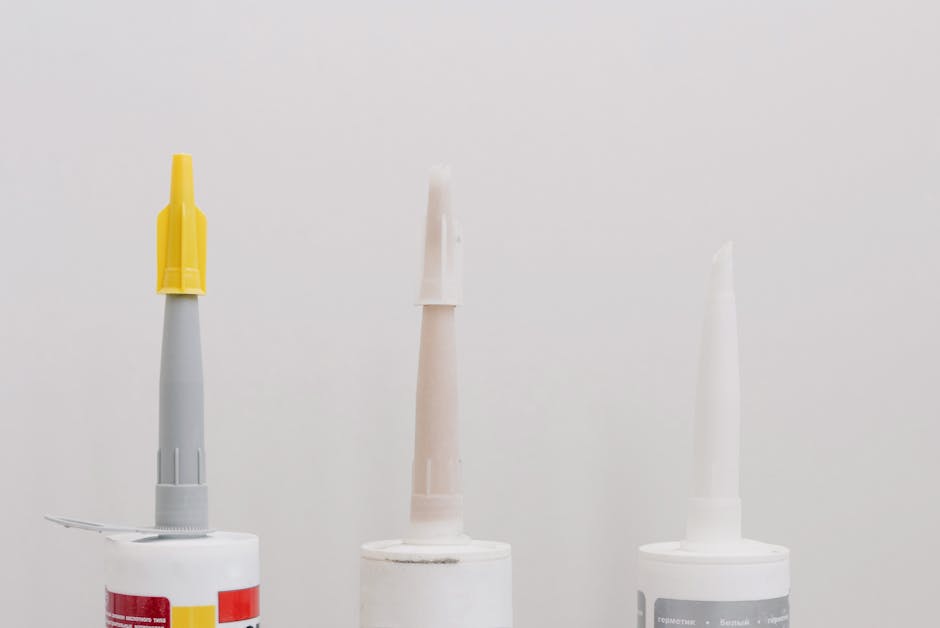
Solvent-Based Bonding Adhesives
This is the workhorse of the industry. Solvent-based adhesives are high-strength contact glues. They are designed for a "two-sided" application, meaning you apply the glue to both the back of the EPDM membrane and the roof substrate. You must wait for the adhesive to "flash off" (become tacky but not wet) before mating the surfaces. Once they touch, the bond is nearly instantaneous and very strong. These are ideal for the temperature fluctuations we see in Columbus, as they offer excellent heat and cold resistance.
Water-Based (Latex) Adhesives
Water-based options are often preferred for their lower odor and easier cleanup. In many cases, these allow for a "one-sided" application on porous substrates like wood, where the membrane is laid into the wet adhesive. However, for vertical surfaces or non-porous substrates, a two-sided method is still required. While environmentally friendly and low-VOC, they require specific temperature windows (usually 40 degrees Fahrenheit and rising) to cure properly.
Neoprene Bonding Adhesive
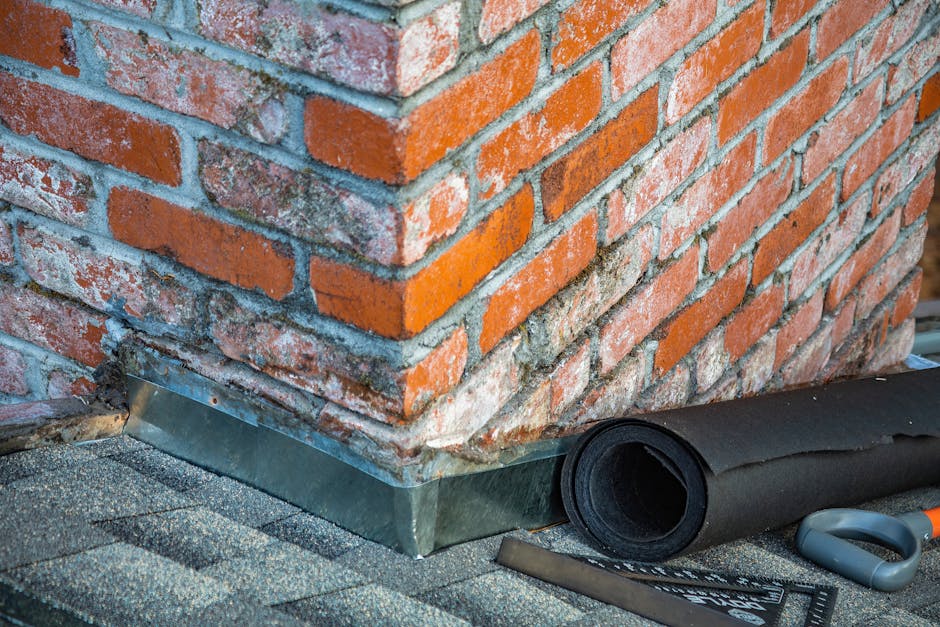
Neoprene-based adhesives are specialized for bonding EPDM to specific substrates like metal, masonry, or concrete. They are incredibly durable and often used in perimeter details or where the roof meets a brick wall. A standard 1-gallon container of neoprene adhesive typically covers about 60 square feet.
VOC Compliance
In April 2026, environmental regulations continue to favor low-VOC (Volatile Organic Compound) products. Many manufacturers now offer "Low-VOC" versions of their solvent adhesives to meet these standards without sacrificing the high-strength bond needed for a long-lasting roof. You can find more technical details on these formulations in the EPDM Adhesives and Sealants - Product Data sheets.
Comparison Table: Solvent-Based vs. Water-Based Adhesives
| Feature | Solvent-Based Adhesive | Water-Based (Latex) Adhesive |
|---|---|---|
| Application Method | Two-sided (Contact) | One-sided or Two-sided |
| Odor Level | Strong | Low |
| Drying Time | Fast (10-20 mins) | Slower (varies by humidity) |
| Substrate Compatibility | Most (ISO, Wood, Metal, Concrete) | Porous (Wood, Fiberboard) |
| VOC Content | Higher (unless Low-VOC version) | Very Low |
| Best For | Professional field application | DIY or environmentally sensitive areas |
Essential Components: Primers, Bonding Agents, and Seam Tapes
A leak-free roof is not achieved with glue alone. It requires a system of products working together to ensure every square inch is sealed.
Low-VOC Primers
Primer is not an adhesive in the traditional sense, but it is the most critical step for seams. Before applying EPDM Seam Tape, the membrane must be cleaned and primed. The primer cleans the factory film off the rubber and creates a "tacky" surface that the tape can chemically bond to. Without primer, seam tape will eventually peel away.
Seam Tapes and Sealants
For the areas where two sheets of EPDM overlap, we use seam tape. Modern tapes, like those from H.B. Fuller, are pressure-sensitive and provide a watertight, vulcanized bond. Once the tape is applied, an edge sealant or lap caulk is often used along the exposed edge of the seam to provide a secondary line of defense against standing water.
Putting It All Together
If you are tackling a small project, you might look into an EPDM rubber roof kit, which typically includes the bonding adhesive, primer, tape, and sealants in the correct proportions.
How to Apply EPDM Roofing Adhesive for a Professional Bond
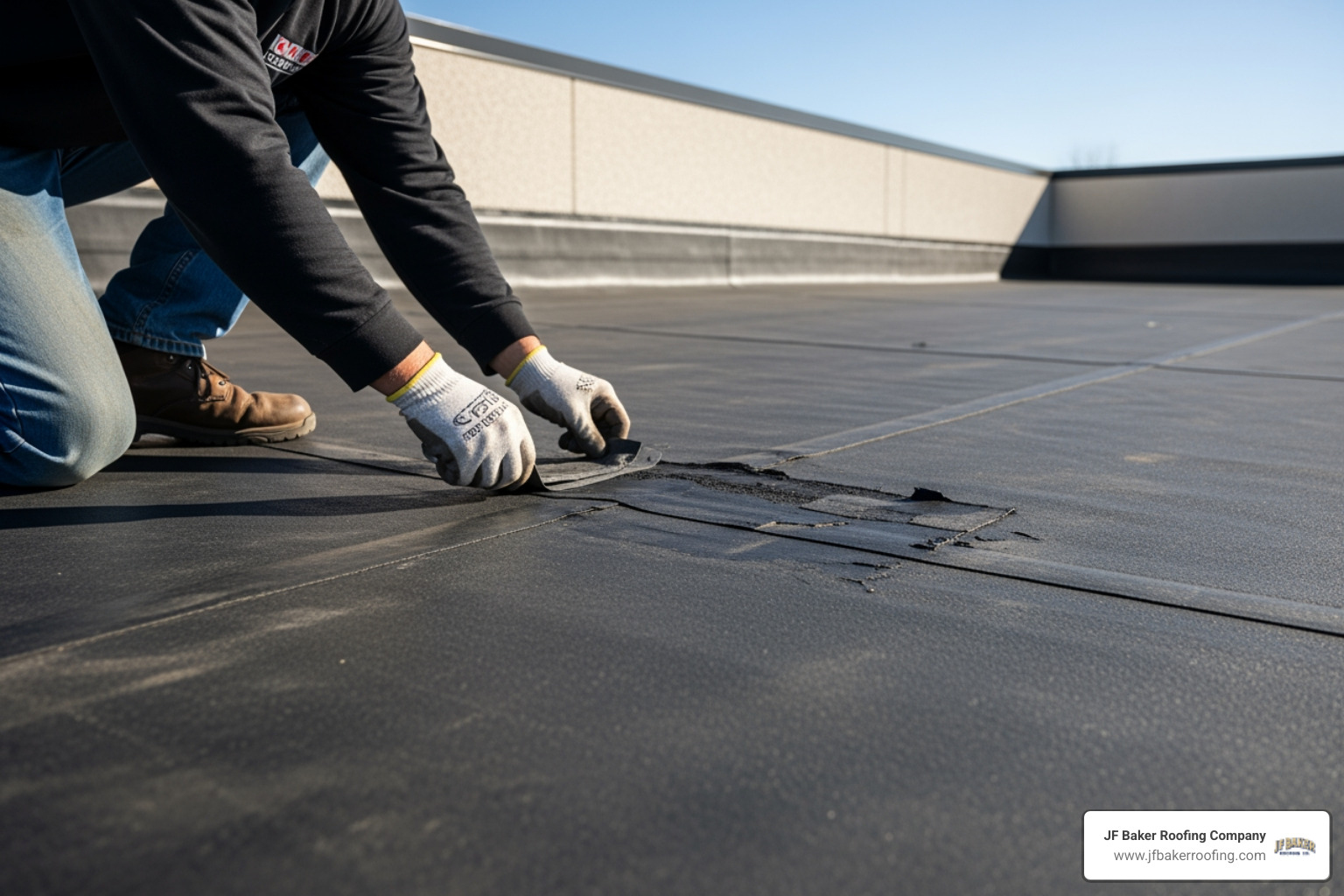
Applying epdm roofing adhesive is a bit of a race against the clock and the weather. If you apply it too thick, it won't dry; if you wait too long, it loses its "tack."
Preparing the Substrate for EPDM Roofing Adhesive
The substrate is the surface your roof sits on. Whether it is plywood, oriented strand board (OSB), concrete, or polyisocyanurate (ISO) insulation board, it must be bone dry and clean.
- Cleaning: Sweep away all dust and debris. Even a small amount of sawdust can prevent the adhesive from sticking.
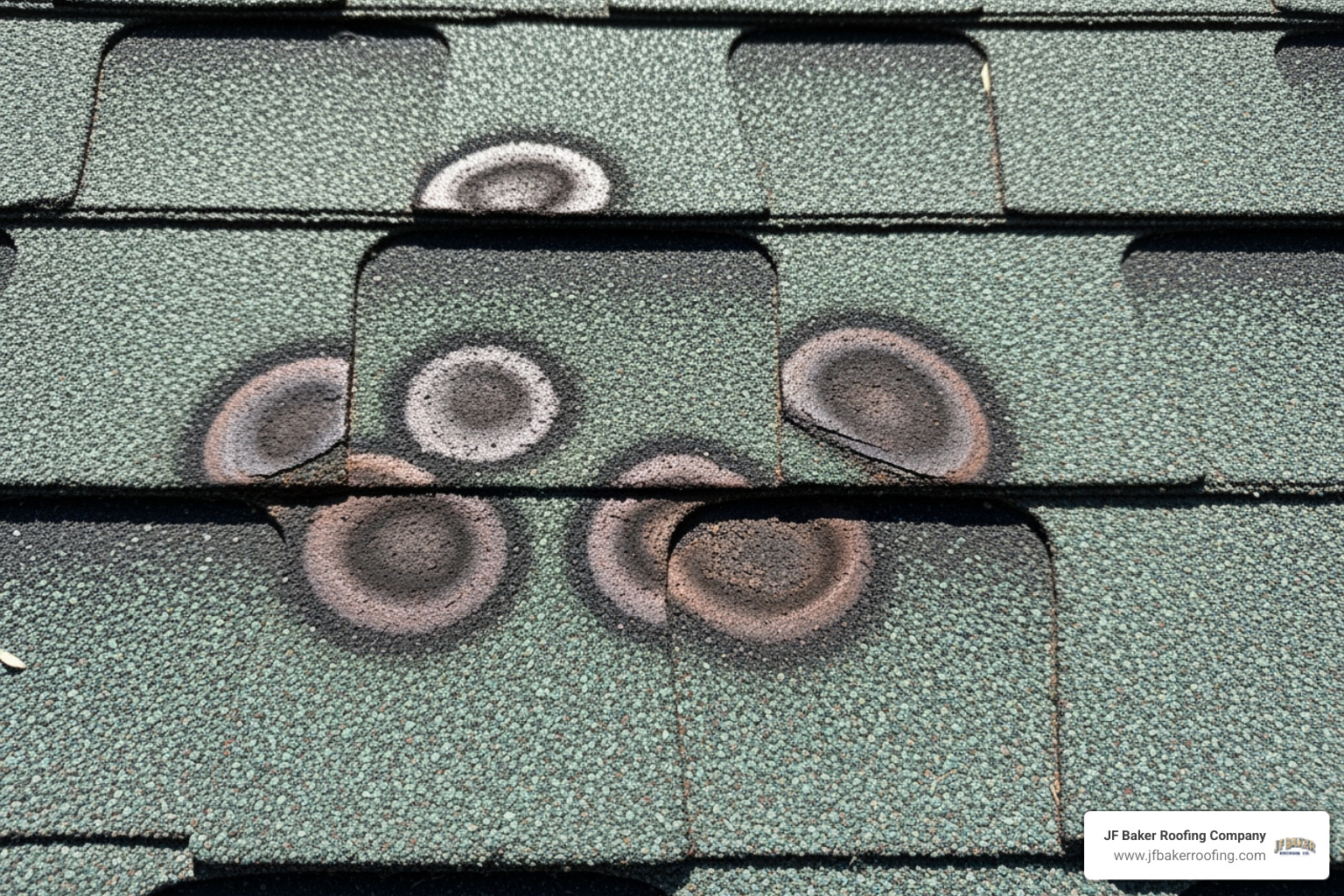
- Moisture: This is the biggest enemy. If there is trapped moisture in the wood or concrete, the adhesive will blister as that moisture tries to escape in the sun.
- Structural Integrity: Ensure all boards are fastened tightly. Any movement in the substrate will put unnecessary stress on the adhesive bond.
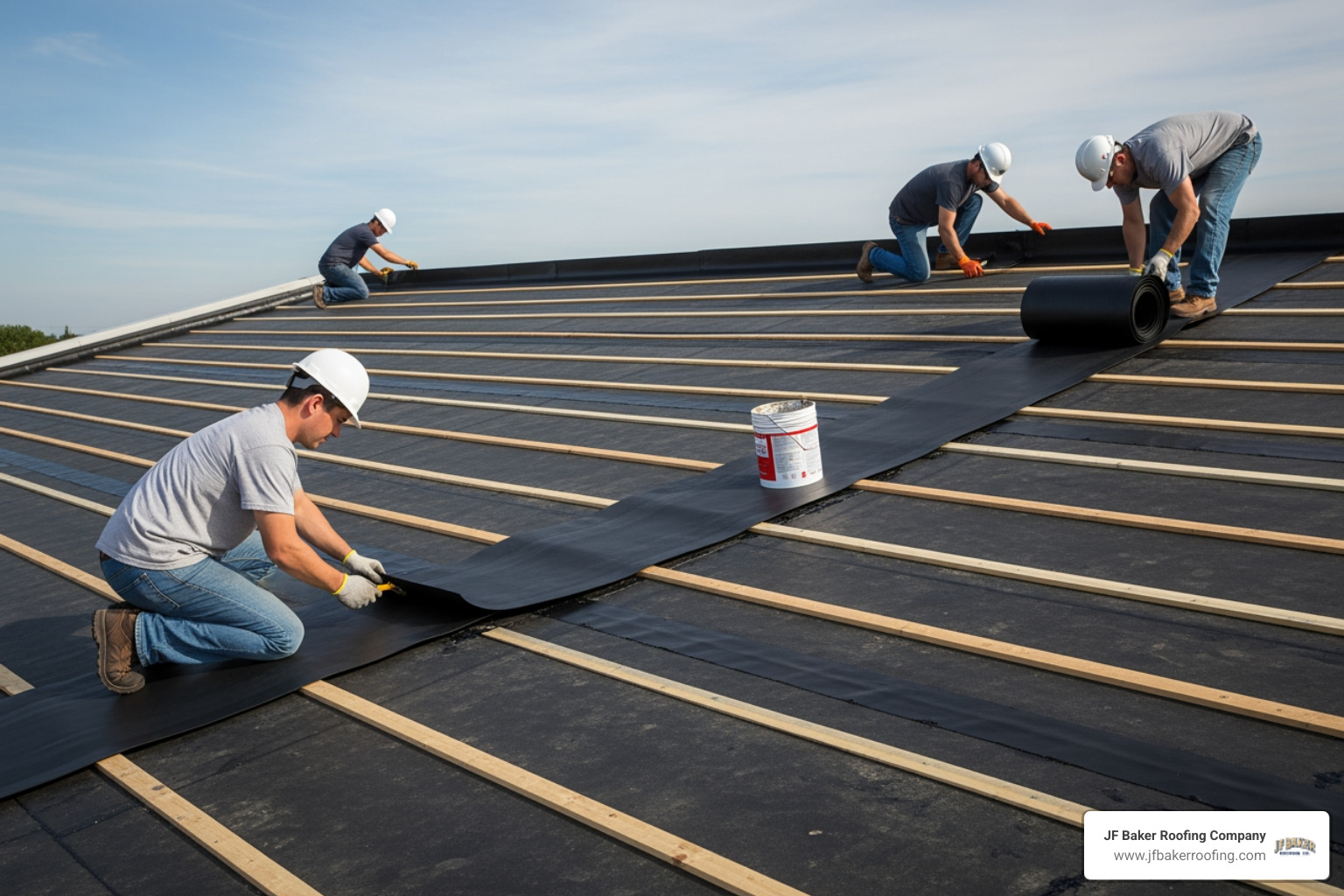
Step-by-Step Application Techniques for EPDM Roofing Adhesive
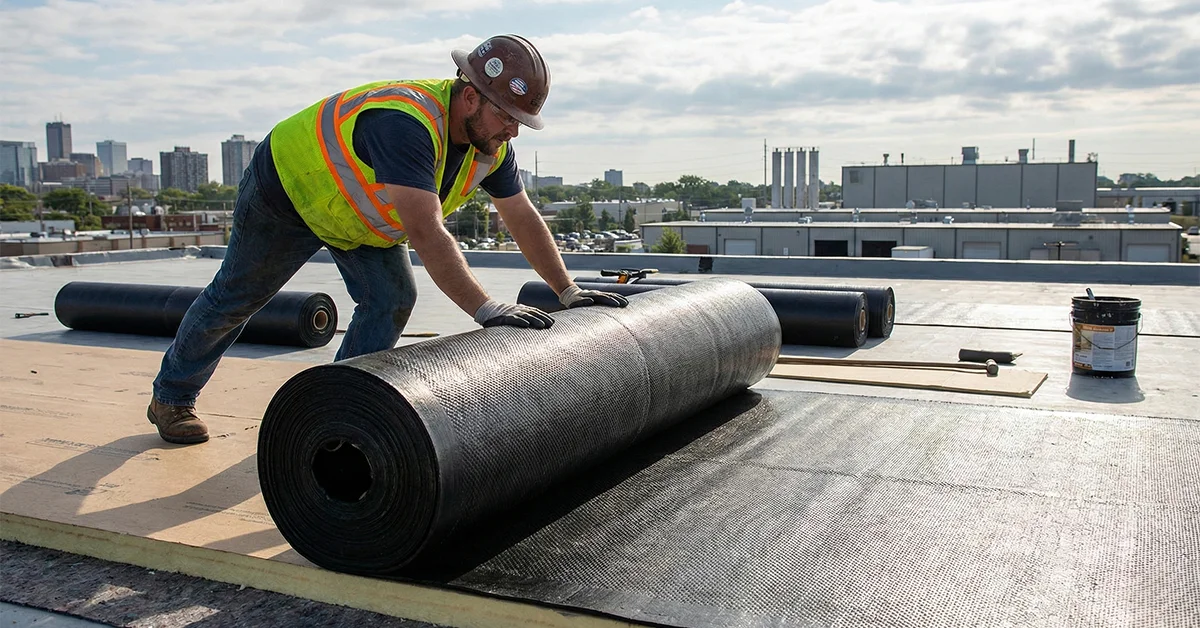
- Position the Membrane: Lay out your EPDM sheet exactly where you want it. Let it "relax" for at least 30 minutes to get rid of any packing wrinkles.
- Fold it Back: Fold half of the sheet back over itself to expose the underside and the roof deck.
- Stir the Adhesive: Always stir your adhesive thoroughly. Over time, the solids settle at the bottom of the pail.
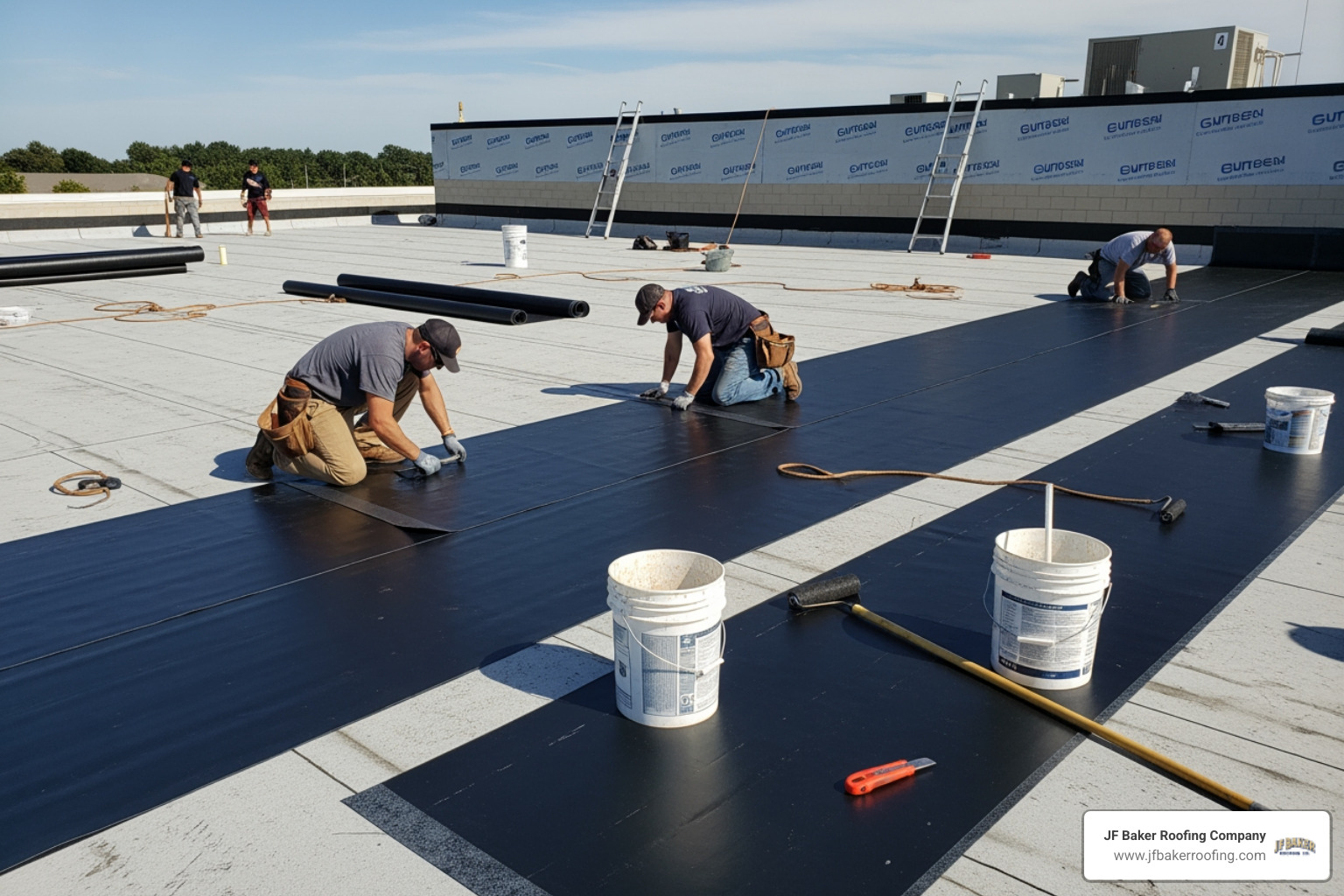
- Apply to Both Surfaces: Using a 9-inch medium nap roller, apply a smooth, even coat to both the roof deck and the back of the rubber. Avoid puddles.
- The Tack Test: Wait for the adhesive to "flash off." It should be tacky to the touch but should not string or stick to your finger when you pull away. If it feels wet, wait longer.
- Mate the Surfaces: Carefully roll the rubber onto the deck. Try to avoid air pockets or wrinkles, as you cannot reposition the sheet once the two adhesive-coated surfaces touch.
- Roll the Field: Use a heavy lawn roller or a specialized floor roller to press the membrane into the substrate, ensuring 100% contact.
- Seal the Edges: Finish the perimeter and seams with the appropriate primers and tapes.
For a deeper dive into the full process, check out our EPDM rubber roof installation guide.
Coverage Rates and Environmental Factors
Understanding how much epdm roofing adhesive you need is vital for project planning. There is nothing worse than being halfway through a roof in Dublin or Westerville and realizing you are out of glue.
Typical Coverage Rates
- Solvent-Based Adhesive: Typically covers about 60 square feet per gallon (when applied to both surfaces). A 5-gallon pail usually covers about 300 square feet of finished roof.
- Water-Based Adhesive: Often covers more area, roughly 100-120 square feet per gallon, especially when used in a one-sided application.
- Primers: A single quart of low-VOC primer can cover up to 175 square feet of seam area.
Ohio Weather Challenges
Our Central Ohio climate plays a huge role in how adhesive performs.
- Temperature: Most adhesives should not be applied if the temperature is below 40 degrees Fahrenheit. If it is too cold, the solvents won't evaporate, and the glue will stay wet, leading to "solvent trap" and massive blisters.
- Humidity: High humidity in a Columbus summer can slow down the flash-off time. If the air is thick with moisture, you might wait 30 minutes for the glue to tack up instead of the usual 10.
- Shelf Life: Most EPDM adhesives have a shelf life of about 12 months if stored in a cool, dry place. If you find an old pail in the garage that has separated or turned into a thick jelly, it is time to toss it.
Frequently Asked Questions about EPDM Roofing Adhesive
Can I use EPDM roofing adhesive on wet surfaces?
Absolutely not. Epdm roofing adhesive is designed to be used on surfaces that are 100% dry. Moisture will interfere with the chemical bond, leading to immediate or delayed failure. If a surprise rain shower hits during installation, you must stop, cover your materials, and wait for everything to dry completely before resuming.
What is the difference between water-based and solvent-based glue?
The primary difference is the carrier liquid and the application method. Solvent-based glue uses chemical solvents that evaporate quickly, creating a high-strength contact bond on both surfaces. Water-based glue uses water as the carrier, has much less odor, and often allows you to apply glue to only the substrate (one-sided) while the glue is still wet. Solvent-based is generally considered more "heavy-duty" for commercial field work, while water-based is popular for RVs and smaller residential projects.
How long does EPDM adhesive take to dry?
The "flash-off" time (when it is ready to bond) usually takes 10 to 20 minutes depending on the wind and temperature. However, the "full cure" can take much longer. While the roof is walkable and watertight almost immediately, the adhesive can take up to 72 hours to reach its maximum structural strength.
Conclusion
Installing a flat roof that lasts 30 years requires more than just high-quality rubber; it requires the right epdm roofing adhesive and a meticulous application process. Whether you are dealing with a small repair on a porch in Upper Arlington or a large commercial project in downtown Columbus, the bond is everything.
At JF Baker Roofing, we have been "Built on integrity. Proven by performance" since 1929. As a third-generation family-owned business, we have seen every type of roofing failure imaginable, and most of them start with poor adhesive choice or improper preparation. We stand behind every roof we install, providing honest assessments and quality craftsmanship to our neighbors in Hilliard, Gahanna, Powell, and across Central Ohio.
If your flat roof is showing signs of age, or if you are ready to install a new, high-performance EPDM system, we are here to help. You can learn more about maintaining your system in our guide to rubber flat roof repair, or contact our commercial roofing experts today for a no-pressure consultation. Let our reputation be your security.

.jpeg)