Best Roof Patch for Leaks That Actually Work

Why Finding the Best Roof Patch for Leaks Can Save You Thousands
The best roof patch for leaks depends on your roof type and conditions, but here are the top options most homeowners rely on:
| Product Type | Best For | Key Benefit |
|---|---|---|
| Rubberized wet patch (e.g., Henry 208R) | Asphalt shingles, general repairs | Works in rain and standing water |
| Liquid rubber sealant | Flat roofs, large coverage areas | Flexible, long-lasting waterproof seal |
| Silicone sealant | All roof types, UV exposure | Reflects up to 90% of UV rays |
| Polyurethane sealant | High rain/snow areas, flashing | Superior water resistance |
| Sealant tape | Small cracks, emergency repairs | Fast, easy to apply |
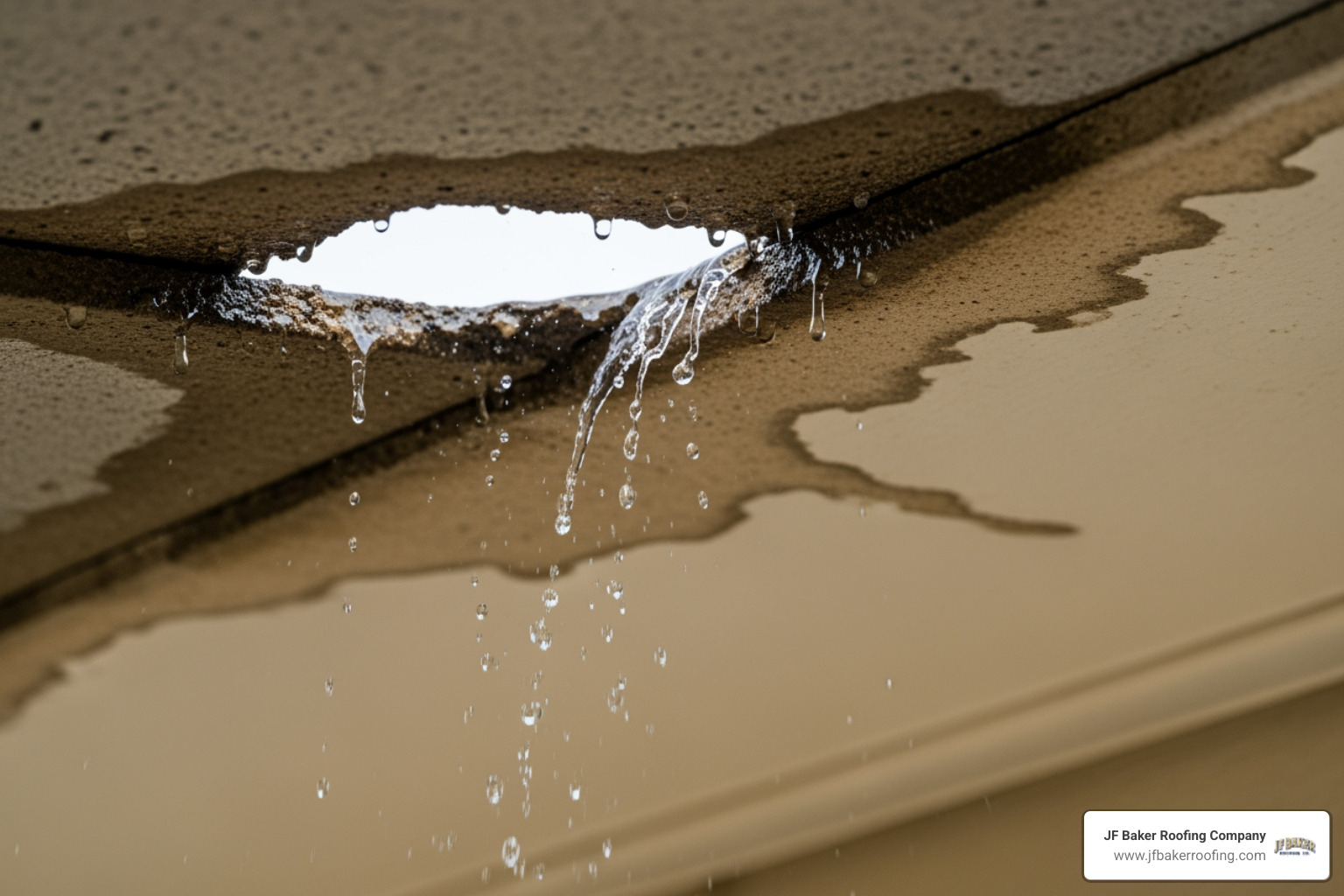
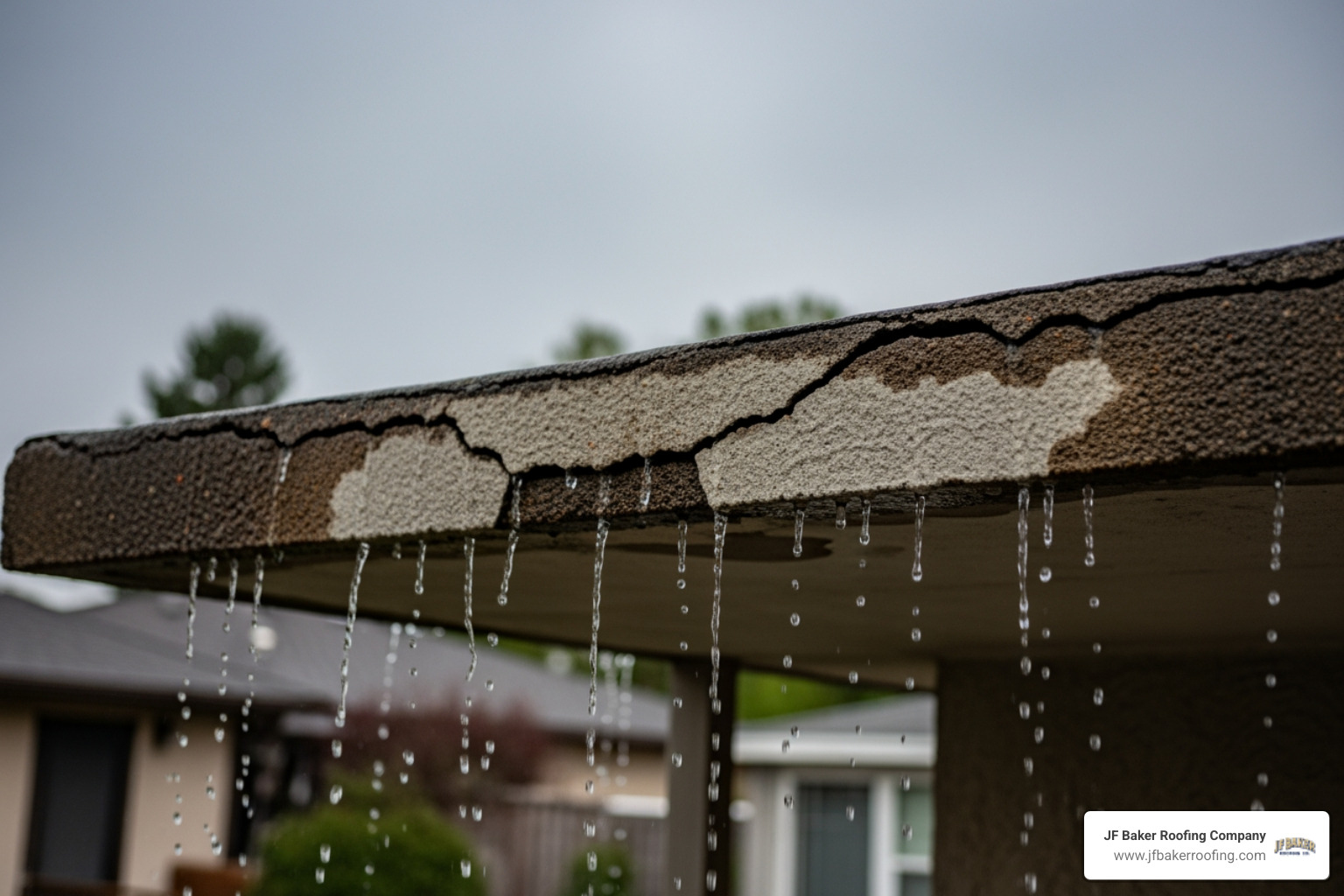
A small roof leak might not feel urgent. But left alone, that drip can quietly rot your decking, grow mold within 48 hours, and turn a simple fix into a full roof replacement averaging around $9,000.
The good news? Patching a roof leak can cost as little as $20 and about an hour of your time.
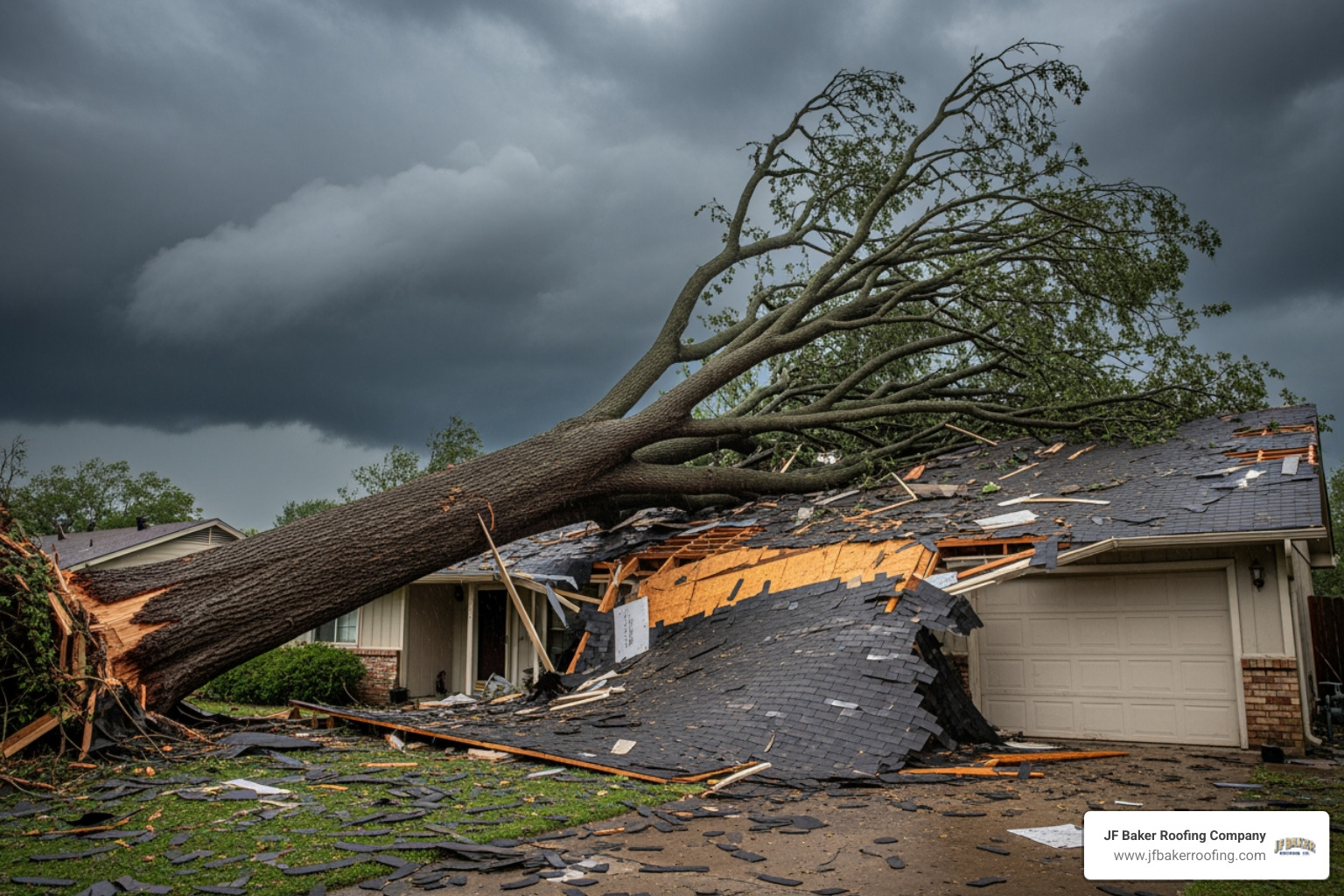
Here in Central Ohio, spring storms and unpredictable weather can open up leaks fast. Whether you're dealing with a damaged shingle, a cracked seam, or a flat roof that's holding water, the right patch product applied correctly can stop the damage before it spreads.
This guide walks through the best products for different roof types, how to apply them properly, and when it makes more sense to call a professional than to climb up yourself.
Best roof patch for leaks terms to know:
Choosing the Best Roof Patch for Leaks Based on Material
In our 96 plus years of serving Columbus and the surrounding areas, we have seen that the material of your roof dictates which patch will actually hold. You wouldn't use wood glue to fix a tailpipe, and you shouldn't use a standard asphalt cement on a modern TPO flat roof.
For asphalt shingles, which are the most common across Central Ohio neighborhoods like Upper Arlington and Westerville, a rubberized asphalt cement is the gold standard. These products are designed to move with the shingles as they expand and contract in the Ohio heat.
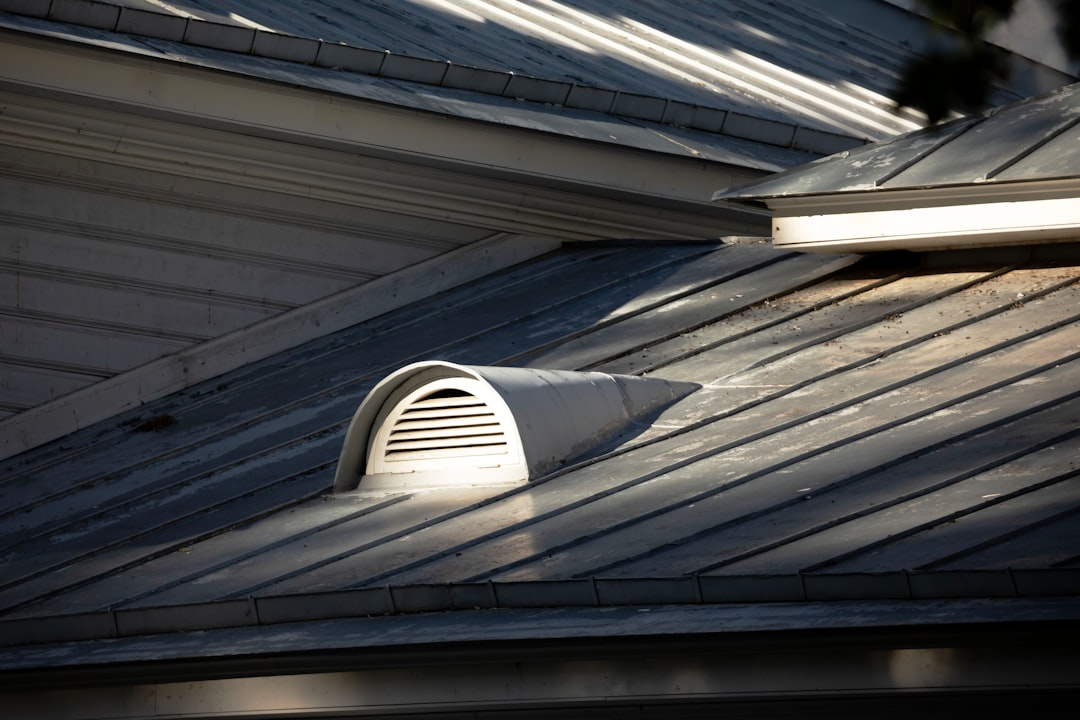
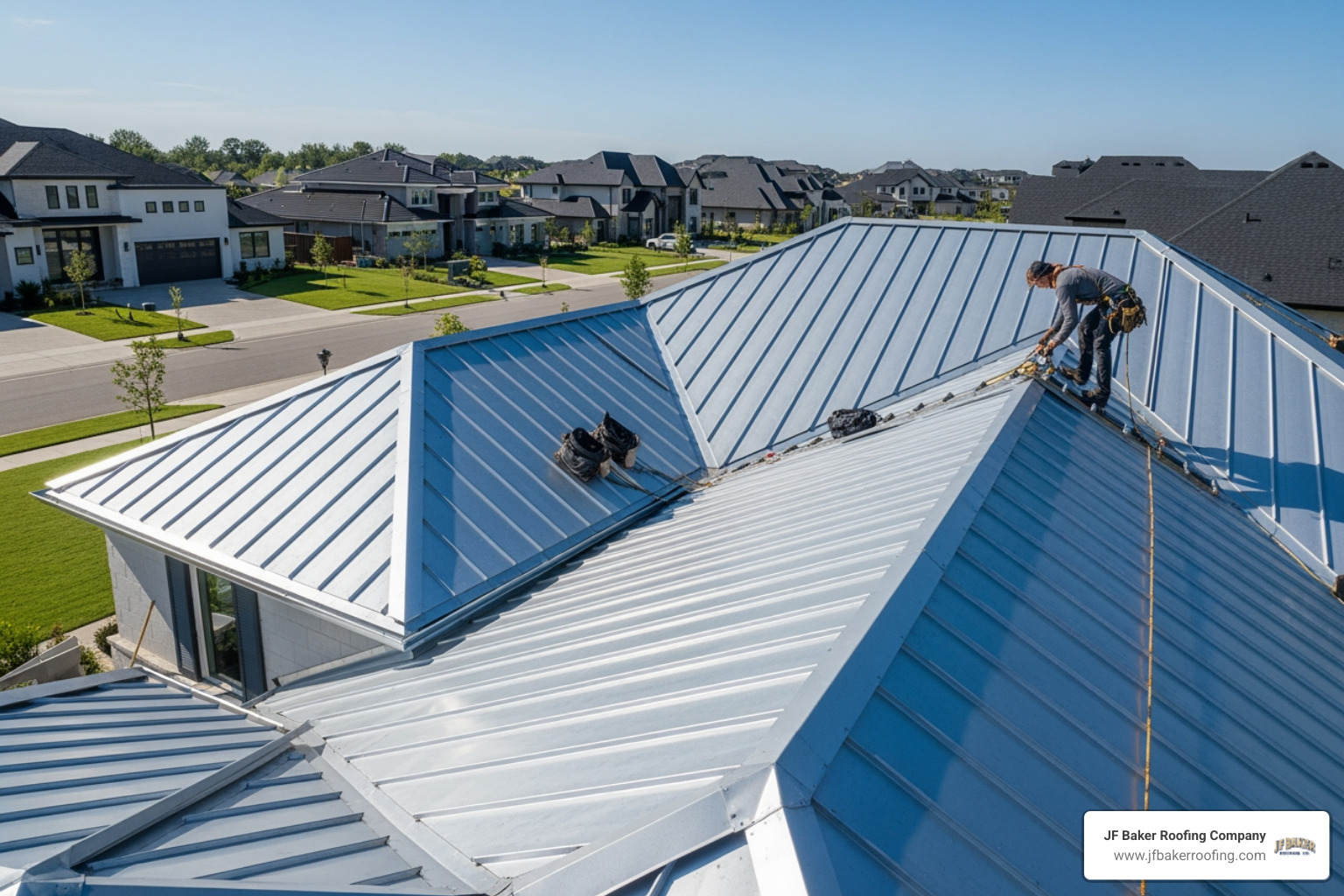
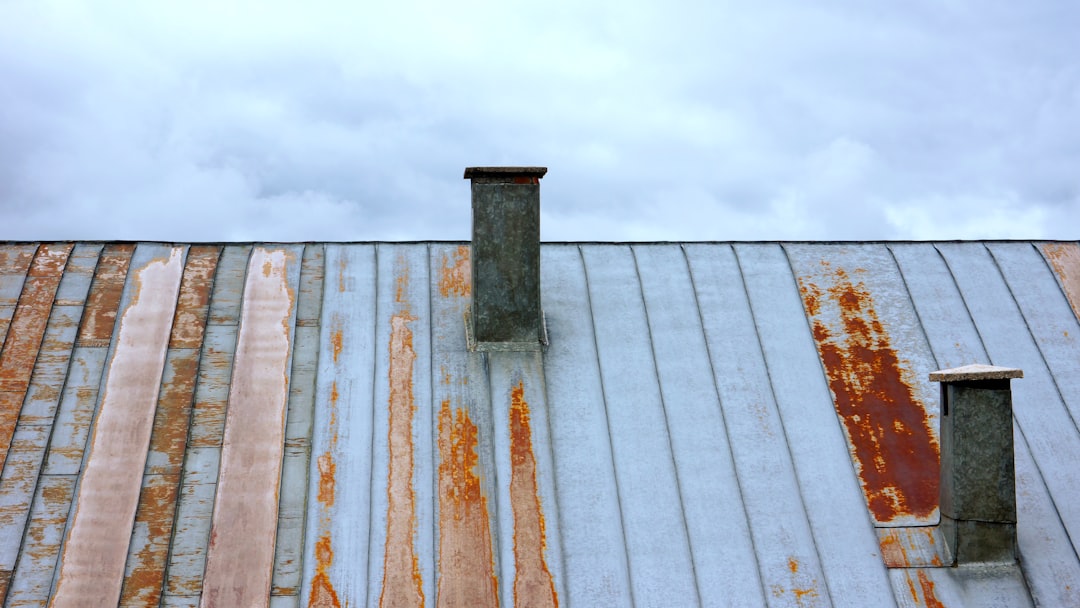
Metal roofs present a different challenge. Because metal expands significantly when the sun hits it, you need a patch with high elasticity. Products like Liquid Rubber or specialized metal roof sealants work best here. If you are noticing drips near the peak of your home, you might want to check our guide on metal roof ridge cap leaking to see if a patch is enough or if a component needs replacing.
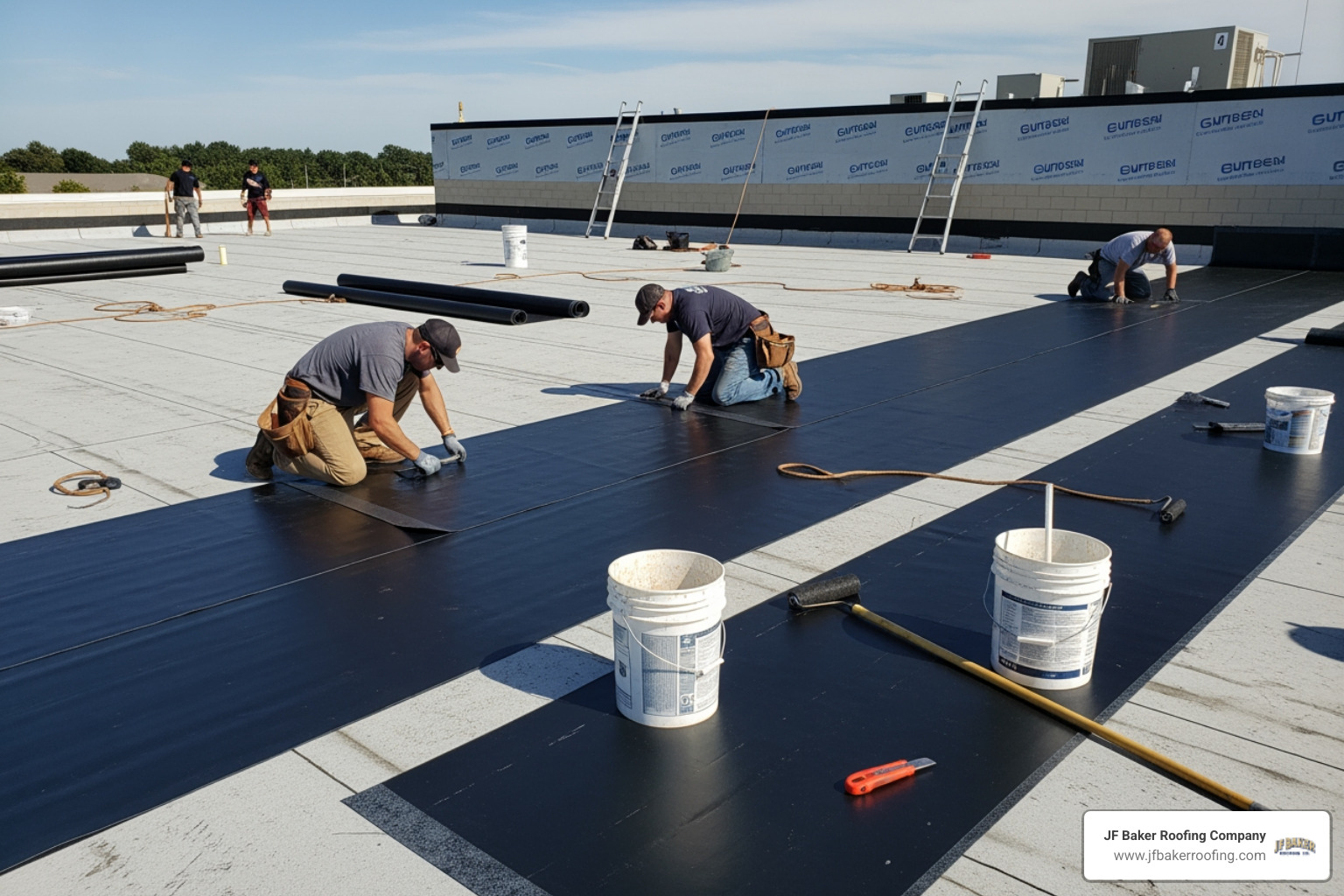
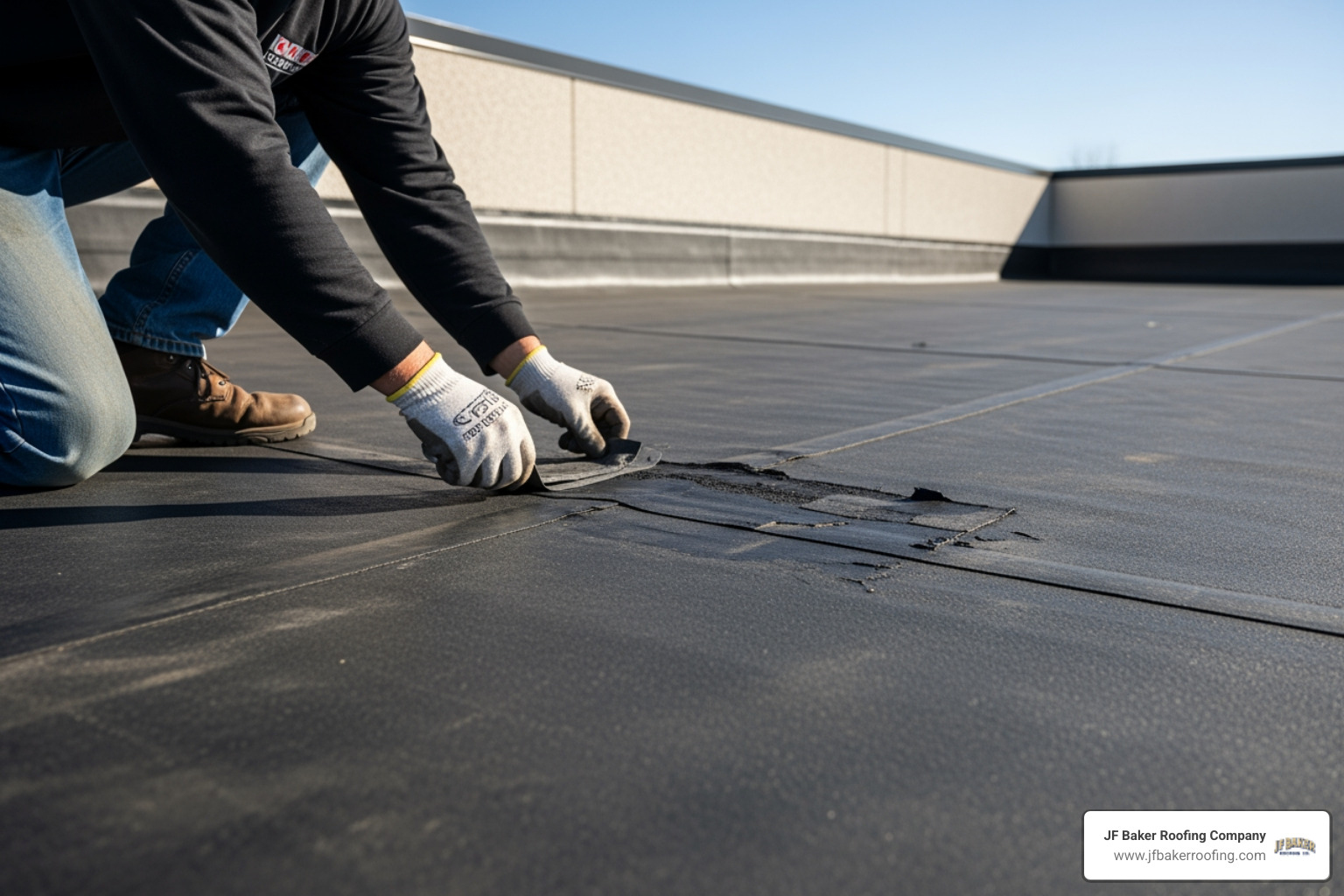
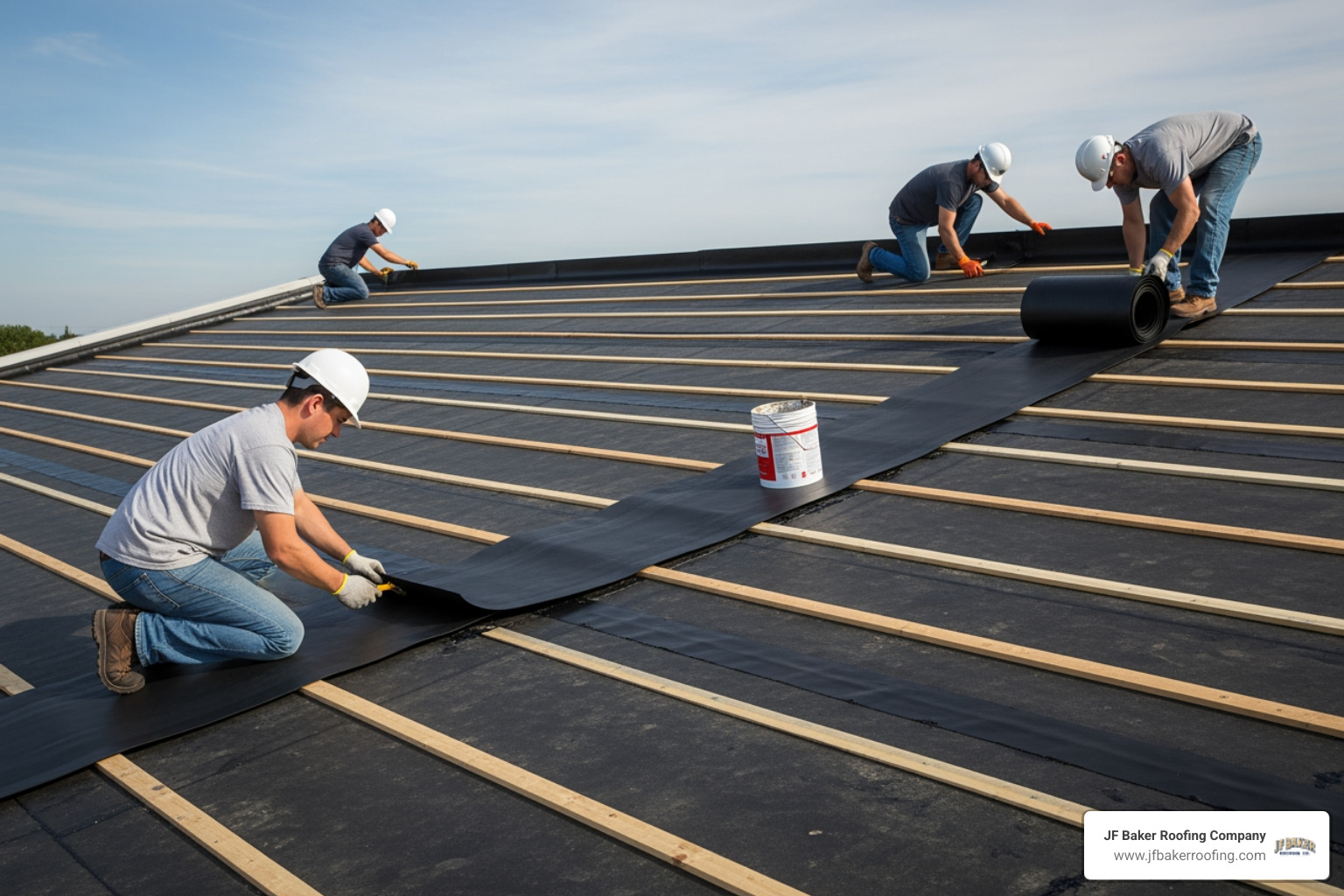
Flat roofs, often found on commercial buildings in downtown Columbus or over residential garages in Bexley, require products that can handle "ponding water." Standard patches can dissolve or peel if they sit under a puddle for a week. For these, we typically recommend silicone or specialized rubber flat roof repair kits that create a seamless, waterproof barrier.
Best Roof Patch for Leaks in Wet Weather
It never fails: the leak only shows up when it is pouring rain. In the past, you had to wait for the roof to dry before applying a fix. Today, premium rubberized wet patches have changed the game.
Products like Henry 208R or Henry 209XR Extreme are specifically formulated to displace water. This means they can be applied in a driving rainstorm or even underwater in a clogged gutter. These sealants meet ASTM D3409 standards, which is just a fancy way of saying they are proven to stick to damp or wet surfaces.
If you are out in the middle of a storm in Dublin or Gahanna trying to stop a leak, look for a "Wet Patch" label. These products use penetrating oils that reach deep into cracks even when the surface is slick.
Best Roof Patch for Leaks on Flat Surfaces
Flat roofs are notorious for holding water in low spots. If your roof has "ponding water" (water that stays for more than 48 hours), a standard acrylic or asphalt patch will likely fail.
The best roof patch for leaks on flat surfaces is usually a 100% silicone sealant. Silicone is unique because it is inorganic, meaning it won't break down under constant water exposure. It also reflects up to 90% of UV rays, which is vital for preventing the patch from becoming brittle in the summer sun.
For larger areas, liquid rubber coatings are an excellent choice. They go on like thick paint and cure into a flexible rubber sheet. If you are dealing with a masonry or concrete surface, such as a rooftop terrace in Grandview Heights, look into a concrete roof leakage solution that can penetrate the porous surface of the stone.
How to Apply a Roof Patch Sealant Correctly
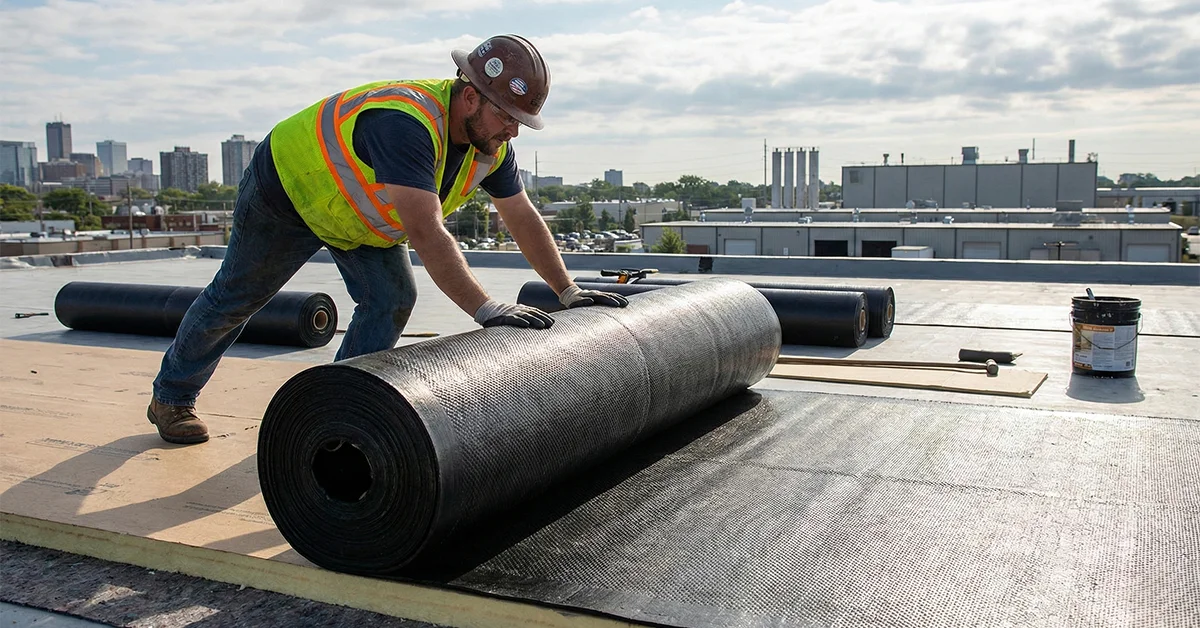
Applying the patch is about more than just glopping it on the hole. If you don't prep the surface, the patch might peel off within a few months.
- Clean the Area: Even if you are using a wet patch, try to clear away loose granules, moss, or dirt. A stiff brush works wonders.
- The 3-Course Method: This is the professional way to ensure a permanent fix. First, apply a layer of roof patch about 1/8 inch thick. Second, embed a piece of reinforcing fabric (like Henry 181 or 183) into the wet patch. Third, apply a final layer of patch over the fabric. This creates a "sandwich" that is much stronger than the sealant alone.
- Feather the Edges: Make sure the edges of your patch are smoothed down so water can't get underneath and lift it up.
- Allow for Cure Time: While many patches stop leaks instantly, they can take 30 days or more to fully cure before you can paint or coat over them.
Essential Tools and Safety Precautions
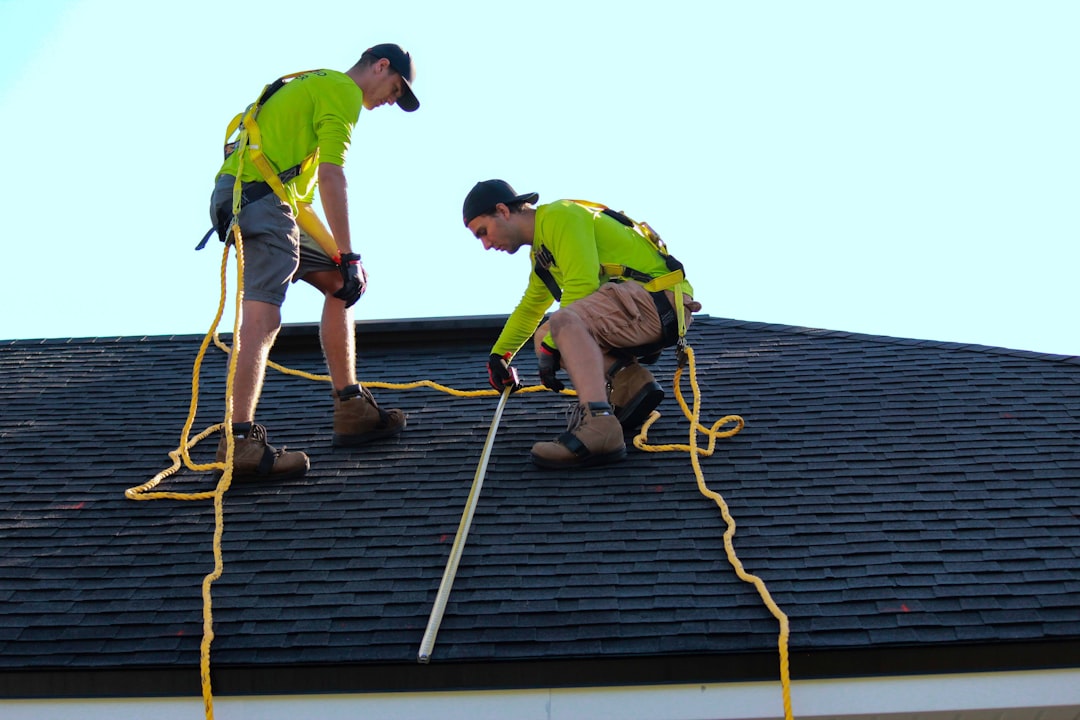
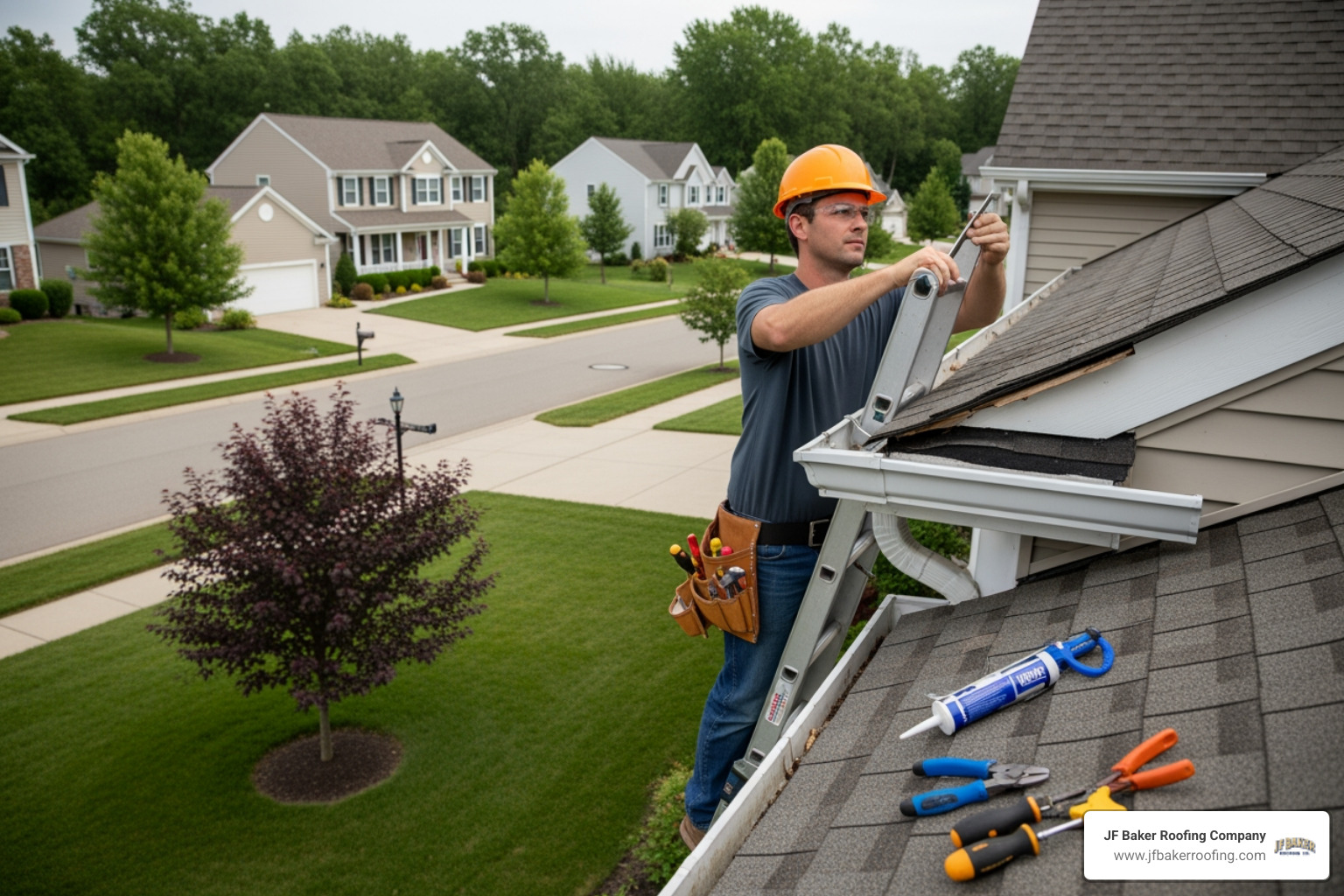
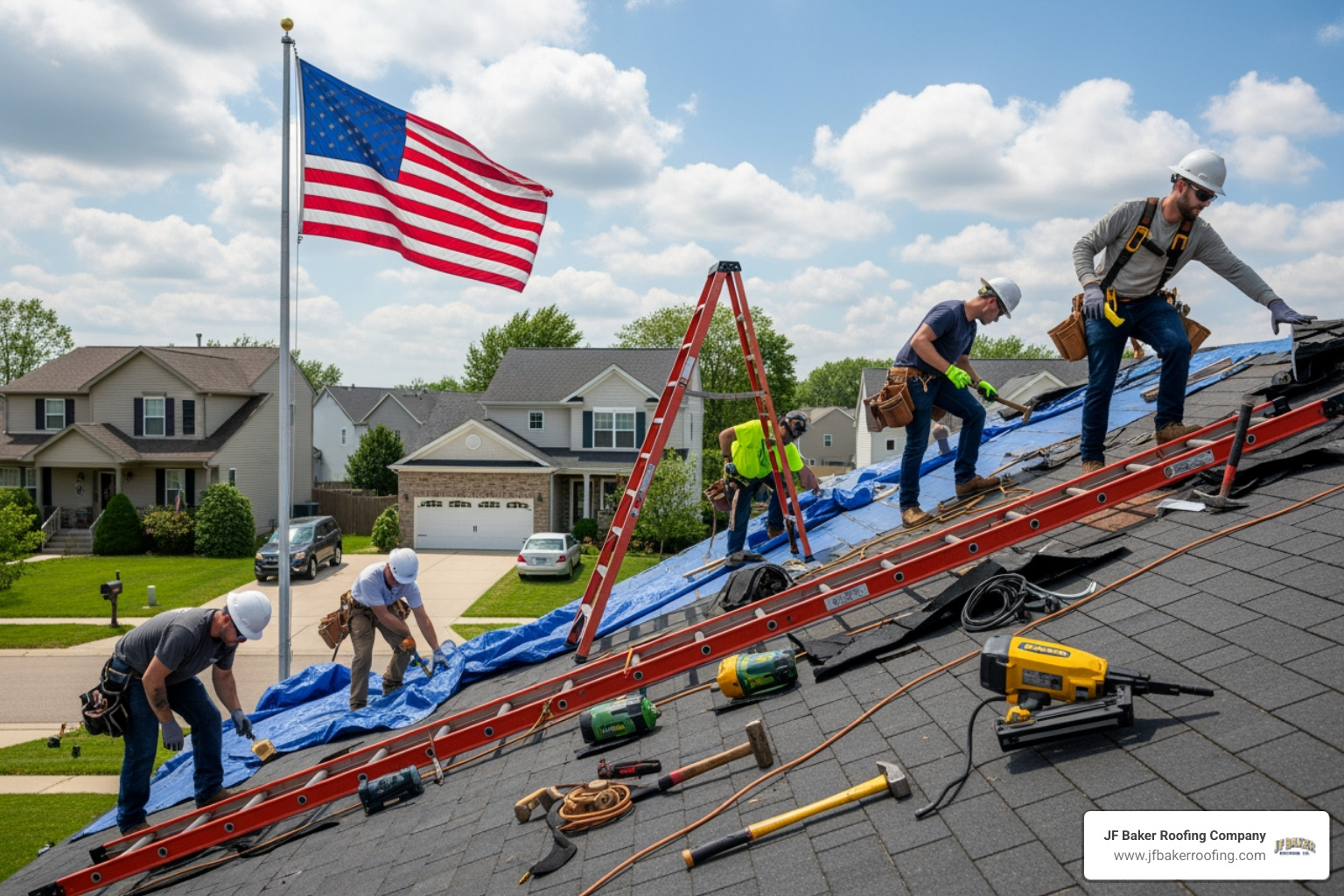
Before you head up the ladder, make sure you have the right gear. Safety is our biggest priority, and it should be yours too.
- Tools: You will need a sturdy roofing trowel or a wide putty knife. For tube-based sealants, a high-ratio caulk gun makes the job much easier on your hands.
- Safety Gear: Wear rubber gloves. Most roof patches are solvent-based and very difficult to get off your skin.
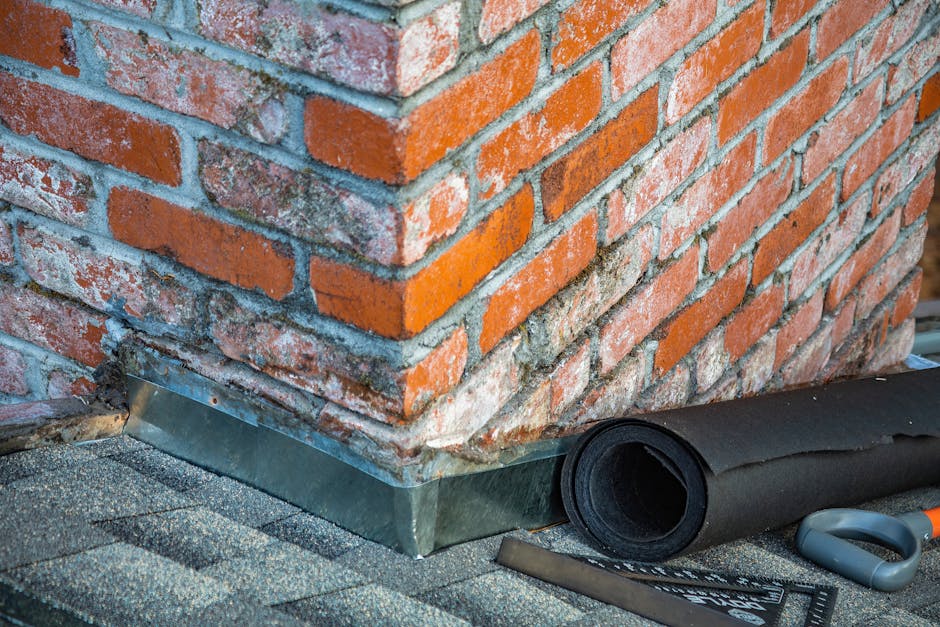
- Ladder Safety: Always have someone hold the ladder, and never work on a roof during a lightning storm or in high winds. If the leak is near a chimney, be extra careful as the flashing can be sharp. For more on these specific repairs, see our tips on chimney leak fix.
Comparing Liquid Sealants, Tapes, and Trowel-Applied Patches
Each type of patch has its own pros and cons. We have put together this comparison based on what we see performing best in the Central Ohio climate.
| Patch Type | Durability | Ease of Use | Best Use Case |
|---|---|---|---|
| Trowel-Applied | High | Moderate | Deep cracks, holes, and flashing |
| Liquid Sealants | High | High | Large areas, seams, and flat roofs |
| Sealant Tapes | Moderate | Very High | Emergency fixes, skylight frames |
| Spray Sealants | Low | Very High | Very small pinholes, gutters |
Liquid sealants like Liquid Rubber are fantastic because they are blendable and can hide the repair on black asphalt shingles. Sealant tapes, such as Gorilla Waterproof Tape, are incredibly sticky and great for a fast fix, but they can be difficult to reposition once they touch the roof.
Temporary vs Permanent Repair Methods
It is important to distinguish between a "get me through the night" fix and a "get me through the decade" fix.
Temporary Methods:
- Emergency Tarps: A heavy-duty tarp can protect your home for up to 90 days. We recommend using an anchor board at the peak to keep it from blowing away in a Columbus windstorm.
- Sealant Tapes: These are great for stopping a leak fast, but UV rays will eventually break down the adhesive.
Permanent Methods:
- 3-Course Patching: As mentioned earlier, using reinforcing fabric makes a patch significantly more durable.
- Shingle Replacement: Sometimes the best roof patch for leaks is simply a new shingle. If you have a few missing shingles, replacing them is often better than trying to glue the old ones back down.
- Rubberized Sealants: High-quality products like Henry 208R often come with a 10-year limited warranty, making them a reliable long-term solution. For specific materials like cement sheets, you might need a specialized cement sheet water leakage solution.
When to DIY and When to Call a Professional
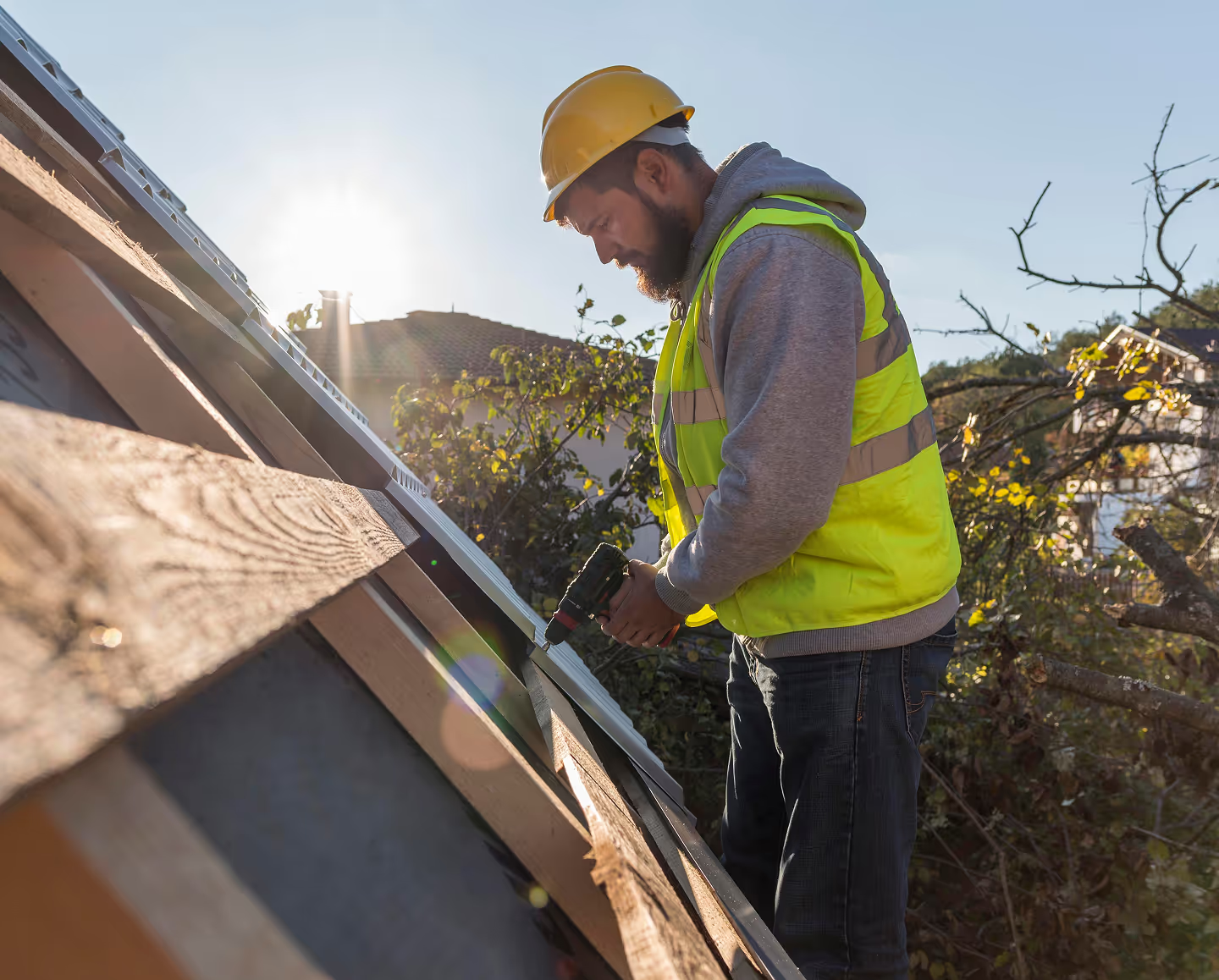
We love the DIY spirit of our neighbors in Hilliard and Grove City, but some jobs are better left to a crew with the right safety equipment and experience.
You can likely DIY if:
- The leak is easy to reach on a low-slope roof.
- The damage is a simple crack in a vent pipe boot or a single missing shingle.
- You are comfortable on a ladder and have a helper.
You should call us if:
- The roof is steep or high: Falls are the leading cause of injury in home maintenance.
- The leak is structural: If your ceiling is sagging or you see rot in the attic rafters, a patch won't fix the underlying problem.
- The roof is over 20 years old: In Ohio, roofs typically last about 20 years. If yours is older and starting to leak in multiple spots, patching is just a "band-aid" on a bigger issue.
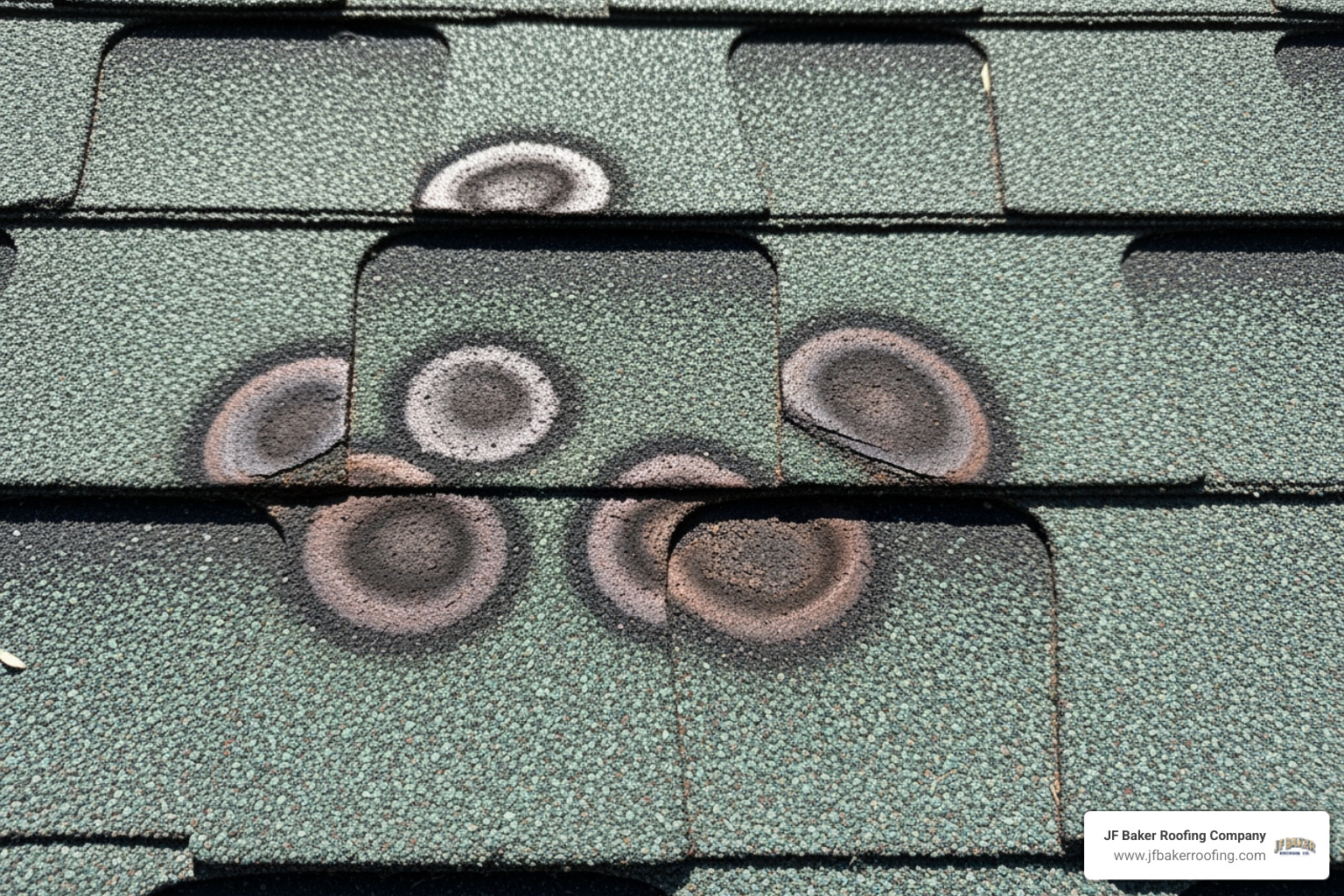
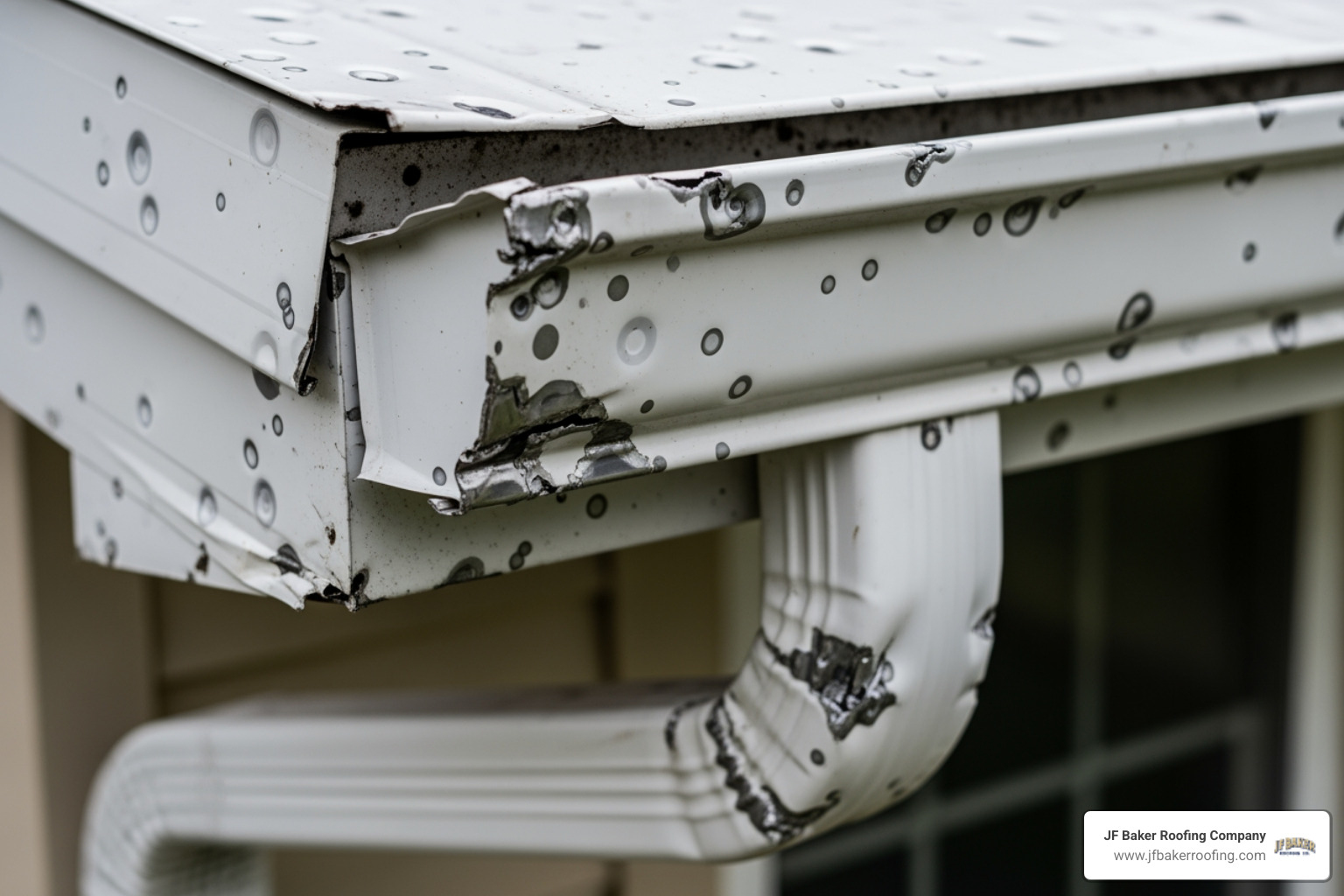
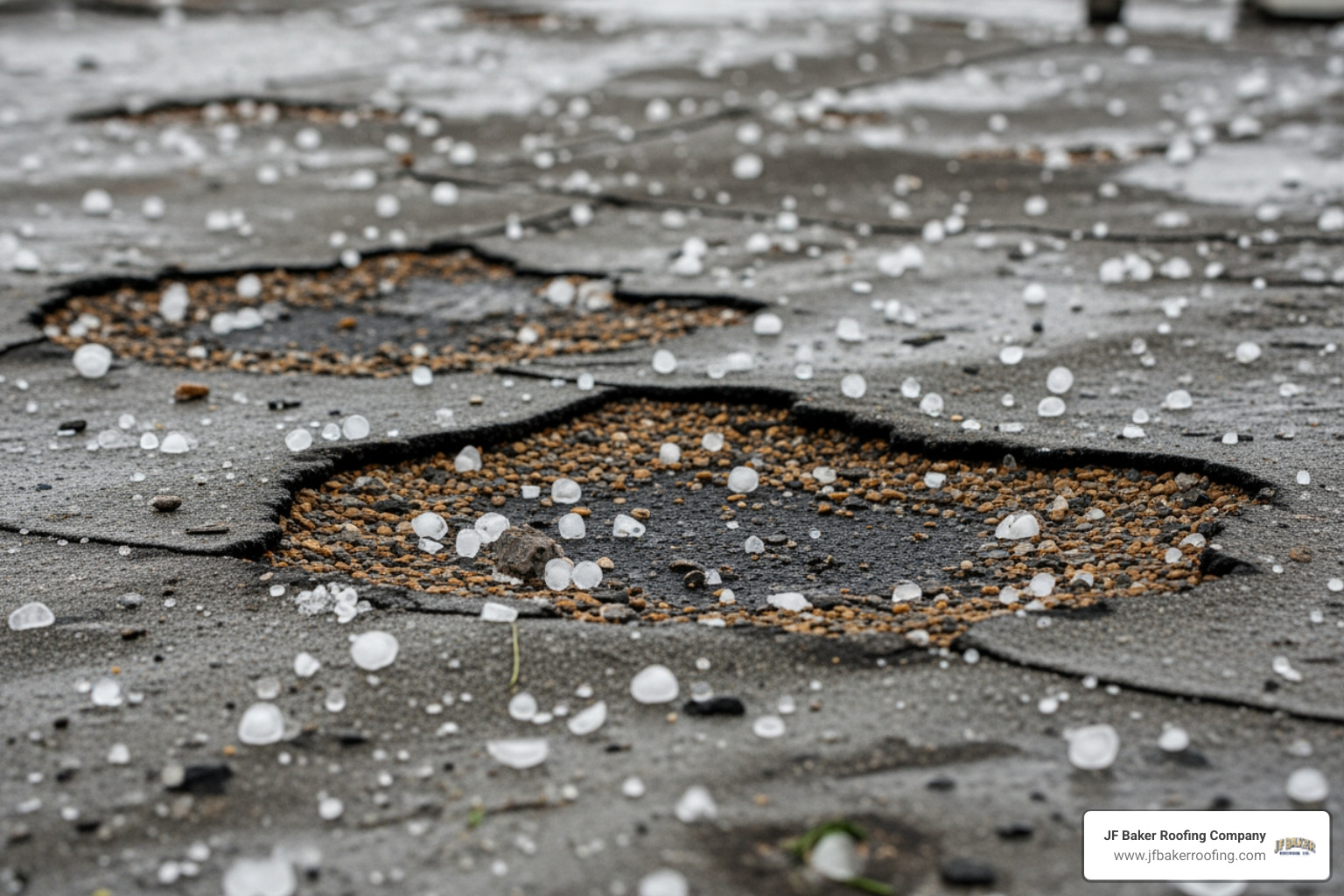
- There is widespread storm damage: After a major hail or wind storm, you may need a full inspection for insurance purposes.
If you are unsure, it is always safer to get an expert opinion. You can contact JF Baker Roofing for professional roof repair in Columbus, OH to get an honest assessment of whether a patch will do the trick.
Frequently Asked Questions about Roof Patching
Can I apply a roof patch in the rain?
Yes, provided you use a product labeled as a "Wet Patch" or "Wet/Dry" sealant. These products are tested to ASTM D3409 standards, meaning they can bond to surfaces even while submerged in water. This is a lifesaver for emergency repairs during those heavy April rainstorms in Central Ohio.
How long does a typical roof patch last?
A well-applied patch using the 3-course method can last 5 to 10 years. Many premium products like Henry 208R offer a 10-year limited warranty. However, the lifespan depends on UV exposure and how much the roof "moves." We recommend checking your patches once a year as part of your regular maintenance.
Is a roof patch a permanent solution?
It can be for small holes or flashing gaps. However, if the leak is caused by shingles that have lost all their granules and are curling, a patch is only a temporary fix. In the harsh Central Ohio winters, ice dams can also force water under patches that aren't perfectly sealed. A patch buys you time, but it doesn't make an old roof new again.
Conclusion
Finding the best roof patch for leaks doesn't have to be a headache. Whether you choose a rubberized wet patch for an emergency or a silicone sealant for a flat roof, the key is acting fast. A $20 can of sealant today can prevent a $9,000 roof replacement next year.
At JF Baker Roofing, we have been helping our neighbors across Columbus, Dublin, and the entire Central Ohio area since 1929. We are a third-generation, family-owned business built on integrity and quality craftsmanship. We believe in giving honest assessments: if a simple patch will fix your leak, that is exactly what we will tell you. We only recommend a full replacement when it is truly necessary for the safety of your home.
If you have found a leak and aren't sure if a DIY patch is enough, or if you have dealt with recent storm damage, let our reputation be your security. We stand behind every roof we install and every repair we make.
For more help with your home, check out our resources on storm damage repairs or give us a call for an honest, no-pressure assessment. We have been trusted since 1929, and we are ready to help you protect your home for the next generation.

.jpeg)